Nature
 PUBLISHED




It has been 40 years since a landmark moratorium on whaling came into force, yet campaigners warn that thousands of whales are still being killed by a small handful of countries exploiting loopholes and twisting the rules. They're hoping a new petition will end it.
The International Whaling Commission (IWC) was established in 1946 to prevent the collapse of several species that had been hunted to near extinction over the preceding centuries. In 1986, after long and tense debates, a global moratorium was ordered that halted all commercial whaling.
For the most part, it worked: dozens of countries ceased their commercial whaling operations, and many whale populations have slowly started to recover.
However, the governments of three countries – Iceland, Japan, and Norway – have continued to permit the hunting of whales. Since the 1986 moratorium, these nations alone are estimated to have killed around 45,000 whales.
“It is incredible that these three wealthy nations seem to have a blind spot when it comes to the international rule of law and whales. They justify it through various loopholes in the treaty and by stating that the IWC is not following its original mandate, which [they claim] was the orderly development of the whaling industry,” Clare Perry, Senior Ocean Adviser at the Environmental Investigation Agency, told IFLScience.
“It’s as if nothing has changed in the 80 years since the Whaling Convention was adopted,” she added.
The IWC moratorium featured a couple of narrow exemptions that allowed whaling to continue under strict circumstances. This included scientific research, as well as Indigenous communities that rely on whale meat for their food and have a deep cultural tie to whaling.
Iceland, Japan, and Norway have continued to exploit these loopholes, according to campaigners, while pushing the argument that whale populations have recovered sufficiently to resume “sustainable” commercial whaling.
These three countries do have some historical ties to whaling, as do many others that don’t hunt whales today, but campaigners argue that an appetite for the meat is drying up, suggesting their arguments of “economic necessity” are bogus. Faced with low demand, large amounts of whale meat end up being sold cheaply as pet food or feed for animals in the fur trade.
“When you consider that hunting whales adds significant greenhouse gas emissions (from the boats going out to sea, from the energy and refrigerant emissions associated with storing the whaling meat, which has to be deep frozen, from shipping it across to Japan, etc.) And after all of that, no one really wants to or needs to eat whale meat in those three countries, then it really is utterly indefensible,” Perry noted.
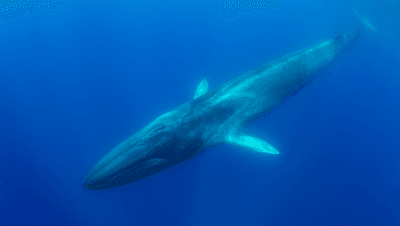
During the 20th century, around 2.9 million whales were killed by the whaling industry, including up to 90 percent of blue whales and 70 percent of fin whales, the two largest animals on Earth. It’s believed this is the largest removal of any animal in terms of total biomass in human history.
The devastating loss of biodiversity has a ripple effect felt by other animals in the ecosystems and the planet as a whole. As large, migratory predators, whales help to distribute nutrients, support phytoplankton growth, and stabilize food webs, all while capturing significant amounts of carbon from the atmosphere.
Many also oppose commercial whaling on ethical grounds, beyond the immediate conservation concerns. A 2023 report by the Icelandic Food and Veterinary Authority found that some whales can take hours to die after the initial harpoon strike, resulting in a significant amount of distress and prolonged pain.
“Simply put, there is no humane way to kill a whale – targeting these very large animals that are moving quickly and submerged most of the time from a moving platform on the sea, it is impossible to guarantee a quick kill. So these mammals often suffer enormous pain, sometimes for hours,” Perry told IFLScience.
After several short-term bans, in 2024, Iceland controversially issued new five-year licenses to hunt hundreds of whales a year. However, last year, a major Icelandic whaling company announced it would not be taking part in hunting fin whales for the second year running, effectively canceling the season. Much of Iceland's whale catch is exported to Japan.
Japan left the IWC in 2019 with a limited list of species it could legally hunt, before adding fin whales to the list in 2024. A meeting with the Chair of the North Atlantic Marine Mammal Commission – a coalition of whaling nations, including the Faroe Islands and Greenland, which practice under the exemption of cultural whaling – earlier this month suggests it has no plans to stop.
And just this month, Norway announced it has upped its commercial whaling quota for 2026 to 1,641 minke whales, an increase of 235 from 2025. The Norwegian Ministry of Fisheries said it would be transferring unused quotas from previous years to this year.
Now that the IWC’s moratorium has reached its 40th anniversary, the End Commercial Whaling Coalition is putting out a fresh call to put an end to the commercial hunting of whales once and for all with a new petition.
“There is no economic necessity for Iceland, Japan, or Norway to hunt whales, only a refusal to evolve. At a time when the world is desperate for environmental leadership, it is indefensible for three of the world’s richest countries to bypass the IWC’s global moratorium on commercial whaling," Perry said in a statement.
“We are calling on them to trade their harpoons for the cooperation the world so urgently needs.”