Nature
 PUBLISHED
 27
27


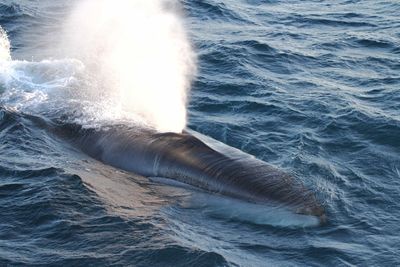


Japan has confirmed it has killed its first fin whale in over a decade. A male fin whale, measuring 19.6 meters (64 feet) long and weighing 55 tonnes, was recently caught off the coast of Iwate Prefecture by the whaling company Kyodo Senpaku, according to OceanCare.
The catch comes after a controversial decision in May 2024 when fin whales were added to the list of species that can be caught in Japan’s exclusive economic zone. The country’s Ministry of Agriculture, Forestry, and Fisheries announced that they would allow the hunting of 59 fin whales, along with its existing quotas for minke whales, Bryde’s whales, and sei whales.
Just in time for the announcement, Kyodo Senpaku unveiled their new whaling factory ship, the Kangei Maru, a 112.6-meter (369-foot) long vessel with an onboard butchering hub.
Fin whales are the second-largest animal on Earth in terms of length, second only to the blue whale, and are considered vulnerable to extinction by the International Union for Conservation of Nature.
Japan argues that the species’ population numbers in the North Pacific have bounced back to the extent that whaling can be considered sustainable. However, many experts disagree and have heavily criticized the decision to commence the killing of fin whales, citing conservation and ethical concerns.
“The fin whale is the second largest animal on earth. Putting it in the gunsights in 2024 is a big mistake for Japan, for whales, and for the international community working to protect them. We call on Japan immediately to withdraw this indefensible decision,” Catherine Bell, Director of International Policy at the International Fund for Animal Welfare, said in a statement sent to IFLScience.
“There is no humane way to kill a whale at sea and we have profound concerns about the welfare implications of this proposed hunt. Japanese whalers have not killed fin whales since 2011 and current harpoon operators may have no experience in killing a species that is significantly bigger - longer and heavier - than the largest species they currently hunt. Harpoons are usually not effective at killing whales on impact, leading to a slow and painful death,” added Bell.
Japan resumed commercial whaling in June 2019 after its controversial withdrawal from the International Whaling Commission (IWC), the intergovernmental panel that regulates the whaling industry.
Their relationship with whaling has long been out of step with the international community, which widely condemns the practice – with some notable exceptions.
The Australian government has been especially vocal in their opposition, saying it was “deeply disappointed” by the recent news from Japan, adding, “Australia is opposed to all commercial whaling and urges all countries to end this practice.”