Nature
 PUBLISHED




What you’ll discover in this article
- Being able to age an organism is important for conservation and the environment, but not all organisms make this so easy.
- Not only do we not know how to age fungi, but even identifying individuals is uniquely complicated.
- And it gets weirder still, as Dimitrios Floudas of Lund University, Sweden, told IFLScience, “Fungi have very dynamic bodies[...] This ability of mycelia to grow in one direction and disappear from another direction makes the definition of a body as we, humans, understand it very difficult.”
I was once accused of #AccidentalPartridge for positing "How do you sex a fish?" on Twitter (RIP). Well, at the risk of becoming my icon once again, I’m here to ask: How do you age a fungus?
It seems like a simple question. About the most basic thing you can know about an organism, surely?
Just watch it live and, eventually, die. Oh, sweet summer child.
This ability of mycelia to grow in one direction and disappear from another direction makes the definition of a body as we, humans understand it very difficult.
Dimitrios Floudas
As clonal, dynamic, and essentially invisible lifeforms, fungi unfold beneath our feet expanding across seemingly impossible ranges both physically and temporally. There’s an individual honey fungus in Oregon thought to be thousands of years old.
Is that normal, or an exceptional extreme? A new opinion article has some thoughts on how we could figure it out.
How to meet a fungus
The first challenge with aging an organism is figuring out where they start and end. Something study author Dimitrios Floudas of Lund University, Sweden, is acutely aware fungi don’t make easy.
“Defining an individual in fungi is tricky for two reasons,” he told IFLScience. “Firstly, all fungi are invisible.”
“What we see during our walk in nature is a sporocarp and that only for species that produce macroscopic sporocarps (e.g. mushrooms). But even when we see a number of mushrooms of the same species at one spot we do not know (we assume) that they belong to an individual (to the same mycelium).”
“This is not necessarily true.”
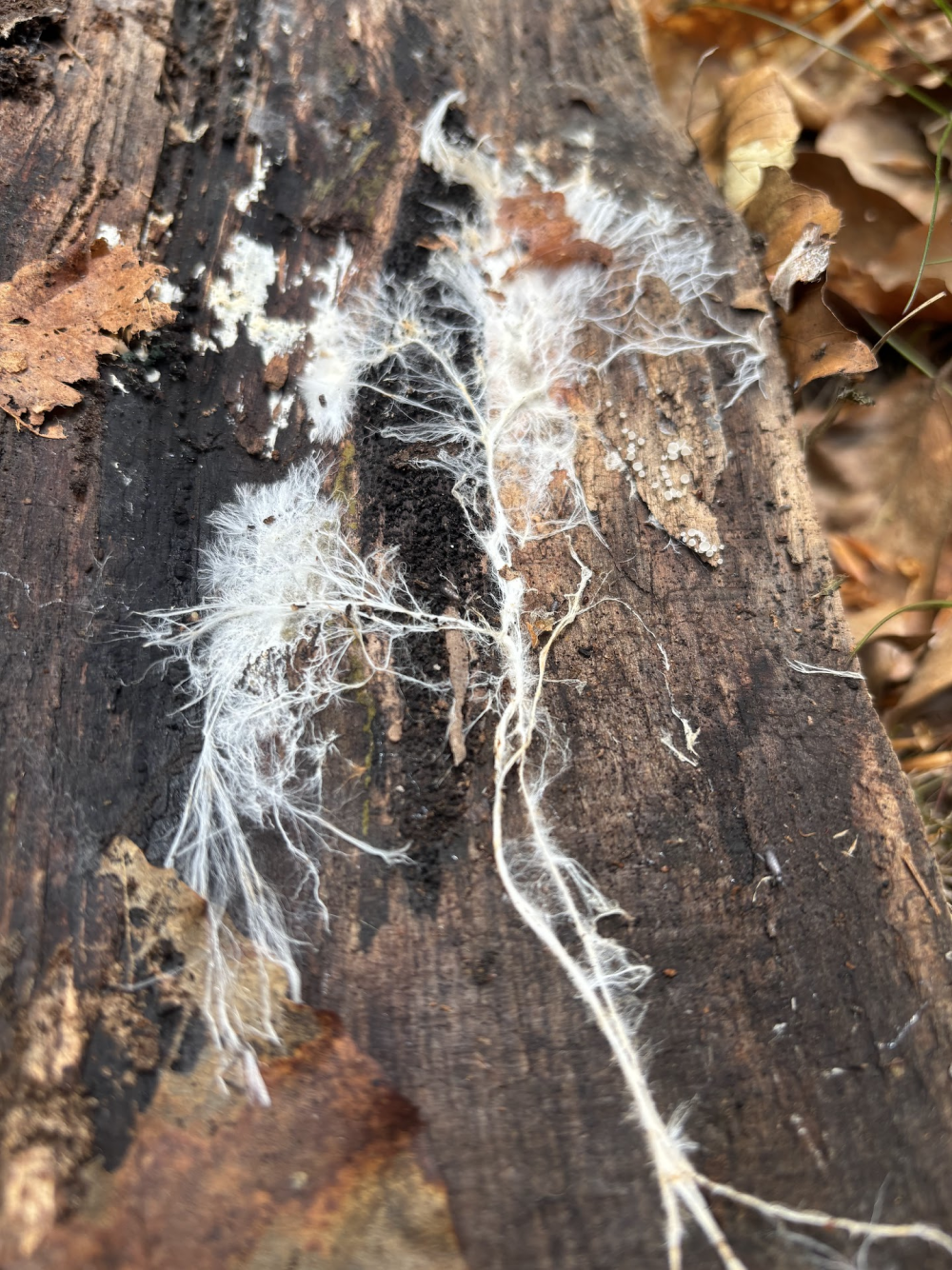
The only way to be sure is to use genetic tools to test samples and see if they’re the same individual, but this takes time and resources. Then there’s the fact that fungi don’t really exist on their own, anyway, but in colonies that can be split up.
It’s similar to plants in the sense that you can take a cutting from a rosebush and establish a different plant.
Where it becomes more complicated is that if separated fungi individuals later meet again in the soil, they can merge back into one individual.
Knowledge of longevity is important for predicting for how long pathogenic fungi can remain at a site. This is particularly important for invasive fungal species.
Dimitrios Floudas
And while, yes, there are clonal plants, too, they are the exception. With fungi, clonal is the rule and the complexities don’t end there.
Mushroom melding
“Fungi have very dynamic bodies,” said Floudas. “Part of their mycelia can expand while another part can be autodigested (dissolved and eaten by the organism itself) and disappear.”
“This ability of mycelia to grow in one direction and disappear from another direction makes the definition of a body as we, humans, understand it very difficult.”
But we’ve got to try, right?
After all, understanding how long an individual of any species can persist is a fundamental part of figuring out their lifecycle and role within an ecosystem. It also informs conservation, especially for a lifeform we’re so fond of putting in risottos, but the benefits extend beyond the conservation of fungi.
"Understanding longevity is important for environmental applications,” said Dimitri. “For example, inoculation of young trees with mycorrhizal fungi in the field in order to increase reforestation success requires that we understand for how long the mycelia we have inoculated could survive with their host.”
“Alternatively, knowledge of longevity is important for predicting for how long pathogenic fungi can remain at a site. This is particularly important for invasive fungal species, which have become a major issue in many areas of the planet.”
Fungi-on-a-chip
A tall task ahead of us, then, but one the authors suggest we have a few tools to tackle it with. First, they urge that searching for a universal lifespan is a dead end. Instead, we need to consider fungal longevity as something that is unique to species with different lifestyles.
Then it’s a case of combining tried and tested techniques. We have genetic tools that can match related samples. Long-term lab experiments can deliver in-depth data in a controlled environment, and then we have new toys to play with.
You’ve heard of body-on-a-chip – microfluid devices that mimic organic systems. No reason, then, the same technology couldn’t be wielded to create “fungi-on-a-chip” and observe their growth and longevity in detail.
A lot of work to study Earth’s hidden kingdom, but one that could reveal just how much we still have left to learn about one of the planet's most widespread organisms.
The article is published in the journal Trends In Microbiology.