Nature
 PUBLISHED



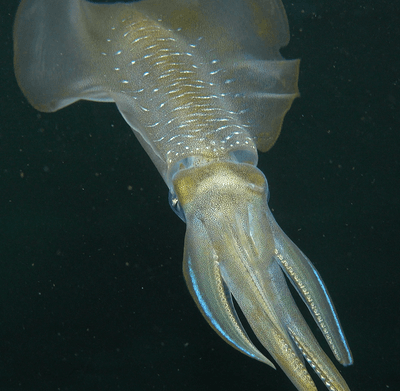


When squid are exposed to water with high levels of carbon dioxide, their brains shrink, the Society for Experimental Biology’s annual conference has heard.
Worse still, the shrinkage affects some parts of the brain more than others, potentially impeding the prospects for survival for squid and other cephalopods, including octopuses.
Besides increasing the chances of heat waves like the northern hemisphere is currently experiencing, burning fossil fuels has some lesser-known consequences. Some of the carbon dioxide released in the process is absorbed by the oceans, and while this means the world warms more slowly than if the CO2 stayed in the air, it also affects marine chemistry.
The most common name for this is ocean acidification, although since the oceans are naturally very slightly alkaline, pedants debate whether the name is truly accurate.
Whatever term you prefer, the shift in pH levels is making it harder for marine creatures to produce calcium carbonate, hindering the recovery of coral reefs from damage. However, new research indicates that could be far from the end of the danger.
“Cephalopods are widely regarded as being one of the most intelligent groups of animals living in the ocean,” Dr Garett Allen of Acadia University said in a statement. Indeed, that intelligence has attracted something of a cult status recently, inspired by the documentary My Octopus Teacher and novels like Remarkably Bright Creatures.
Allen leads a team exploring the effects of ocean acidification on cephalopods by rearing bigfin reef squid (Sepioteuthis lessoniana) in tanks with levels of carbon dioxide high enough to lower the pH of seawater from 8.2 to 7.8. That’s what the squid’s wild counterparts are expected to face by 2100 if emissions continue at current rates.
In their preliminary work, the team was shocked to observe a 49 percent reduction in brain volume among the squid raised in the high-CO2 tanks, compared to those in control tanks at current carbon dioxide levels.
“I immediately saw that their brains were half the size and had to check the diagnostic output of the software,” says Dr Allen. “It was a real surprise.”
Neurological effects are not entirely unexpected. A decade ago, it was reported that squid behavior changed where carbon dioxide levels are naturally enhanced by nearby volcanic activity. “Prepare for cowardly cephalopods,” one biologist tweeted at the time.
Nevertheless, this new study found an astonishingly large change.
A smaller brain might not matter so much if it had to control a more modest body, but the high-CO2 squid were the same overall size as the controls. Worse still, the optic lobes and optic tracts, essential for the capture of prey, were 52 to 62 percent smaller under the 2100 projection.
The team had already observed that squid exposed to water acidified by CO2 from hatching hunted 42 percent less than the controls. Squid raised under current conditions, before being exposed to raised CO2 were affected even more and reduced their hunting by 65 percent.
“We think that the reduced willingness to feed may be linked to a decline in visual acuity,” Allen said. “Not because of the retina itself, which looks to stay the same, but perhaps because the optic lobe is shrinking.”
Instead of being afraid to hunt, it seems the squid might be unable to spot their prey, or to trust their eyes when they do.
The work was presented at the Society of Experimental Biology Annual Conference. Aspects were previously published in Communications Biology.