Nature
 PUBLISHED



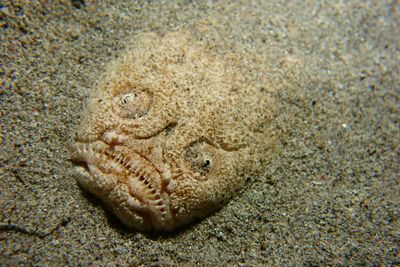


There are all sorts of things in the ocean that could deliver a nasty bite or sting. Some of them are beautiful and disguise their ill intentions with iridescent colors, or flashy patterns. Some of them however look down right ugly: Meet the stargazer fish.
Now even though we have a scientific appreciation of all the creatures, few could find beauty in the maw of a stargazer. There are about 51 species of these large fish, which are known for their enormous pouting mouths full of teeth and eyes on top of their heads that are permanently facing skywards, giving them their name.
They spend most of their time buried in the sand with just their eyes peeking above the surface, as they wait for their unsuspecting prey. When a fish or invertebrate happens swim over, they open their mouths to create a vacuum and suck their prey in.
However, if their food is scarce, they can use one of their tricks.
Some stargazers possess a flap of skin growing on the floor of their mouths that they stick out, like a furry tongue, to fool fish into thinking it's something tasty. This lure entices the fish near the stargazers waiting mouth, ready to be swallowed up whole.
If that wasn't enough, white margin stargazers also possess some pretty nasty spines capable of giving a horrible sting to anything or anyone that comes too close. While getting a stargazer spine in your foot is said to be painful, the venom is usually not fatal to humans.
Bu that is not all, as stargazers possess another tool in their toolbox. Some species are capable of generating an electric shock from cells called electroplaques. This can produce a 50-volt shock and is thought to be more of a defensive strategy to deter predators from coming too close.
“The thing that is difficult is to spot them because they are always hiding in the sand. But if you’re lucky enough to see the eyes emerging from the sea bed or maybe the little 'tongue' that they use to attract fishes, once you’ve spotted [these] it’s not so difficult to approach because you can get really close," wildlife photographer Pietro Formis, who won the Highly Commended prize for Animal Portraits in the Wildlife Photographer Of The Year 2023 competition for his image of a mediterranean stargazer, told IFLScience.
"If you touch them, they swim away, so you have to get close, but not too much."
Stargazer fish can be found in almost every ocean, apart from the chillier polar regions.