Nature
 PUBLISHED


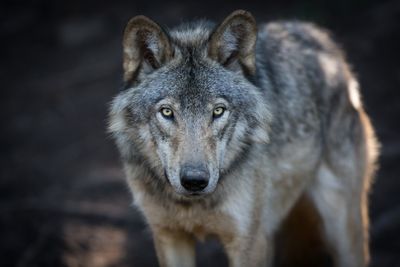


With a distribution that once stretched around the entire Northern Hemisphere, spanning Arctic tundra, temperate forests, grasslands, and deserts, the gray wolf is one of the most successful predators on the planet.
Over the last couple of hundred years, however, humans have done a pretty good job in eradicating them from large parts of their range. And it turns out that this has impacted their evolution.
A new study has been looking at wolf skulls collected from across Europe, Asia, and North America to try and calculate how the environment they lived in influences the shape of their skulls.
They found that skull shape is largely dictated by three aspects.
The first of these is geography. Wolves living at higher latitudes, meaning those in northern North America and Europe, were typically larger than those from more southerly regions.
This is consistent with Bergmann’s rule, in which animals living in colder, higher-latitude environments tend to have larger bodies than those living in warmer, lower-latitude climates.
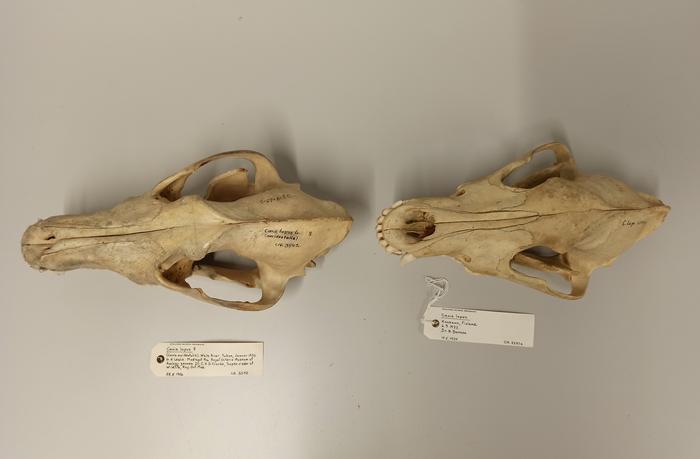
Next up was prey size. Those wolves that fed on larger herbivores, such as moose or bison, had larger skulls. So strong is this influence on skull size that even though the wolves living in Yellowstone are fairly far south, their skulls are comparable to those from higher latitudes because their diet is predominantly large elk.
Finally, the biggest influence on skull size was population identity. A variety of factors drive this, but it crucially includes human interference and genetics.
As people around the world persecuted and hunted wolves, they reduced their numbers and fragmented their populations. This caused something known as the founder effect. This occurs when a new population of animals is created from a small number of individuals, resulting in a loss of genetic diversity and the population becoming more similar.
"In many cases, humans have reinforced the processes that naturally make populations different,” explains Dominika Bujnáková, doctoral researcher at the University of Oulu and lead author of the study, in a statement.
“By reducing population sizes and fragmenting habitats, we have limited gene flow and accelerated divergence between some populations not only in genetic terms but also in how those populations look like.”
A clear example of this can be seen with the wolves now living in Norway and Sweden. By the 1960s the predators were nearly entirely eradicated from this region, before a small population moved back in from the east.
This has resulted in a highly distinct population of wolves with wider frontal bones, higher cheekbones, and a more downward-sloping snout compared to the wolves that lived in the region before they were exterminated.
“These morphological shifts mirror the genetic changes that occurred when wolf populations were decimated by hunting and later re-established by a small number of immigrants,” said Bujnáková in a second statement.
In addition to the Scandinavian wolves, the researchers found that those living in the Arctic, coastal Alaska, and Italy were also highly distinct. Again, they suspect that this reflects the isolation of these populations, meaning that the wolves have drifted from the more standard form.
This work not only goes to show how the direct and indirect impact of people can leave lasting marks on the genetics and appearance of animals, but could also help feed into conservation activities.
With ongoing projects to reintroduce and rewild wolves to parts of their former ranges, understanding how populations vary could be critical to their success.
The study is published in the journal Diversity and Distributions.



 1
1