Nature
 PUBLISHED



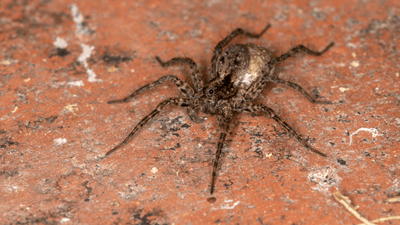


A species' running speed says a lot. It can tell us about their behaviors, hunting strategies, anatomy, and physiology. But as evolution gathers momentum, can ancestry prevent animals from obtaining superspeed?
To answer this question, a team of researchers decided to study speed among a hyper-diverse group of arthropods: spiders. No doubt there are a few people out there that would prefer not to know the speed potential of these arachnids, but it’s a race that can teach us a lot about evolution.
Those spiders which were both fast and capable to scale smooth surfaces would sometimes escape and we had to catch them in the lab
Dr Jonas Wolff
It is, however, also a race that isn’t very easy to organize. To study a group as diverse as spiders, you’ve got to get specimens. Loads of specimens. It was critical to the research team that their roster of racers represent “the entire spider tree of life,” co-author Jonas Wolff told IFLScience. So, it was spider catching time.
Fortunately, the pre-print study (meaning it has not yet undergone peer review) was a collaboration between two universities: the University of Greifswald, Germany, and Imperial College, London, where Wolff says first author Shreyas Kuchibhotla did the majority of the experimentation.
Out in the field, the teams managed to capture a representative from 258 different spider species. They ranged from the very small to the gigantic – a group the authors hypothesized might reach a speed plateau due to the physical constraints of big size.
“The main challenge was not to make the spiders run, not to record or analyze the runs, but to gather the desired diversity of spider species,” said Wolff, but that isn't to say spider racing is without its complexities.
“From the practical side, those spiders which were both fast and capable to scale smooth surfaces (e.g. huntsmen and zebra spiders) would sometimes escape and we had to catch them in the lab.”
Spiders at the ready, the race was on. Footage captured by the team shows the speedy skedaddlers running across paper. This data could then be combined with previous work to bolster the represented species in the data set.
Only by comparing it against all these other species it was revealed that this Australian species of huntsman is the fastest running of all recorded spiders
Jonas Wolff
Of those recorded, there was a clear victor. The fastest spider of all was a harvestman (Heteropoda cervina/jugulans) that clocked an impressive 3.59 meters per second. That puts it at a pace of around 8 miles per hour. Considerably speedier than the average human jogging speed of just 6 miles per hour.
“That species was recorded in an earlier study by the lab of Christoffer Clemente at the University of the Sunshine Coast in Australia,” said Wolff. “Only by comparing it against all these other species it was revealed that this Australian species of huntsman is the fastest running of all recorded spiders – in absolute terms.”
The researchers think its speed comes down to its long, powerful legs. But the evolution of spiders has demonstrated there’s more than one way to get fast.
When they adjusted for body size, there was a different champion: a goblin spider (family Oonopidae). It may be tiny, but it makes up for it with an incredibly high stride frequency – speed it uses to chase down prey.
It seems they sit at a sweet spot, benefitting from their large legspan while not yet being mass restricted as the heavier tarantulas
Jonas Wolff
Two immensely speedy spiders, then. But could they, in time, get faster?
“If these two species are at a biomechanical/physiological limit must be tested in follow up studies,” said Wolff. “At least for the huntsman it seems they sit at a sweet spot, benefitting from their large legspan while not yet being mass restricted as the heavier tarantulas.”
“That said, there are larger species of huntsman spiders, such as the giant huntsman Heteropoda maxima from caves in Laos, to which we had no access in this study.”
Now that’s a spider I’d like to see skedaddling…
The pre-print study is hosted on the server bioRxiv.



 1
1