Nature
 PUBLISHED
 7
7




The de-extinction company Colossal Biosciences has reached another big milestone in its mission to make extinction a thing of the past, securing a further $200 million in Series C funding from TWG Global. It brings their total funding to $435 million to date, capital they have used to pioneer a de-extinction toolkit that has already contributed to advancements in species preservation and human healthcare.
“Colossal is a revolutionary genetics company making science fiction into science fact,” said Colossal co-founder Professor George Church, of Harvard Medical School and the Massachusetts Institute of Technology (MIT) in a statement emailed to IFLScience. “We are creating the technology to build de-extinction science and scale conservation biology particularly for endangered and at-risk species. I could not be more appreciative of the investor support for this important mission.”
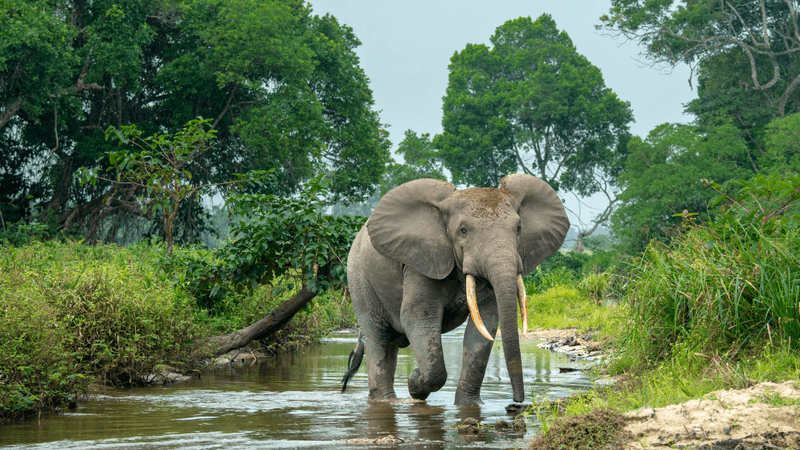
You may recognize Colossal as the company behind ambitious goals to de-extinct the mammoth, dodo, and thylacine, goals that have seen them innovate revolutionary technologies with far-reaching applications. Newly-announced achievements include generating chromosome-scale references genomes for the African elephant, Asian elephant, and rock hyrax, as well as acquiring ancient genomes for the woolly mammoth. A key part of their goal to reintroduce the mammoth's cold-tolerant phenotype into modern day equivalents involves tracking those genes down, and they've already successfully edited over 20 key genes linked to the core traits that enabled these animals to thrive in cold environments.
On the dodo front, they’ve generated a chromosome-scale assembly of the Nicobar pigeon, its closest relative, and established a flock that will act as primordial germ cell donors for Colossal’s future dodos. Plus, they’ve developed a machine learning approach to identify genes associated with craniofacial shape so that they can work towards the unique bill morphology of the dodo.
This has major implications not only for de-extinction science but also in conservation.
Ben Lamm
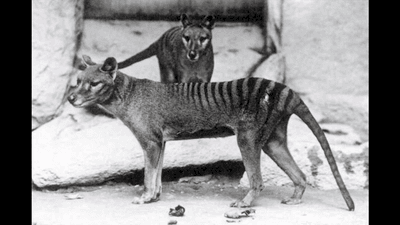
Another key project centers around the thylacine, an extinct marsupial that was native to Australia, Tasmania, and New Guinea. The last known individual died in 1936.
An ex-utero way of generating thylacines would be preferable as it could bypass the need for a surrogate, but mimicking the uterine environment is no mean feat. Now, Colossal has announced that it's not only made a prototype for an artificial uterus, but also used it to culture fertilized single-cell marsupial embryos to over halfway through pregnancy.
“The system is much more sophisticated than any existing device, with modulated precision microfluidics and gas control that enables us to control the environment the embryo is growing in, in a very precise way,” Colossal co-founder Ben Lamm told IFLScience. “It also enables us to image the embryo as it develops to make sure all developmental milestones are on track.”

“The device will be important for studying embryonic development and making sure the DNA edits we are making are driving the correct developmental changes. This will also enable us to generate thylacine young at scale for rewilding, without the need for surrogate mothers.”
At this stage we are using the device for marsupial embryo culture, but we will expand this next to mice.
Ben Lamm
To borrow Church’s words, it really is an achievement that’s “making science fiction into science fact,” but beyond resurrecting species from the past, the technology can also contribute to the conservation of animals alive today.
“This has major implications not only for de-extinction science but also in conservation. An artificial womb would enable us to generate living animals from endangered animal cells that are preserved in biobanks – again without the complications of surrogacy.”
Marsupials are a great starting point for testing this technology as they have a very short gestation (typically less than two weeks), and only form a very superficial placenta during pregnancy. There remain obstacles to overcome in meeting the changing nutritional demands of embryos at different stages of their development, but if successful, it could be adapted to different animal groups.
“At this stage we are using the device for marsupial embryo culture, but we will expand this next to mouse which has a longer gestation period and greater attachment to the mother through a larger placenta.”
From mice to mammoths, these guys are providing plenty of inspiration for any aspiring sci-fi writers.