Nature
 PUBLISHED
 2
2


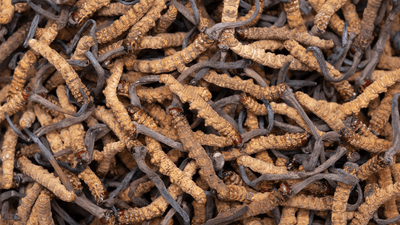


You could do worse than to end up with a wedding ring made of the zombie fungus Cordyceps sinensis, a parasite that’s touted to be worth more than its weight in gold to the right buyer. Coveted for medicinal use, it’s a crucial form of income for some people, but one that’s under threat due to climate change and overharvesting.
Zombie fungi seize their hosts, manipulating their nervous system so that they behave in a way that's beneficial for spore dispersal. Cordyceps was the inspiration for The Last Of Us, but as of yet, it has – thankfully – never parasitized a human. As for caterpillars? Well, just ask the ghost moths, Hepilus fabricius.
Ghost moth larvae are victimized by the highly prized caterpillar fungus that’s found at altitudes above 4,500 meters (14,700 feet) in Bhutan, China, India, and Nepal. It’s known as yartsa gunbu or DongChongXiaCao, and translates to winter worm – summer grass.

The haunting name about hits the nail on the head as its spores invade the bodies of caterpillars, directing them toward the soil’s surface where they die. Cordyceps remains dormant in the winter, and then bursts out of the caterpillar’s head into the sunshine come spring.
Spores escaping the mushroom are free to float into the environment, further infecting more caterpillars. The long stick-like protrusions that burst out of their heads were once confused for worms, but it’s actually the fruiting body of Cordyceps sinensis.
Valued at around $150,000 per kilogram in China with a global market value of $11 billion, reports New Scientist, yartsa gunbu turns quite the profit, but harvesting it isn’t easy. It requires foraging at an elevation almost the same as Everest’s Base Camp, attracting a “wormrush” each year as people flock in search of fruiting bodies.

With a limited harvesting window of two months, and many collectors reliant on Cordyceps income, overharvesting has met with climate change to deliver a sucker punch to their numbers. Each year it gets harder to find the parasitized caterpillars, feeding into a cycle that’s turning winter worm–summer grass into the world’s most expensive fungus.
Companies are now exploring the possibility of cultivating Cordyceps artificially as it's been found they have similar nutritional contents to their wild and scarce counterparts. While a solution to the issue of sustainability, it’s not a sustainable approach for the pickers who rely on the caterpillars for income.
It's a fine line to tread between conserving this unique zombie fungus and a traditional practice that's persevered for a thousand years, but one that's worth our consideration. After all, as they say, even a worm will turn.