


 Nature
 PUBLISHED


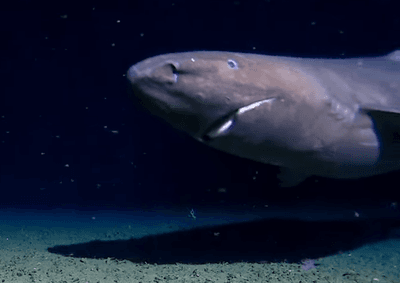


For the first time, a shark has been filmed in the near-freezing waters of Antarctica. Its shock appearance came as a pleasant surprise to scientists as they had no idea sleeper sharks inhabited the waters – and it goes to show how little we still know about our planet’s own oceans.
The lone shark was spotted during an expedition last year by the Minderoo-UWA Deep-Sea Research Centre and Inkfish Expeditions. Sea-faring scientists planted bait and cameras on the seabed near the snow-covered South Shetland Islands, around 120 kilometres (74 miles) north of the Antarctic Peninsula, then waited to see what it had captured.
When they retrieved the equipment and reviewed the footage, they were treated to a huge surprise. In the dim, frigid waters, a barrel-like shark with a dopey expression gently looms past the camera.
“The objective of the expedition was to document all biodiversity in the South Shetland trough, from crustaceans to fish and the results were incredible, but then seeing, after all those days down south, a big tank of a shark show up is one of the reasons why this job is really great,” Professor Alan Jamieson, Director of the Minderoo-UWA Deep Sea Research Centre, told IFLScience.
“Just one of those true wonders of nature.”
Its slow-moving behaviour and tank-like appearance show the individual is a sleeper shark (Somniosidae). This family of sharks lives a strange existence, living extremely long and slow lives in the quiet depths of the ocean. Some species, such as the ultra-long-living Greenland shark, are known to inhabit cold waters in the Arctic, while others are known to live in southern parts of the world’s oceans, such as the Southern sleeper shark. However, scientists had no evidence that they could venture this far south – until this observation in 2025.
The team believes the individual is a South sleeper shark (S. antarticus), although a huge amount of uncertainty still surrounds this taxonomic family.
On the expedition in question, we filmed a total of 400 hours underwater and saw one individual, so they are not something easily encountered; they are quite the elusive animal.
Prof Alan Jamieson
“Sleeper sharks, called Somniosus, are thought to be of three species: Somniosus macrocephalus (Greenland shark), S. pacifica (Pacific sleeper shark), and S. antarticus (South sleeper shark)," Jamieson told IFLScience. "Despite the name ‘antarcticus’, the original wasn’t actually found in Antarctica. Also, there is some ambiguity over whether or not pacifica and antarcticus are the same species or not, so we are not quite sure. As much of the early work was from around 100 years ago, we could really do with some genetic material. So the question isn’t whether or not it is a new species, but whether S. antarticus really exists as a species."
At least five other species of shark have been recorded in the Southern Ocean around Antarctica before, albeit never a sleeper shark. And most of these reports come via accidental bycatch from fishermen, not in situ footage of individuals alive and kicking.
The 2025 observation is especially surprising as most fish that live in Antarctic waters have evolved highly specialised traits to bear the cold waters, such as "anti-freeze" blood. However, there are ways to get around this. The South Pole sleeper shark was spotted at a depth of 490 meters (1,607 feet) where the waters were around 2°C (35.6°F). This is a subsurface layer of relatively warmer water, which the shark likely uses as a corridor to venture further south into waters that would otherwise be too chilly.
The sleeper shark is unlikely to be a rogue traveler making pioneering trips into new waters, nor a lost soul struggling to find its way back home. The researchers suspect that it’s not totally unusual for sleeper sharks to frequent this part of the ocean. However, we still know incredibly little about the deep sea, especially around the Southern Ocean, let alone the lives of sleeper sharks.
“We presume it has been around for a very long time, but the operational weather window in Antarctica is just a few months of the year, so exploration at depth is very short, plus their geographical distribution is massive, yet their population density is very low," said Jamieson. "On the expedition in question, we filmed a total of 400 hours underwater and saw one individual, so they are not something easily encountered; they are quite the elusive animal."


 1
1