Nature
 PUBLISHED


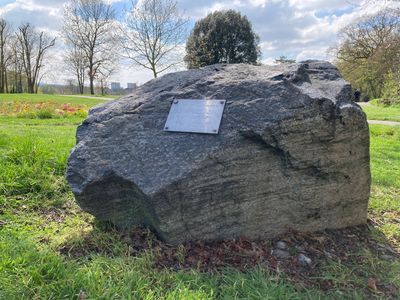


Take a wander through the outskirts of south London and you might stumble across a fragment of Earth’s deep past: a collection of rocks forged more than 2 billion years ago. Older than the first stirrings of complex life, they are among the most ancient rocks in Western Europe. But what are they doing in a leafy suburb?
The rocks originated far away on the Hebrides, the rugged archipelago that sits on the northwestern tip of Scotland like a mohawk. Most of the Hebrides is comprised of this primeval geology, including the islands of Raasay, Skye, Rùm, Coll, Tiree, and Iona.
Known as the Lewisian gneisses, or Lewisian gneiss, the rocks are the oldest rocks in Western Europe, some of which date back to around 3 billion years ago.
They began as molten rock that solidified deep within the Earth’s crust. Over time, these rocks were thrust down to depths of more than 25 kilometers (15.5 miles), where colossal heat and pressure transformed them.
The minerals inside were forced to recrystallize and align, producing the distinctive light and dark layers still seen in the geology. In the next twist, tectonic movements compressed and forced these bands like a giant accordion, creating the swirling patterns that make the Lewisian gneiss today.
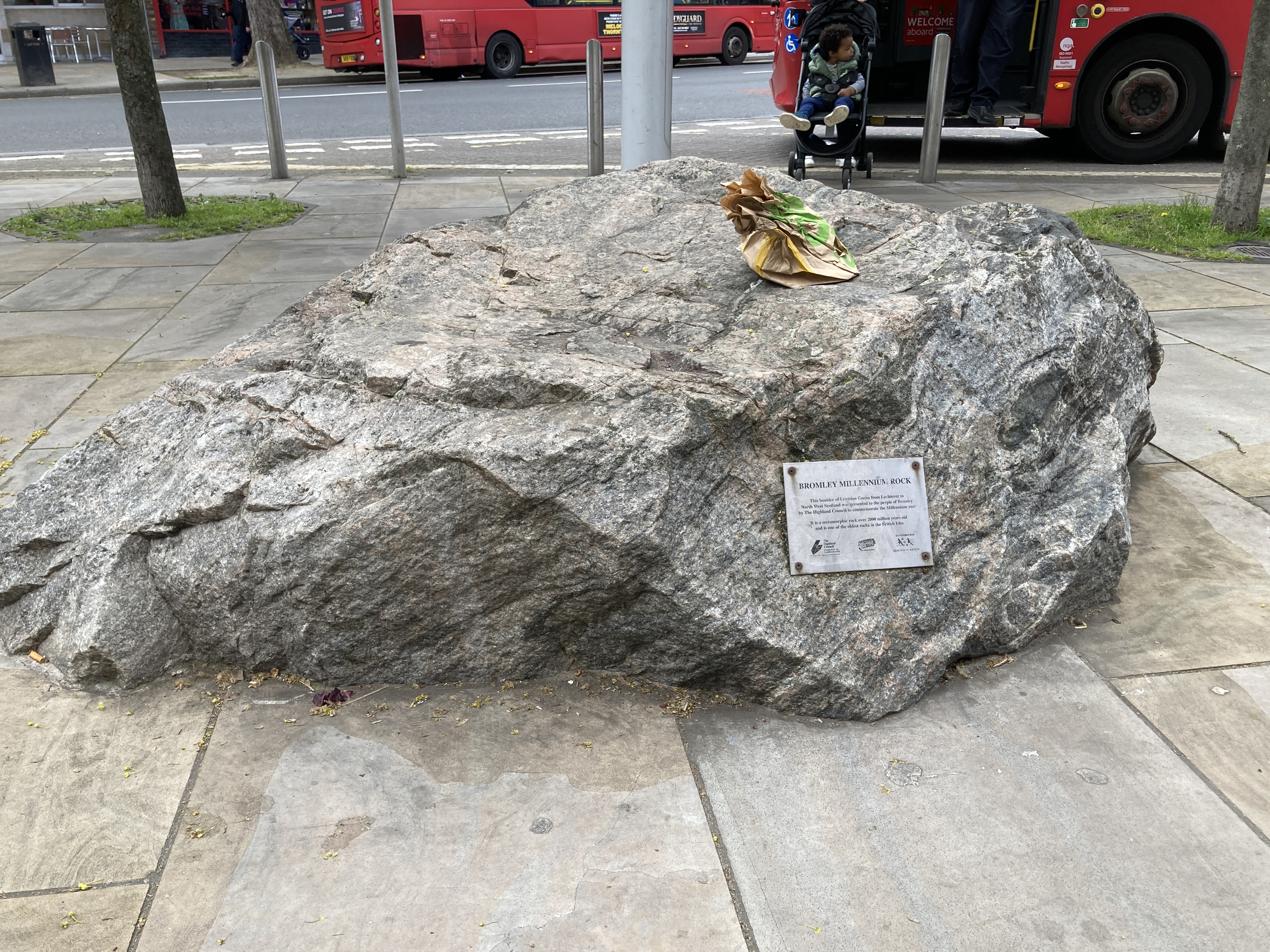
If you’re unfamiliar with the geography of Great Britain, the Hebrides lie over 750 kilometers (466 miles) from Greater London; it's almost the entire stretch of the British Isles from north to south. Yet, somehow, a handful of these ancient Lewisian gneisses ended up in Bromley, a borough on the capital’s southeastern edge.
The journey wasn’t natural. It was the brainchild of the Ravensbourne Geological Society, which drummed up a poignant way to mark the turn of the new millennium in 2000.
In 1999, Austin Lockwood, a passionate amateur geologist leading the group, had been exploring northwestern Scotland when he was introduced to some blocks of Lewisian gneiss that were approximately 2 billion years old (or 2,000 million years old).
He saw them as a perfect symbol to hail the arrival of the year 2000. While humanity celebrated a single year turning, these rocks had silently endured billions of years, a reminder of the vastness of geological time. Bringing them to London was a way to let people perceive a piece of that immensity, connecting the fleeting human calendar to the deep history of the Earth.
Along with the so-called Millennium Rocks placed around the town, Lockwood arranged the collection of thousands of small pieces of prehistoric rock, which were given to each of the 45,000 school children in the borough.
In 2024, a map of the so-called Millennium Rocks in Bromley was compiled by Londonist. So far, they’ve crowd-sourced information that’s led to the identification of at least 12 achingly old stones, although other records suggest there are at least 19 in the borough.



 1
1