Nature
 PUBLISHED


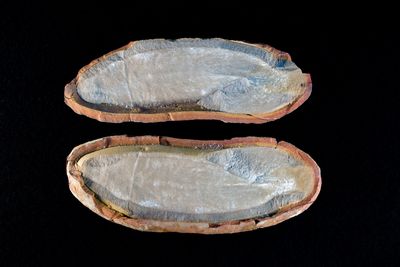


Modern-day Chicago is known for its gusty winds and unapologetically chunky pizza, but 300 million years ago, the region was a lush land of tropical swamps, river deltas, and shallow seas. This abundance of extinct plant life and animal life is incredibly well-preserved at the Mazon Creek fossil site – a treasure trove that’s proving even more remarkable than once believed.
Located near Morris in the southwestern Chicago metro area, the fossil bed first attracted miners seeking coal in the 19th century. What they unearthed instead was a spectacular archive of prehistoric life.
The thousands of fossils here date to the Carboniferous Period, around 300 million years ago, an era of major change to life on Earth, including the emergence of the first reptiles. The remains have managed to stay remarkably intact as they’ve been encased within siderite (iron carbonate) concretions.
Researchers have previously argued that the lifeforms can be split into two distinct groups: the Braidwood and Essex assemblages. The former represents an offshore coastal water ecosystem that’s rich in plant-life, while the latter is more akin to a river delta filled with a diverse collection of freshwater organisms, as well as washed-in terrestrial plants. It turns out, this may be an oversimplification.
In a new study, scientists at the University of Missouri reanalyzed some 300,000 siderite concretions from around 350 different localities at Mazon Creek. Their findings suggest that there needs to be a further subdivision of the Essex assemblage into two distinct sub-assemblages, named the Will-Essex and Kankakee-Essex.
The Will-Essex zone sat in the nearshore–offshore transition, its seafloor bustling with clams and marked by telltale trace fossils. Farther out, the Kankakee-Essex zone was ruled by cnidarians, a phylum including jellyfish, hydroids, sea anemones, and corals.
This means that the magnificent site actually contains three distinct ancient environments – freshwater, transitional marine, and offshore – each with unique animal life.
“We found three readily identifiable paleoenvironments, including the unique characteristics of a benthic marine assemblage representing a transitional habitat between the nearshore and offshore zones,” Jim Schiffbauer, lead study author from the Department of Geological Sciences at the University of Missouri, said in a statement.
“These ancient environments were each dominated by specific groups of animals, for example freshwater animals nearest to shore, jellyfish and sea anemones further offshore, and marine clams and worms in the transitional zone,” he added.
Looking ahead, the team plans to investigate how the Mazon Creek ecosystems connect to the underlying “Colchester coal layers”, the very deposits that first drew miners and fossil hunters to the area. They’re also teaming up with private-sector partners and researchers at the University of Toronto to reconstruct how these ancient worlds operated.
“It offers a real snapshot of the incredible diversity present in the late Carboniferous Period and allows for inferences about the complexity of food chains and how this ecosystem functioned,” Schiffbauer said. "Now, we have an unparalleled and statistically supported look at the interconnected terrestrial, estuarine and marine life of the Carboniferous Period.”
The study is published in the journal Paleobiology.


 1
1