Humans
 PUBLISHED




Cheese has something of a mystique about it. If we were to ascribe personalities to foodstuffs, cheese would be priestly in some way. In fact, I’ve seen rooms fall silent when a good cheeseboard appears. But while I’m (mostly) joking about this supposed reverence, it may actually have ancient roots. In fact, the oldest cheese ever discovered may have been intended as a food for the afterlife.
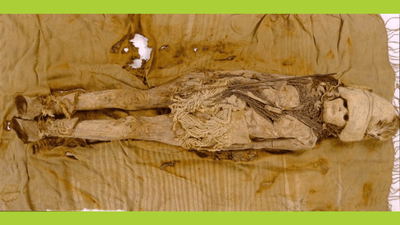
About two decades ago, archaeologists discovered a strange white substance scattered across the heads and necks of ancient mummies in the Xiaohe cemetery, in northwestern China’s Tarim Basin. These Bronze Age bodies are between 3,300 and 3,600 years old and were buried in an incredibly dry and salty soil, which naturally mummified them.
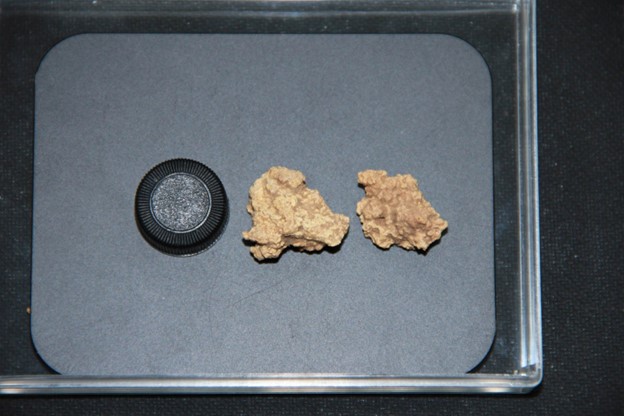
From the start, the scientists believed the white substance might have been a type of fermented dairy product, but they couldn’t figure out exactly what kind. However, given the substance’s presence in the ancient tombs – coffins shaped like boats – and that it appeared to have been deliberately placed where it was, archaeologists agreed that it likely represented a funerary good.
Although it is difficult to know for sure, it is possible that the ancient Xiaohe people were giving the deceased a valuable, life-sustaining resource for their journey after death.
In 2014, Chinese archaeologists first identified the substance as a type of soft cheese, similar to kefir cheese. However, confirmation of this did not occur for nearly 10 years. In 2024, scientists reported they'd finally solved the long-fermenting mystery: the white substance was indeed kefir cheese and they had even identified the bacteria that created it.
By extracting DNA from the samples found in three different tombs at the cemetery, the team identified ancient DNA from both cows and goats in the samples. In other cheesemaking traditions, such as Middle Eastern and Greek practices, cheese was made from the mixing of milk types, but the Xiaohe people used different types of animal milks in separate batches.
The DNA analysis also demonstrated that the cheese contained bacterial and fungal species such as Lactobacillus kefiranofaciens and Pichia kudriavzevii. Both microorganisms are often used in kefir grains today – these are symbiotic cultures of probiotic bacteria and yeast that can be used to ferment milk into kefir cheese. They essentially behave like sourdough starters.
Today, there are two major groups of Lactobacillus bacteria, one originating in Russia and one in Tibet. The former is the most commonly used in the US, Japan, and Europe for fermenting yogurt and cheese.
But the team’s analysis of the ancient kefir allowed them to trace how these bacteria have evolved. They found that the ancient Lactobacillus kefiranofaciens bacterium is more closely related to the Tibetan group, undermining the belief that kefir originated solely in the North Caucasus mountains where Russia is today.
It seems the cheesemaking culture of the Xiaohe people has been maintained in Northwestern China’s Xinjiang region ever since the Bronze Age.
The scientists also revealed how Lactobacillus kefiranofaciens improved its genetic stability and fermenting abilities through genetic exchange across time. Compared to ancient Lactobacillus, current bacteria are less likely to cause immune responses in human intestines, but this was not always the case.
Over the centuries, it seems, Lactobacillus has become more adapted to human hosts through this process of genetic exchange.