Humans
 PUBLISHED





This week, news broke that microbiologists had analyzed the ancient microbiome of the 5,300-year-old mummy Ötzi and successfully isolated ancient, still active microbes from his body. The researchers even used these prehistoric yeasts to bake a loaf of "very, very good" sourdough bread, according to Live Science.
It's a daring move, to be sure, but they are far from pioneers. In fact, there’s a long-standing tradition of scientists eating and drinking their subjects, most of whom lived to tell the tale. Here’s a small buffet of those instances, as well as some that were just ill-founded rumors.
Mammoth is “agreeable to the taste,” apparently
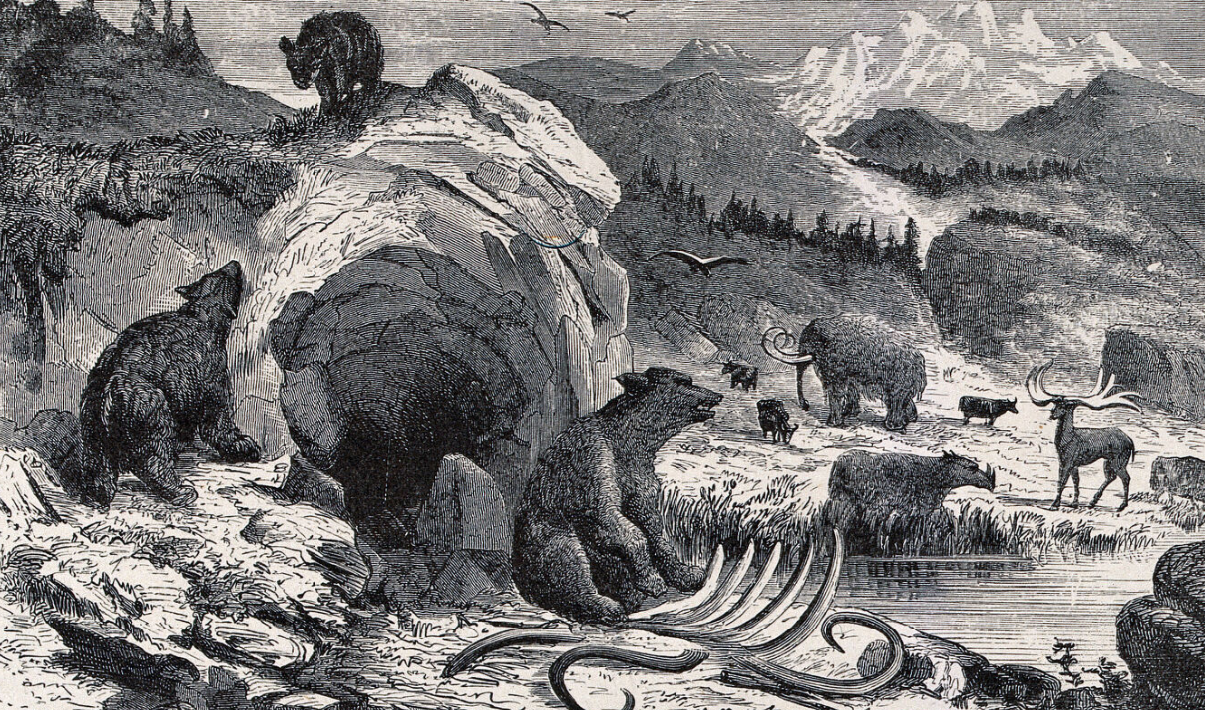
At the turn of the 20th century, Russian scientist Otto Ferdinandovich Herz had returned to St Petersburg after unearthing a mammoth carcass from the ice near the Berezovka River in Siberia.
Hoping to make a splash at the grand unveiling of his discovery at the Imperial Museum, he reportedly served an elaborate banquet featuring mammoth meat.
One account of the meal declared it an overwhelming success: "particularly the course of mammoth steak, which all the learned guests declared was agreeable to the taste, and not much tougher than some of the sirloin furnished by butchers of today."
Mammoth Jerky
But Herz and his presumably intoxicated entourage weren't the only people to sample mammoth in the early 20th century. There's another anecdote from James Oliver Curwood, an American author and adventurer, who in 1913 was exploring the upper reaches of North America alongside a group of Indigenous people. His expedition stumbled across a semi-frozen mammoth recently exposed by a collapsing cliffside — and without much hesitation, they decided to take a bite.
"The flesh was of a deep red or mahogany color, and I dined on a steak an inch and a half thick,” he commented. “The flavor of the meat was old not unpleasant but simply old and dry. That it had lost none of its life-sustaining elements was shown by the fact that the dogs throve upon it."
50,000-Year-Old Soup
Speaking of prehistoric delicacies, palaeontologists have also eaten a bison that died 50,000 years ago. The so-called “Blue Babe” was a mummified Alaska steppe bison discovered by gold miners in 1979, then handed over to scientists for research at the University of Alaska Museum of the North.
After making some headway on their research in 1984, the team decided to throw a meal. The choice of cuisine was obvious.
“To climax and celebrate Eirik Granqvist’s [the taxidermist] work with Blue Babe, we had a bison stew dinner for him and for Bjorn Kurten, who was giving a guest lecture…” palaeontologist Dale Guthrie wrote of the event. “A small part of the mummy’s neck was diced and simmered in a pot of stock and vegetables.”
“We had Blue Babe for dinner. The meat was well aged but still a little tough, and it gave the stew a strong Pleistocene aroma, but nobody there would have dared miss it.”
Plutonium Picnic
Plutonium is radioactive. As such, most scientists and chefs recommend not putting this metal anywhere near your mouth. However, in August 1944, one unlucky scientist did not have much of a choice.
While working on the Manhattan Project, a vial of plutonium chloride dissolved in acid exploded, with a small amount going into the mouth of a chemist called Donald F. Mastick. He reportedly said it had a distinctly metallic taste – not candy, as some viral posts on social media have claimed.
Needless to say, this was an unfortunate predicament to find yourself in. Mastick was forced to swish out his mouth and spit out the contents several times, then was subjected to multiple rounds of stomach pumping. As plutonium is so precious, the chemical was recovered from his stomach contents to be reused in future experiments.
Remarkably, Mastick survived the incident with only mild effects. In fact, he went on to have a long and illustrious career as a chemist before passing away in 2007 at the ripe old age of 87.
Heavy Water
In another episode of Chemists Behaving Badly, here are the scientists who drank heavy water.
Heavy water is a form of water with a unique twist to its atomic structure. Instead of ordinary hydrogen, its atoms are replaced by deuterium, a heavier isotope of hydrogen that carries an extra neutron, making it D₂O rather than H₂O. It occurs naturally in extremely tiny amounts, but most is produced synthetically for use in nuclear reactors.
Back in the 1930s, when scientists had started toying around with this strange elixir, questions arose over whether it was safe for human consumption. Enter Klaus Hansen, a pharmacologist at the University of Oslo.
Under the careful watch of his colleagues, who were ready in case he passed out, he took the first of a series of gulps of the liquid.
“I lifted the beaker to my lips. Immediately, I felt a burning dry sensation in my mouth and then I could feel nothing. First, my mind became excited and impressed with a feeling of crisis. I had some shock. Then I said to myself, ‘Be quiet—you are simply going through a minor experience.’ Then it was all over. I could see, hear, breathe, feel and walk just as before," he reportedly said.
“Within the next few weeks, I shall either be seriously ill or able to tell what the effects are,” he added.
Fortunately, Hansen wasn’t poisoned and he survived the experiment with little problem. This was a pleasant surprise, since heavy water had been found to kill guppies, tadpoles, flatworms, and plant seeds. Mice could drink some amounts, but it made them appear drunk and incredibly thirsty.
As for the taste of heavy water, that was later affirmed by Gioacchino Failla and Harold Urey, a Nobel Prize-winning chemist: “Neither of us could detect the slightest difference between the taste of ordinary distilled water and the taste of pure heavy water," Urey and Failla wrote of the experiment.
“It might be mentioned in this connection that one cubic centimeter of water is not too small an amount to taste properly, since both of us could detect plainly the characteristic 'flat' taste of distilled water in both cases. It may be concluded, therefore, that pure deuterium oxide has the same taste as ordinary distilled water."
Eggs are a little different in Antarctica
Polar researchers face some of the harshest conditions that scientists have to grapple with. Sometimes, desperate times call for desperate measures.
In 2022, IFLScience spoke to Robert Headland, senior associate of the Scott Polar Research Institute at the University of Cambridge, who shared his experience eating penguin eggs. Many species of penguin eggs have been eaten since the “Golden Age” of exploration, he explained, but he was most personally familiar with the Gentoo penguin (Pygoscelis papua).
“They are about duck egg size, larger and more rounded than those of hens. The shell is thicker and stronger than that of a hen and some caution is needed on cracking one without making a mess. The uncooked albumen is translucent with a slight greenish tint compared to that of a hen. The yolk is much brighter, much more orange [than] a hen's,” Headland told IFLScience.
“On cooking, boiling (about 10 minutes), or frying, the albumen coagulates but remains translucent, it does not whiten. [The] yolk solidifies and retains its bright colour. If the eggs are whipped, for an omelette, or scrambled, the result is not greatly different from hen, duck, or most other eggs.”
If you’re wondering what they taste like, the short answer is not great: “The taste is somewhat fishy as krill form a major part of the diet,” said Headland. “A personal comment is that penguin eggs taste much better when you are hungry.”
With that said, there are ways to jazz up this delicacy. For instance, Headland once made a pavlova dessert from a penguin egg, which he described as “beautiful.”
Very Well-Aged Champagne
Champagne can age exceptionally well. Under the right conditions, a fine bottle of bubbly can be stored for years, if not decades, and still taste sublime. However, 170 years might be pushing it.
In 2023, marine archaeologists recovered a shipwreck from the coast of Finland's Åland archipelago that sank to the bottom of the Baltic Sea in 1852. On board were 168 bottles of champagne made by the Veuve Clicquot Ponsardin, Heidsieck, and Juglar (known as Jacquesson since 1832) champagne houses.
Naturally, they had to have a sip. Unfortunately, after sitting at the bottom of the ocean for a century and three quarters, the taste left something to be desired. Describing the taste in a peer-reviewed paper, a team of researchers described the champagne as tasting of “animal notes,” “wet hair,” “reduction,” and sometimes "cheesy".
Presumably, it would get a 1-star on Vivino.
The "media invention"
Have you ever heard the rumor about the geologists who drank the world’s oldest water, an ancient liquid that had been sealed underground for around 2.64 billion years?
It’s a great tale, but not totally accurate. Earlier in 2026, IFLScience spoke to one of the scientists in question, Barbara Sherwood Lollar, a professor in the Department of Earth Sciences at the University of Toronto, who set the record straight.
“Alas, 'and she drank the water’ is a media invention. I did not and wouldn’t,” she told IFLScience. “But if you have seen the videos, you have seen there are flowing, bubbling waters, very actively in some places. Some drops inevitably land on you, and from that one can tell how bitter they are."
"I believe this so-called ‘quote’ or story came about because I was asked, ‘Can people drink the water?’ and I said, ‘No, it would taste terrible,'" she added.
“It can be many times more saline than seawater – definitely not drinkable.”