Humans
 PUBLISHED


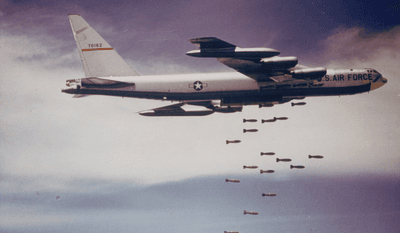


There have been 32 known incidents where the US has accidentally detonated, misfired, or lost nuclear warheads (at least those that the public is allowed to know about). Just one of these accidents, however, became an international scandal and environmental disaster thanks to a cozy seat cushion for someone's ass.
The incident unfolded in early 1968, a time when The Beatles were blasting on the radio, the Vietnam War was raging, and the threat of full-blown nuclear war between the US and the USSR was still very much on the cards.
Ever paranoid about the atomic threat, the US had launched an airborne patrol of up to 12 nuclear-armed bombers to constantly patrol the skies. Known as Operation Chrome Dome, the fleet of planes flew 24/7, non-stop from 1961 to 1968.
The operation's routes regularly shifted to keep the USSR on its toes, but many of the flights cruised around the upper reaches of the Northern Hemisphere, a nice vantage point from which the US could hop over the Soviet Union and casually obliterate a few million people.
The incident unfolds, then explodes
On the morning of January 21, 1968, a B-52 bomber loaded with four B28FI thermonuclear bombs flew out of Plattsburgh Air Force Base in New York to take up its shift policing the skies.
It was mid-winter and temperatures were achingly low as the giant plane headed northeastwards into the Arctic Circle by mid-afternoon. In a struggle to keep warm, some of the crew had reportedly covered parts of the cabin with cushions. Unbeknownst to them, they had been placed over a heating vent that was blasting hot air from the overheating engine. The cushions turned into a smoldering tinder, and flames slowly engulfed the aircraft.
As the plane headed near the US Thule Air Base in Greenland, the crew bailed. Six of the seven successfully parachuted to safety, but one crew member, co-pilot Leonard Svitenko, attempted to escape through the lower hatch and sustained a fatal head injury.
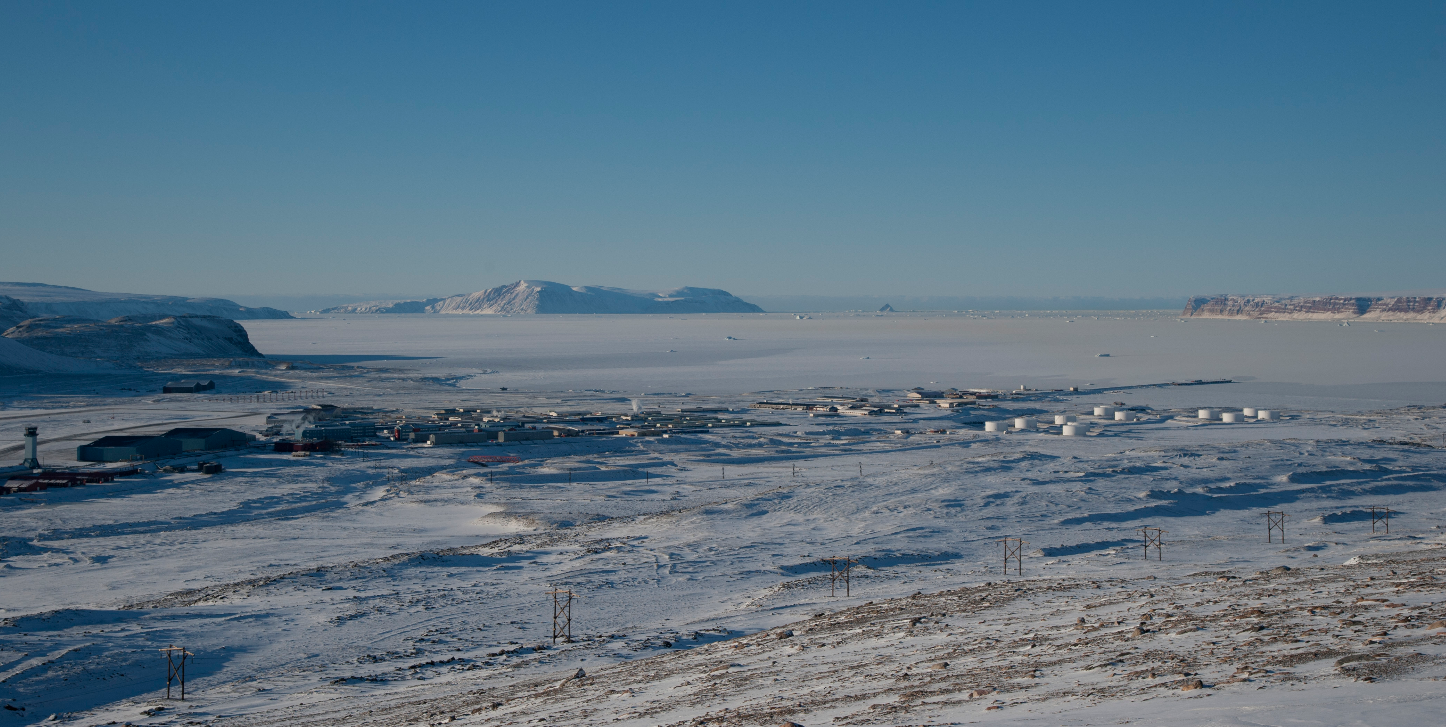
They drifted down to the ice-covered expanse below, watching the plane turn into a fireball as it nosedived towards Wolstenholme Fjord. The plane exploded on impact, rupturing the nuclear warheads and spreading radioactive debris for miles around like a dirty bomb.
It was about to become a very long day for the US State Department, to say the least. First, they had to find the bombs and the nuclear debris, then they had to consider how they were going to clean up the mess. To make matters even more complicated, nukes weren’t technically allowed in Greenland, a territory under Danish control, and Denmark was keen to maintain its reputation as a nuclear-free zone (at least in public).
“Aircraft carried four repeat four nuclear weapons,” reads a telegram between the State Department and the US Embassy in Denmark. "Wreckage covers five mile area. Difficult climate conditions and lack of daylight hampering search operations. Special USAF team being sent.”
What followed was a nine-month cleanup operation, one of the largest and strangest in Cold War history. Hundreds of US airmen and Danish workers spent the sunless Arctic winter traveling via dog sleds and scraping contaminated ice, snow, and wreckage off the fjord by hand. Greenlandic Inuit people reportedly joined the charge, building a village of igloos to shelter the crews when the wind and chills became too much to bear.
Eventually, some 600 containers of contaminated snow had been gathered and were shipped to the US. Three of the nuclear bombs were accounted for, but the fourth was never fully recovered, presumably buried somewhere in ice.
"Thulegate"
Dealing with the contamination was one thing, but the political fallout was just as tricky to traverse. Publicly, the US and Denmark claimed the B-52 had been diverted over Greenland because of an unexpected in-flight emergency. But both governments were lying.
In the 1990s, declassified documents and journalistic investigations revealed that nuclear-armed bombers had been routinely flying over Greenland throughout the 1960s, unbeknownst to the Danish public. It became a political scandal dubbed “Thulegate” that deepened when it was revealed the Danish government had secretly signed a deal with the US to hold 50 nuclear weapons at the Thule base between 1958 and 1965.
Almost six decades later, Washington's interest in Greenland hasn't cooled with President Trump's repeated demands to acquire the territory, one way or another.
Hopefully, a chilly pilot won't threaten to turn tempers nuclear once again.