Nature
 PUBLISHED
 1
1


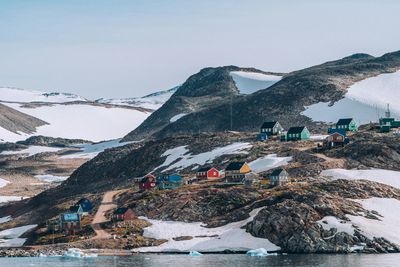


Greenland has once again made headlines after US President-elect Donald Trump doubled down on his interest in purchasing or gaining control over the semi-autonomous Arctic territory of Denmark. His remarks have sparked widespread curiosity, criticism, and concern. So, what exactly is driving Trump's fascination with Greenland? The short answer: natural resources and geopolitical maneuvering.
Greenland is covered by the world's second-largest ice sheet, beaten only by Antarctica. Under this vast expanse of ice lies a hidden world of colossal canyons, prehistoric plant remnants, and even traces of human activity. In northwestern Greenland, the buried ruins of a US military research base remain concealed beneath the frozen surface.
The region's complex and unique geological history has shaped it into a land rich with fascinating features, some of which hold significant value in the 21st century.
Valuable Metals And Minerals
Greenland is a largely untapped treasure trove of mineral resources vital to the global economy. A 2023 report found that Greenland possesses 25 of 34 minerals that the European Commission considers to be "critical raw materials".
This includes precious metals – like gold and silver – and valuable metals essential for battery technology – such as cobalt, copper, nickel, and lithium – that are increasingly sought after for their role in the green energy revolution. Additionally, Greenland boasts deposits of valuable gemstones, including olivine and rubies, according to the Greenland Institute of Natural Resources.
Fossil Fuels
Greenland is home to natural reserves of coal, gas, and oil – although the country’s relationship with fossil fuel extraction is complicated.
Since the 1970s, oil exploration has been carried out in the region by a handful of US and European corporations – including Shell, Chevron, and ExxonMobil – although their efforts were largely fruitless. In 2021, Greenland took the bold move of ceasing further oil exploration and extraction projects reportedly saying the environmental consequences were “too great".
Nevertheless, a report by the US Geological Survey estimated that up to 31.4 billion barrels of oil lay beneath the East Greenland Rift Basins Province.
Geopolitical Chess
Along with its rich natural resources, Greenland is in an important position for the US to counter Russia and China, all of whom see the Arctic as a strategic arena for power.
As a consequence of catastrophic climate change, new opportunities will arise in the Arctic and many countries hope to take advantage. Warming temperatures are set to see the Arctic have less ice for longer periods, opening up its waters –including the Northwest Passage – for faster shipping routes across the top of the Northern Hemisphere. Those who control these "new" waters will have a massive advantage.
Given what’s at stake, some nations with Arctic territories – including Canada, Denmark, and Norway – have recently demonstrated resistance to the growing influence of Russia and China in the region. The US already has an Arctic presence in Alaska, but Trump’s latest comments show an interest in consolidating that foothold, potentially by any means necessary.
However, by trying to “secure” this country for the US, Trump will undoubtedly come into conflict with his North American and European allies, not least the people of Greenland who have long sought independence from another foreign power, Denmark.
Trump’s talk of buying Greenland seems unprecedented and outlandish, but he’s not the first American politician to flirt with the idea. In fact, the notion of acquiring Greenland has surfaced at various points in American history.
After successfully negotiating the purchase of Alaska from Russia in 1868, US Secretary of State William H. Seward said he thought the idea of buying Iceland and Greenland was “worthy of serious consideration”. In 1946, the Truman administration offered Denmark $100 million for the island, calling it a “military necessity.”
Despite these attempts, none of the proposals gained momentum for good reason: neither Greenland nor Denmark are interested in selling up.
“Greenland is ours. We are not for sale and will never be for sale,” Greenland Prime Minister Múte Bourup Egede said in a statement following Trump's recent remarks.