Humans
 PUBLISHED


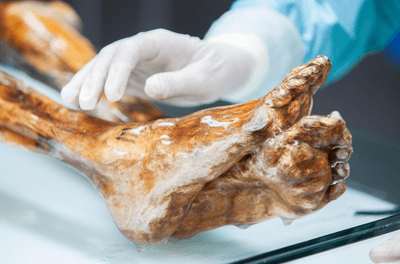


This man perished over 5,300 years ago, but his microbiome may still be tingling with life. Scientists have managed to recover bacteria, fungi, and other microbes from the frozen body of Ötzi the Iceman. Remarkably, some of the ancient yeasts were even able to grow and reproduce, raising the extraordinary possibility that life still lingers within the famous mummy.
Ötzi the Iceman was discovered in 1991 by a pair of unsuspecting holidaymakers taking a hike through the Ötztal Alps, the mountain range that straddles western Austria and northern Italy. When they first spotted the body poking from the ice, it was assumed to be the remains of a recently deceased mountaineer.
However, excavation soon revealed the deep-freeze cadaver was, in fact, a remarkably well-preserved man who had died around 5,300 years ago. Thanks to the sub-zero temperatures and dehydration in the ice, the body remained in relatively good shape, with much of his tattooed skin, internal organs, and muscular tissues still intact.
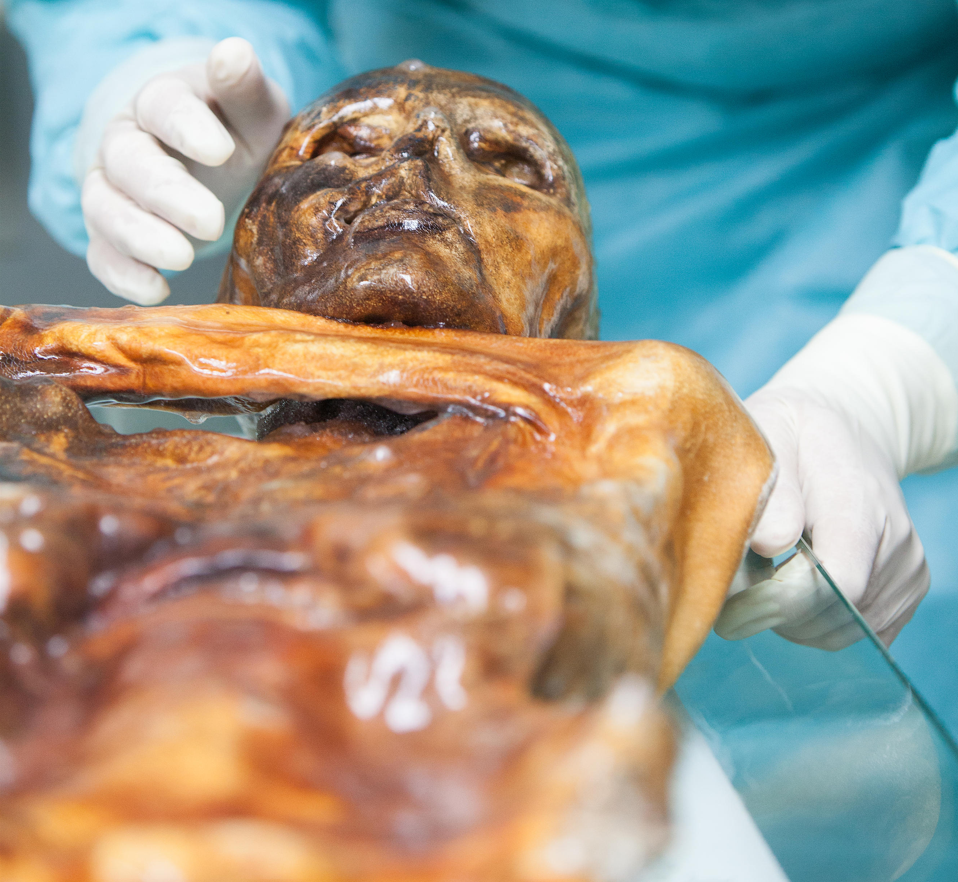
In a new study, researchers at Eurac Research set out to document the microbial community associated with Ötzi's remains. Using skin swabs, tissue fragments, and meltwater samples from the mummy, the team catalogued the diverse array of microbes inhabiting the mummy, offering a rare glimpse into the fungi and bacteria that once occupied his skin, gut, and bodily crevices.
Intriguingly, parts of Ötzi's microbial makeup closely resemble the gut communities found in other ancient human remains, but are scarcely detected in people living in modern industrialized societies.
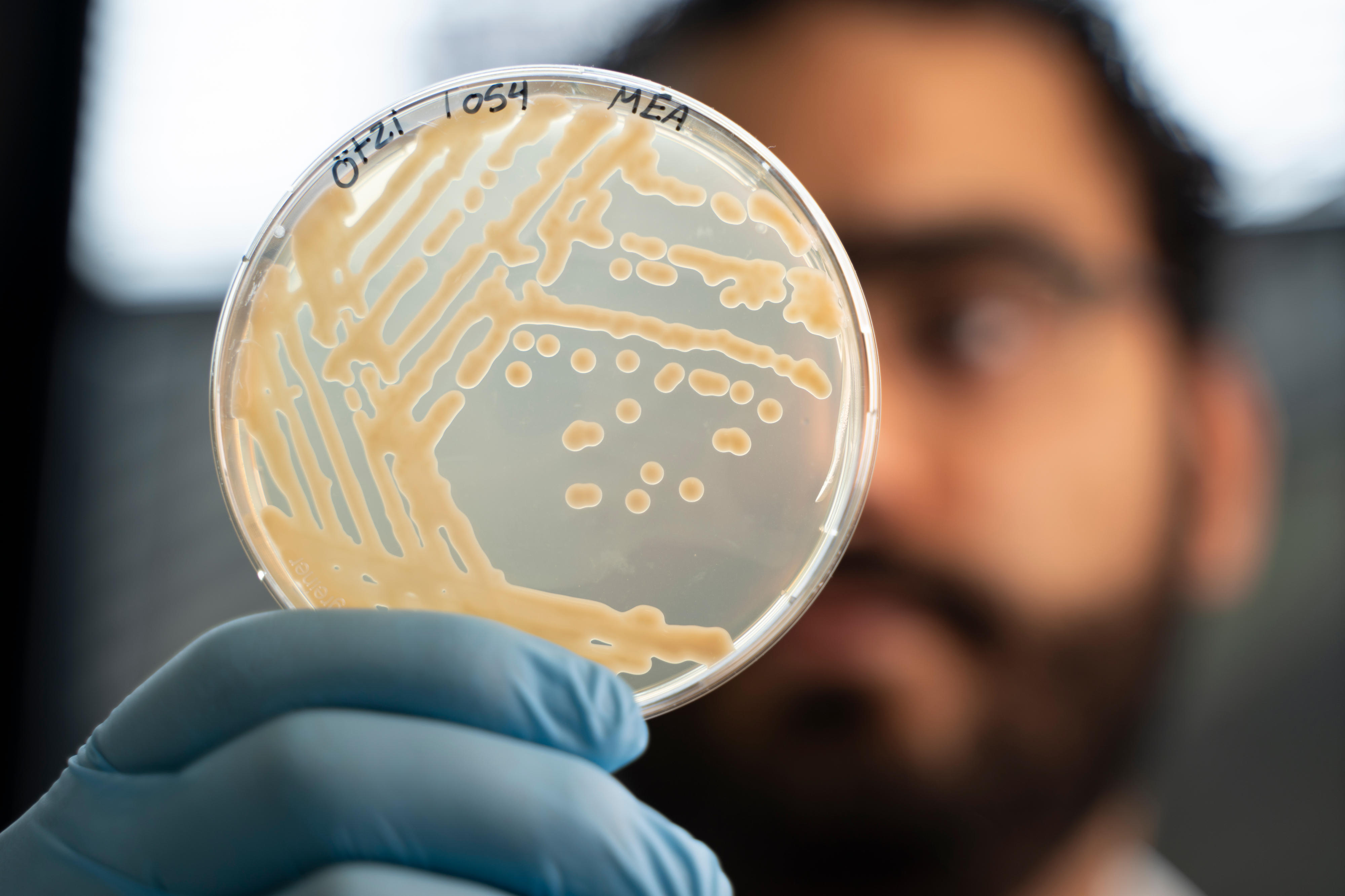
Most intriguing was the analysis of cold-loving yeasts – Phenoliferia, Glaciozyma, Goffeauzyma, and Mrakia – from samples collected in 2019. The researchers say they’re “quite confident” some of these yeasts are still alive, despite being frozen for 5,300 years.
“We actually grew the yeasts in the laboratory – we cultured living colonies from samples taken from Ötzi's body. You cannot argue with a growing colony,” lead author Mohamed Sarhan, a microbiologist studying ancient DNA at Eurac Research in Italy, told IFLScience.
Finding one of the living yeasts inside the stomach was also a moment that stopped us in our tracks.
Mohamed Sarhan
The team found additional evidence in the genetic material of the prehistoric yeast. Ancient DNA is typically fragmented and heavily damaged, but the yeast DNA recovered in 2019 consisted of longer fragments with significantly fewer signs of degradation than samples collected in 2010.
According to the researchers, this pattern is difficult to explain through “passive preservation” alone and instead suggests the presence of newly synthesized DNA from actively dividing cells.
Furthermore, one yeast in particular, Glaciozyma, has become substantially more abundant over the past decade while showing decreasing levels of DNA damage.
“The dramatic increase in relative abundance of Glaciozyma between 2010 and 2019 is itself evidence of replication – dormant or dead cells do not multiply,” commented Sarhan.
While the presence of microbes wasn't entirely surprising – scientists have detected them on samples from Ötzi before – the researchers were struck by the degree of metabolic activity they found.
“We always suspected that the current storage conditions – minus six degrees Celsius, nearly 100 percent humidity – might not be as biologically inert as previously assumed. Cold-adapted microorganisms, particularly psychrophilic yeasts, are known to remain active at sub-zero temperatures in natural glacier environments, so finding them on Ötzi was not entirely unexpected,” said Sarhan.
We strongly suspect Ötzi is not unique.
Mohamed Sarhan
“What did surprise us was the degree of activity. The yeast Glaciozyma, for instance, went from being a minor presence in 2010 to completely dominating the yeast community by 2019 – that kind of dramatic proliferation over just nine years was genuinely striking. Finding one of the living yeasts inside the stomach was also a moment that stopped us in our tracks,” he added.
The question is whether this situation is unique. Certainly, few people can say they will perish on top of a glacier and remain frozen for millennia, only to be studied by scientists over 5,300 years later. However, the researchers believe that the microbiome of Ötzi is far from singular.
“We strongly suspect Ötzi is not unique – he is simply the best studied. The conditions that preserved him – cold and low oxygen – are not exclusive to the Alps. Permafrost mummies from Siberia, Alaska, and the Arctic, as well as remains recovered from peat bogs and high-altitude glaciers in South America, share many of the same preservation characteristics,” explained Sarhan.
“He has essentially served as a proof of concept – demonstrating that ancient mummies are dynamic biological systems rather than frozen snapshots. We hope our study motivates similar microbiome investigations on other well-preserved ancient remains around the world,” he concluded.
The study is published in the journal Microbiome.