


 Humans
 PUBLISHED


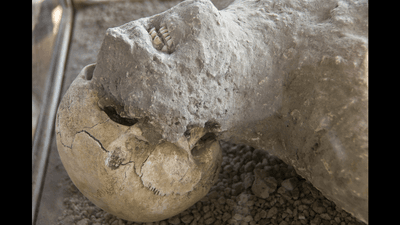


In 79 CE the ancient Roman city of Pompeii was destroyed by a catastrophic volcanic eruption that unleashed 32 hours of hell. It was rather unusual as devastating natural disasters go, because although Vesuvius unleashed the destructive power of 100,000 atomic bombs, Pompeii itself became a site of remarkable preservation.
Not just of buildings, but of human remains. Yes, it’s time we talk about the teeth in those Pompeii plaster casts.
The bodies of Pompeii
One would imagine that such an eruption would level a city, leaving nothing in its wake but death and destruction. Instead, Pompeii was buried in a thick layer of dry volcanic ash and pumice.
Like popping a lid on a Tupperware box, it created a seal that protected everything underneath from air and moisture. As such, almost 2,000 years on, much remains of the ancient city that might have otherwise been lost to erosion.
And the buildings aren’t all that have stood the test of time.
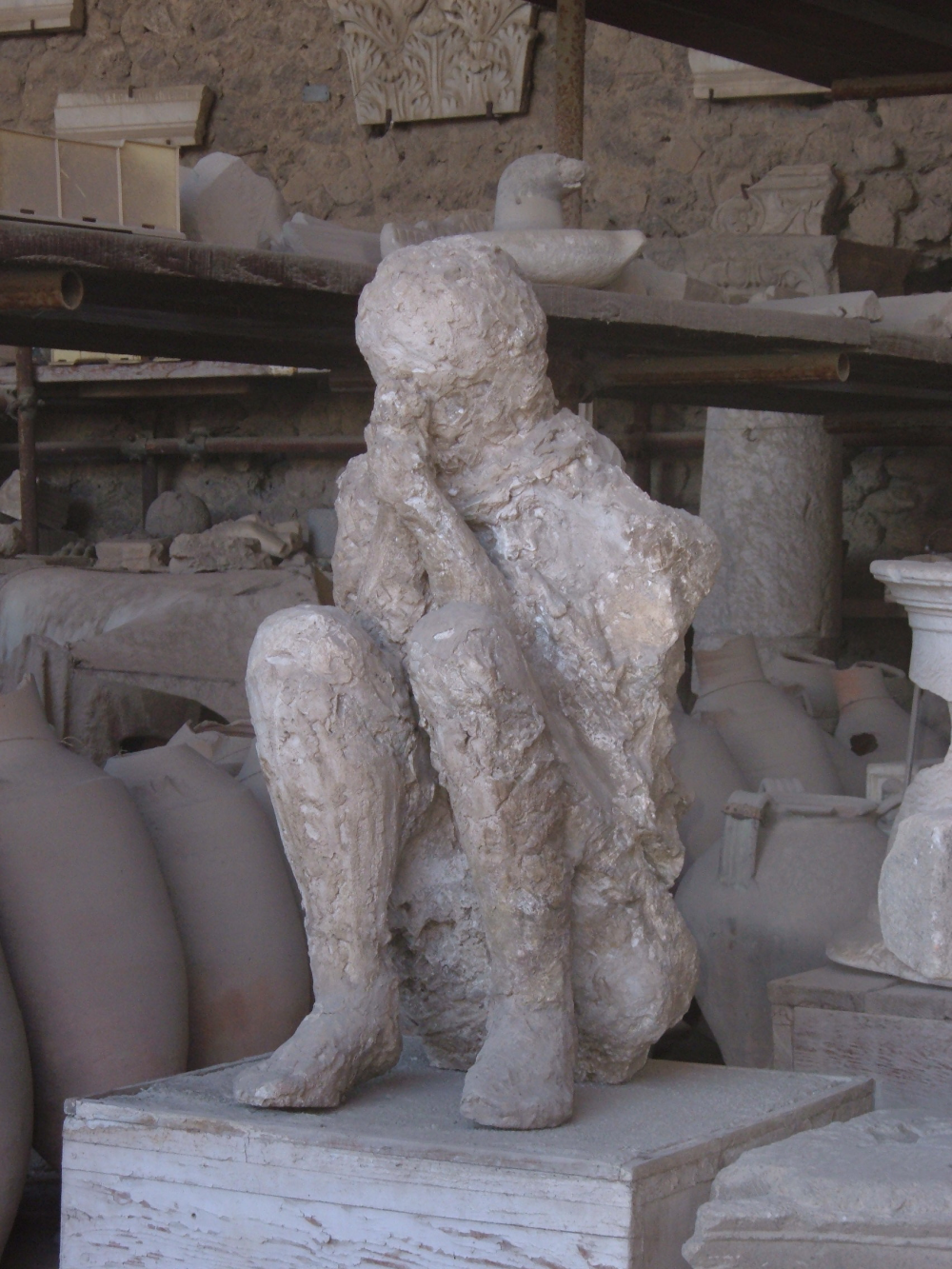
Humans were among the fallout trapped beneath the pumice and ash fall that rained down from the sky. As all that had covered them turned to rock it sealed each victim in a hard shell.
It was enough to preserve their posture at time of death, but it didn’t prevent the flesh and soft tissue inside from decomposing. Eventually all that was left behind was an empty cavity, creating a mold of the corpse trapped within.
Recreating the dead
In 1863, Italian archaeologist Giuseppe Fiorelli came up with the idea to fill these casts with plaster of Paris. The figures could then be liberated from the rock and more than 100 have been made, but there’s more to them than just plaster.
A lot of people sadly did lose their lives, but there were survivors, too.
Prof Caitie Barrett
Though much of the corpses had decomposed, mineral fragments including bones and teeth lingered on. If it was still inside the shell when Fiorelli’s plaster was poured in, then it became part of totally unique sculpture.
Some exhibit a seemingly perfect row of teeth (though their dental hygiene wasn’t as good as some would have you believe). Others were even found with evidence of clothes, begging the question: how did they die if they were still so intact?
As Prof Caitie Barrett, NatGeo archaeologist on the recent series Pompeii: Out Of Time With Tom Hiddleston, told IFLScience, the death count is one of the most common misconceptions surrounding Pompeii.
“One thing I think people sometimes imagine is that everybody died after the eruption of Vesuvius," she said. "A lot of people sadly did lose their lives, but there were survivors, too."
"This docuseries tries to tell the stories of some of those people as well as those who didn’t make it out.”
For the victims, there were a number of causes of death up for grabs.
32 hours of hell
Vesuvius's initial eruption would’ve sent out chunks of rock with the potential to crush people and buildings. Then came the pyroclastic surges that released gases superheated to around 300°C Celsius (572°F), searing blasts thought to have lasted for 150 seconds.
As an experiment in 2013 documentary Pompeii: The Mystery of the People Frozen In Time demonstrated, those conditions are barely enough to char a piece of clothing, but could cook a human.
However, a 2023 analysis concluded asphyxia was the more likely cause of death for Pompeii's unlucky Romans. This is supported by the discovery of some of the dead covering themselves with cloth and perishing in a prone position.
A posture that separates them from corpses found in the nearby Herculaneum site that was also destroyed. The fallen here bear the “boxer position” characteristic of rapid death from heat pulses.
Marking our own homework
Suffice to say, it was a bad time had by all, but the sequence of events that followed the eruption of Vesuvius created a treasure trove for future archaeologists. In fact, so rich is the site's history that we've found evidence of our past investigations over and over again.
The dig that I co-direct, we often find the physical remains of excavations from the 19th century. We’ve found terracotta pipes that these guys were smoking
Prof Caitie Barrett
“At a site like Pompeii, people have been working there for hundreds of years,” Barrett said. “I mean the archaeology of Pompeii actually has its own archaeology.”
“The dig that I co-direct, we often find the physical remains of excavations from the 19th century. We’ve found terracotta pipes that these guys were smoking, the tools they were using. This is a place where a lot of people have been working for a long time.”
In that time, not every technique has been favorable for the preservation of Pompeii. In fact, the 2023 paper concluded the plaster cast approach contaminated the skeletal remains, affecting their elemental profiles and preventing modern analysis.
Still, we've been able to glean much about the lives of those that fell the day Vesuvius blew, and when we finally got a good look at the victims we discovered they weren't who we thought they were...


 1
1