Humans
 PUBLISHED



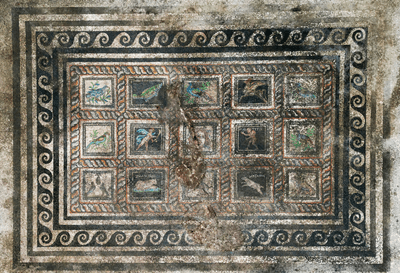


The Romans may have loved their pets just as much as we do, yet with no internet on which to upload photos of their furry companions, the ancients had to make do with mosaic portraits of their beloved animals laid into their villa floors.
An extraordinary example of one such pet-themed artwork has recently been discovered in what was an affluent household in Adramytteion, located beneath the modern settlement of Ören in Türkiye.
Dated to the late second or early third century CE, the Roman-era residence consists of three mosaic-paved halls set around a central atrium.
Within the north hall - which acted as a reception room for visitors - archaeologists found an elaborate floor mosaic consisting of 15 panels, each of which depicts real or mythological animals and monsters. At the center of the arrangement, for instance, is an image of the head of the gorgon Medusa, which may have served to ward off unwanted spirits or bad omens.
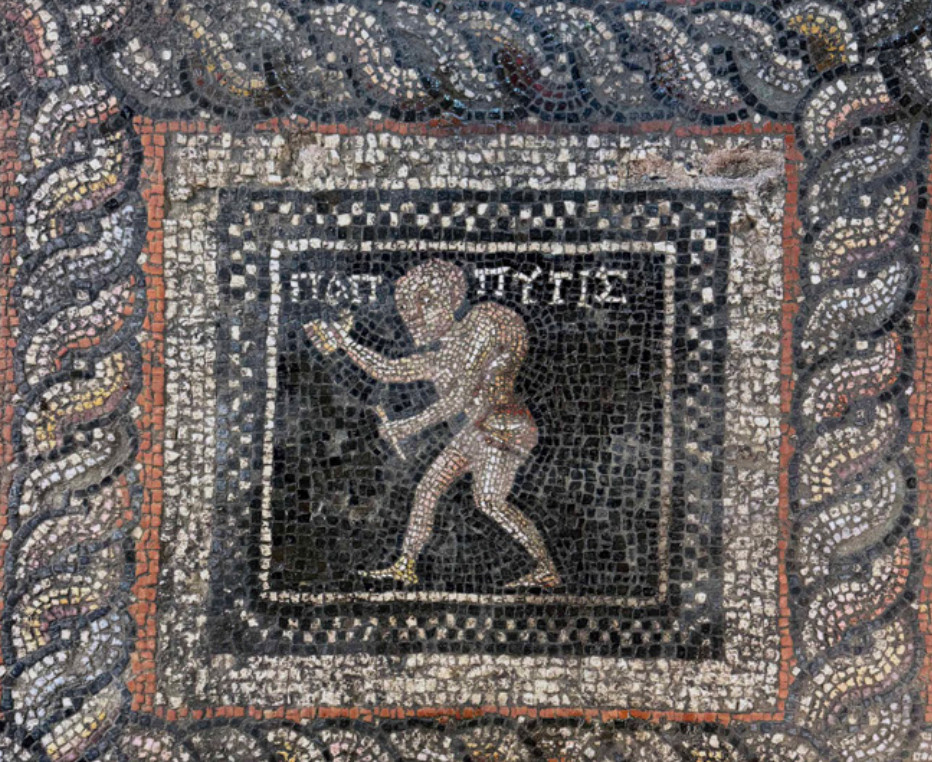
Among the other creatures portrayed in the panels are a peacock and a leopard, as well as “a nude, short-statured male with an enlarged head and emphatically animated movement.”
According to a forthcoming study penned by archaeologist Hüseyin Özgen, an accompanying inscription identifies this character as a pygmy, probably from Egypt. In Roman art, scenes of the Nile often included 'pygmies' as the mythologized imaginings of a foreign, exotic territory.
A winged horse also appears in the mosaic, although Özgen writes that this flying equine is probably not Pegasus. Instead, the creature may represent a local civic mascot, with similar winged horses appearing on the earliest coins from Adramytteion.
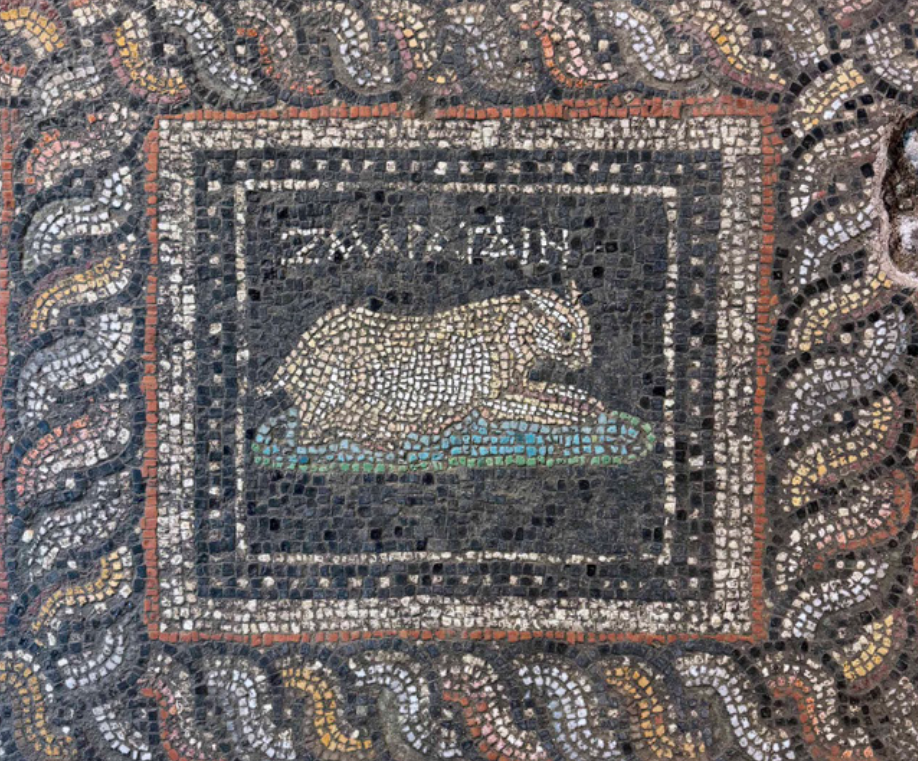
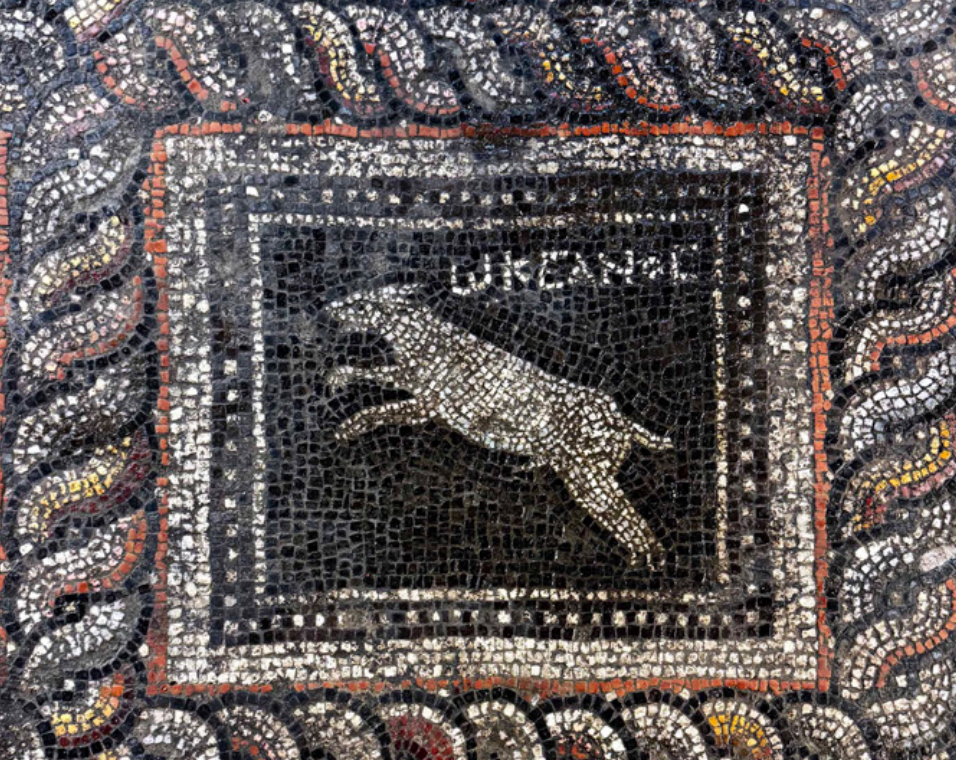
Among the most endearing images, however, is one depicting a cat relaxing on a blue-green cushion, with the word Zmaragdin - meaning Emerald - written above. In a similar panel, a leaping dog appears beneath the word Okeanos, which means Ocean.
“The most economical reading is therefore that Zmaragdin and Okeanos were animals known to the residents, perhaps actual pets,” writes Özgen. “Visitors encountered the named animals at the entrance to a principal reception room. They could operate as familiar signs of ownership and household identity.”
Altogether, Özgen explains that these various images “are compatible within the visual culture of an affluent household in a port city, but they do not establish the patron’s ethnicity or occupation.”
For instance, the depictions of Zmaragdin and Okeanos “personalise the room”, while the winged horse “evokes Adramytteion’s civic memory” and the Egyptian pygmy shows off a “cosmopolitan knowledge” of foreign lands.
The study is due to be published in the Journal of Mosaic Research.