Humans
 PUBLISHED





When Ötzi the Iceman perished in the Alpine Mountains some 5,300 years ago, he could have barely fathomed the thought that scientists would be poking around his body in the 21st century. Moreover, imagine telling him that he would someday have a three-dimensional “digital twin” of himself.
Since being recovered from a glacier near the Austrian-Italian border in 1991, the frozen mummy of Ötzi has provided researchers with a wealth of fascinating insights into the life of a Copper Age hunter in Alpine Europe.
It’s known he was riddled with parasites, suffered from arthritis, and endured broken bones before being murdered from a distance with an arrow in his left shoulder. He was also bald, but who can blame him after a stressful life like that?
As valuable as this information may be, it's not always convenient to poke around his fragile, frozen body every time a new question comes up.
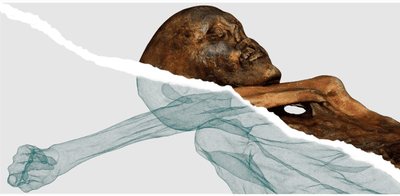
To get around that hurdle, the South Tyrol Museum of Archaeology has commissioned researchers from Arc-Team in Italy to build a complete "digital twin" of the world's most famous Iceman.
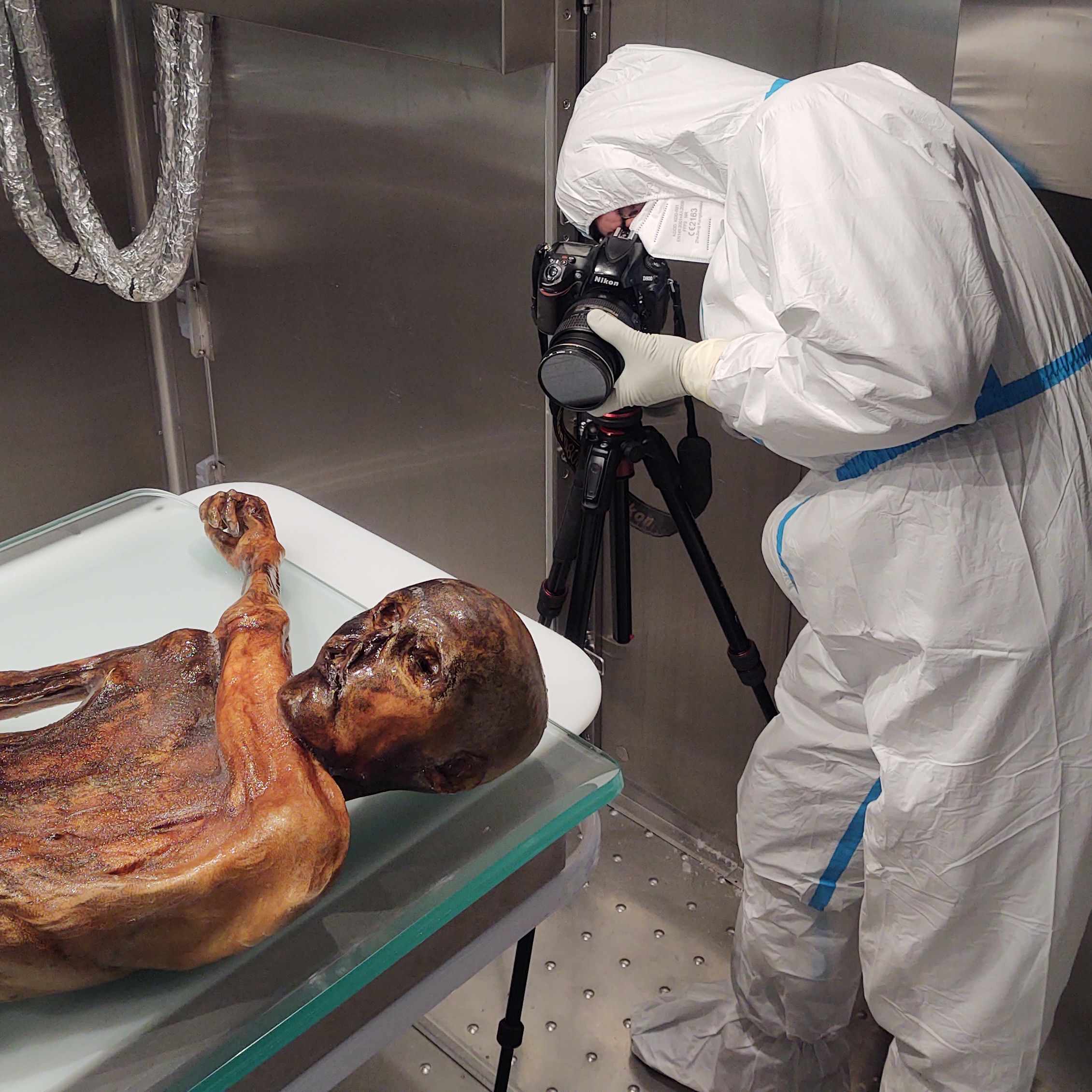
The model was created using 1,294 high-resolution photographs of his body. This was then paired with a whole-body CT scan of the mummy carried out at the Bolzano Hospital in 2021.
Together, the data was used to create an ultra-high-definition model that allows users to view different parts of the glacier mummy, inside and out, down to the submillimeter range. The eventual aim is to turn it into a web-based application that will allow anyone to virtually examine the avatar from different angles.
“What’s special about this digital twin is not just its high accuracy, but the integration of different data layers,” Luca Bezzi, lead author of the study and project leader at Arc-Team, said in a statement.
“For the first time, we can examine Ötzi’s external body surface and his internal anatomical structures in a single three-dimensional model. This creates a versatile tool for preservation, archaeological, and forensic research.”
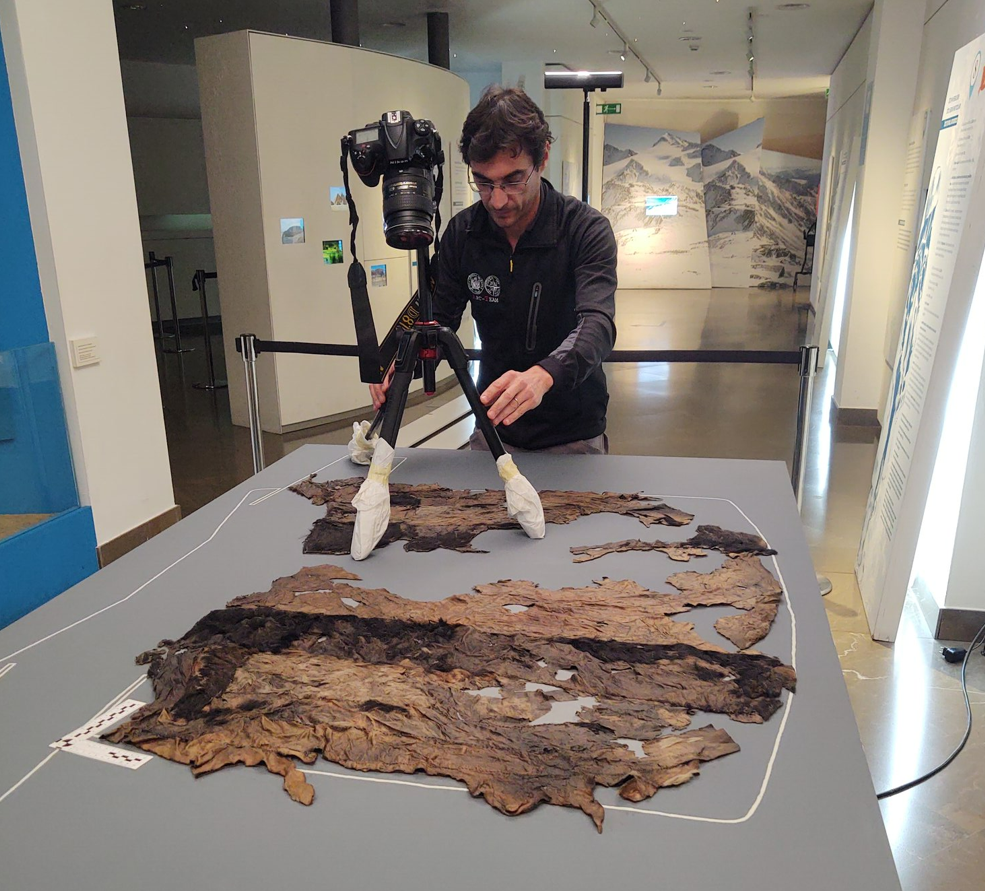
The process of scanning a prehistoric glacier mummy is even trickier than it sounds. Ötzi was found half-buried in a body of ice and remains preserved in a custom high-tech refrigerator, with much of his skin encased in a thin layer of ice. This helps to preserve his tissues, but it does create a reflective surface that’s difficult to scan.
But they didn't stop with his body. Along with Ötzi's cadaver, the recent project also scanned many of his possessions, including a bearskin hat, a fur cloak, a belt, an axe, arrowheads, and other handy trinkets.
You might assume these inanimate objects would be easier to deal with than a 5,300-year-old body, but each is made of a different material — leather, fur, wood, flint, copper — and since each reflects light in a unique way, the imaging technique had to be tailored to every material individually.
 South Tyrol Museum of Archaeology - Arc-Team_1.png "A collection of the objects Ötzi left behind before rudely being killed.")
The preserved body of Ötzi will continue to be housed at the South Tyrol Museum of Archaeology in Bolzano, but his image now lives on in digital form for researchers across the world to access, enjoy, and ponder over.
“Our most important task is to permanently preserve the Iceman and his unique equipment while also facilitating scientific research,” explained Elisabeth Vallazza, director of the South Tyrol Museum of Archaeology.
“Digital twins bring both of these goals together: they document the condition of the objects with unprecedented accuracy, protect the objects, and make valuable research data available for long-term use.”
The new study is published in the journal Heritage.