Nature
 PUBLISHED


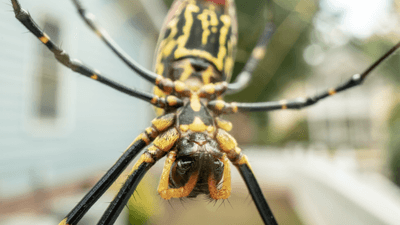


Joro spiders have a lot about them that might get an arachnophobe’s back up. They can parachute, they can be massive, they have venom, and are spreading far out of their native range. However, they’re also shy, play dead, and can be bested by a turkey baster.
Joro spider venom only poses a threat to their prey, which mostly consists of mosquitoes, stink bugs, and other small insects. And while most people might think twice about a parachuting arachnid, the truth is this ballooning behavior only happens when they’re little, and it’s widespread among spiders.
Meet the joro spider
Known to science as Trichonephila clavata, the joro spider gets its name from the Japanese jorō-gumo meaning “entangling bride," and they're steeped in folklore.
Female joro spiders have a vibrant coloration of yellow with black stripes and a red spot on their abdomens, while the males are a more subdued hue of reddish-brown. They’re native to East Asia but have been making headlines for their impressive spread across the United States in recent years, where they are an invasive species.

How big are joro spiders?
Joro spiders can be the size of an outstretched human hand, with a leg span of up to 10 centimeters (4 inches). However, there’s vast sexual dimorphism in the species, with the males having a body size less than a quarter of that of the females.
Why is the joro spider spreading?
Since it was first discovered in Georgia, USA in 2014, the joro spider has spread to several other states across the US. The pattern of their spread since their initial introduction appears to be in line with natural migration, facilitated by their ballooning behaviors as spiderlings to take to the skies. Although, it’s also possible they may have been hitchhiking along on some human road trips.
One possible explanation for their nomadic nature could come down to their stress response. A recent study looked at how they reacted physiologically to the non-fatal stressor of being restrained, and found that the joro spider remained much more calm with less variation in heart rate compared to other spider species.
This may be connected to their reputation for playing dead far longer than other spider species. And it's possible that their chilled approach to stressful situations enables them to occupy environments with frequent disturbances, places that other spiders’ delicate hearts simply couldn’t tolerate.

Are joro spiders dangerous?
These laid-back arachnids aren’t dangerous to humans, as although they are venomous, they’re also unlikely to bite us because they are so shy. Furthermore, they have very small fangs designed for biting insects, not mammals. That means they’re unlikely to break the skin and even if they did, the venom wouldn’t be considered medically important for a human. A joro spider bite is compared by PennState Extension to a weak bee sting, and in 2022, they found no reports of an allergic reaction to a joro spider bite.
So it just goes to show, don’t read a spider by its headlines. Especially not one who can be made to play dead with nothing more than a puff of air from a turkey baster.