


 Nature
 PUBLISHED




Waves of extinction have ripped through life on Earth over and over again during its long history. The non-avian dinosaurs were the last to feel the burn, 66 million years ago, but there have been several other surges of species loss before that. Now, a new study suggests scientists may have overlooked Earth’s first-ever major extinction event, an apocalyptic loss of life that was far more disastrous than previously held.
The fossil record shows a sharp drop in biodiversity around 550 million years ago. Before this, parts of the sea were dominated by relatively complex, soft-bodied organisms that looked more like plants, though they were technically early animals. Then, abruptly, these so-called Ediacaran biota were replaced by comparatively simple lifeforms – an event that became known as the Kotlin Crisis.
Scientists have been aware that the Kotlin Crisis was marked by significant biodiversity loss, but the percentage of taxa lost was considered too low to meet the threshold to formally achieve the status of being a “mass extinction event.”
Generally speaking, a mass extinction event is defined as a period in which at least 75 percent of all species on Earth are wiped out in a relatively short span of time. Five "big ones" are widely recognised in the fossil record, the earliest being the Late Ordovician mass extinction, around 445 million years ago. Some scientists believe we’re currently in the early days of a sixth mass extinction event, primarily driven by habitat destruction, pollution, and climate change.
However, we might have to start rethinking this numbering system. The new research argues that approximately 80 percent of fauna was wiped out during the Kotlin Crisis around 550 million years ago, making it one of the most significant events in the entire history of animal life. If that’s true, it could mean this period saw Earth’s earliest known "big" mass extinction event.
“The severity of the Kotlin Crisis extinction event is much more profound than we previously thought,” Dr Duncan McIlroy, study author and Professor of Palaeobiology at the Memorial University of Newfoundland, said in a statement.
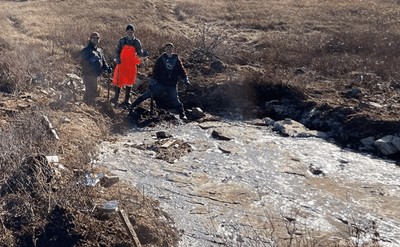
The evidence comes in the form of an "exceptionally preserved" collection of fossils recently found embedded in ancient ashfall at a site in Newfoundland, Canada. Known as Inner Meadow, the site shows that the Ediacaran biota was much more complex than previously assumed.
For a bit more background, researchers have assumed the Ediacaran period passed through three distinct phases. First came the Avalon Assemblage (575–560 million years ago), featuring strange fractal-like creatures called Rangeomorphs living in deep, dark ocean waters. Next, the White Sea Assemblage (560–550 million years ago) marked a golden age of Ediacaran life in shallow seas, including early animal ancestors like Dickinsonia and Kimberella. Finally, the Nama Assemblage (550–538 million years ago) saw a decline in diversity before life was dramatically reshaped by a mass extinction that gave way to the Cambrian explosion, the biggest burst of evolution to ever happen in the history of the Earth.
The new research shows that the Avalon-type fossils at the Inner Meadow site are 13 million years younger than other faunas in the region.
This blurs the lines between the Avalon Assemblage and the White Sea Assemblage. It indicates that the Avalon Assemblage lived 10 million years longer than thought and, as such, they were not lost in a smaller-scale extinction event, but amidst the wider Kotlin Crisis. If that view is accurate, it would mean the wave of extinction around 550 million years ago would have ecompassed many more species than previously assumed.
“The fossil record of the earlier Ediacaran faunas is strange in that the rate of background extinction in earliest biotas is almost zero, so the Kotlin Crisis is not set against a background of progressive species loss as it is through the rest of the Phanerozoic,” said McIlroy.
“It is amazing to think that the organisms fossilized at Inner Meadow immediately precede the first extinction event and that there was so much loss of diversity at a time when stasis had been the norm, and when the relatives of modern animal groups had just evolved.”
Strangely enough, researchers still do not know what triggered the Kotlin Crisis. Big shocks to the environment, such as violent volcanic eruptions or asteroid impacts, are typically to blame for mass extinction events. However, no clear culprit has yet been identified for this one. To find out, it's the job of scientists to find more evidence of this mysterious paleontological period by looking for more traces hidden in Earth's rocks.
The study is published in the journal Geology.

 1
1