


 Nature
 PUBLISHED


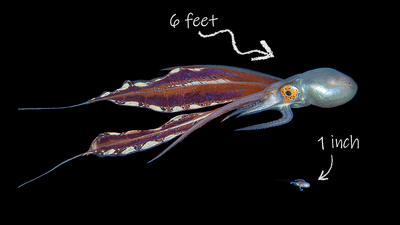


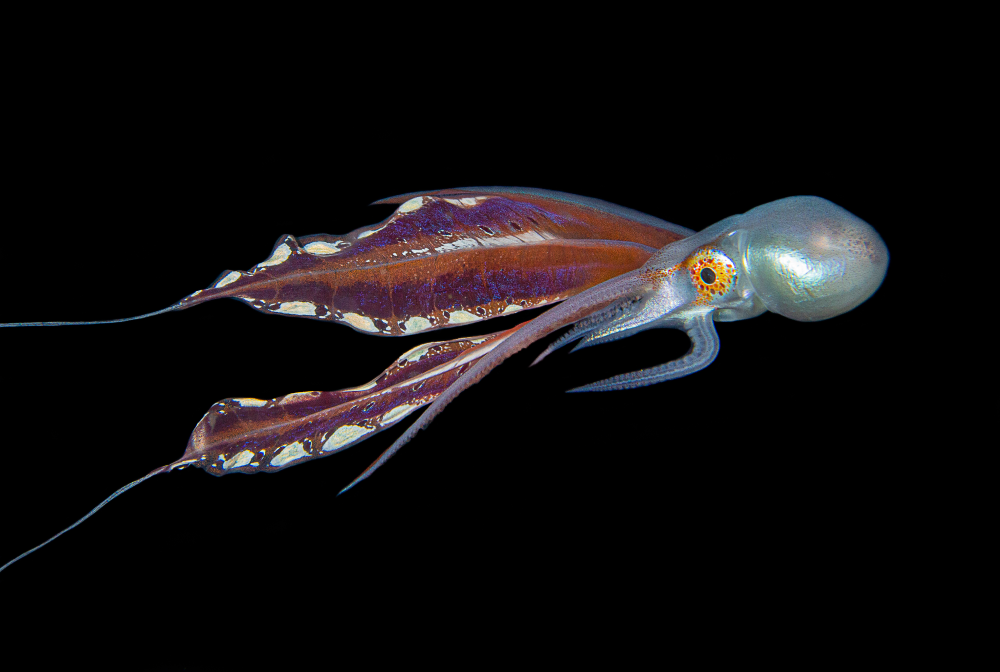
A female blanket octopus has to be up there as one of the most spectacular sea creatures to see alive in the wild. Growing to the length of an adult human, they trail an iridescent rainbow skirt as they glide through the water. They are big, they are bright, they are beautiful, but a blanket octopus male? Well, it’s about the size of a peanut.
Sexual dimorphism describes the way the male and female sexes of a species can vary in size, shape, and morphology. It can be very subtle, or it can be in the extreme. The ocean has some notable examples to shout about, like the deep-sea angler fish that have massive females and tiny males, which go one step further in fusing to her body and reducing to a pair of accessory gonads.
The Krøyer's deep sea angler fish (Ceratias holboelli) was awarded the Guinness World Record for size difference between a male and a female as the female is 500,000 times heavier than a mature male. However, when it comes to length, the blanket octopus (Tremoctopus spp.) takes the lead with a male-to-female ratio of 1:72. According to the London Natural History Museum, that makes it the biggest sexual dimorphism of all animals alive on Earth today.
Blanket octopus male vs female
A female blanket octopus can grow up to 1.8 meters (6 feet) in length, about the average size of an adult human male. Meanwhile, a male blanket octopus only grows to a modest 2.5 centimeters (1 inch).
That huge skirt that trails behind the female is a kind of webbing between their first and second arm. It looks beautiful to us, but it’s actually a form of defence as by unfurling it, it’s thought the females make themselves look bigger and therefore more threatening to predators.
A male blanket octopus, though ridiculously small, isn't completely defenceless. They’ve evolved to be immune to the sting of one of the ocean’s creepiest predators: the Portuguese Man o’ War that’s often thought of as a deadly jellyfish but is, in fact, a siphonophore made up of a colony of millions of identical clones called zooids.
The zooids are separate animals but they have to be together to survive, as they each fulfil a different role. Some zooids enable the creature to swim, while others form the organism’s notoriously long tentacles, which are loaded with venom-filled nematocysts. Super dangerous to many animals, but not the male blanket octopus.
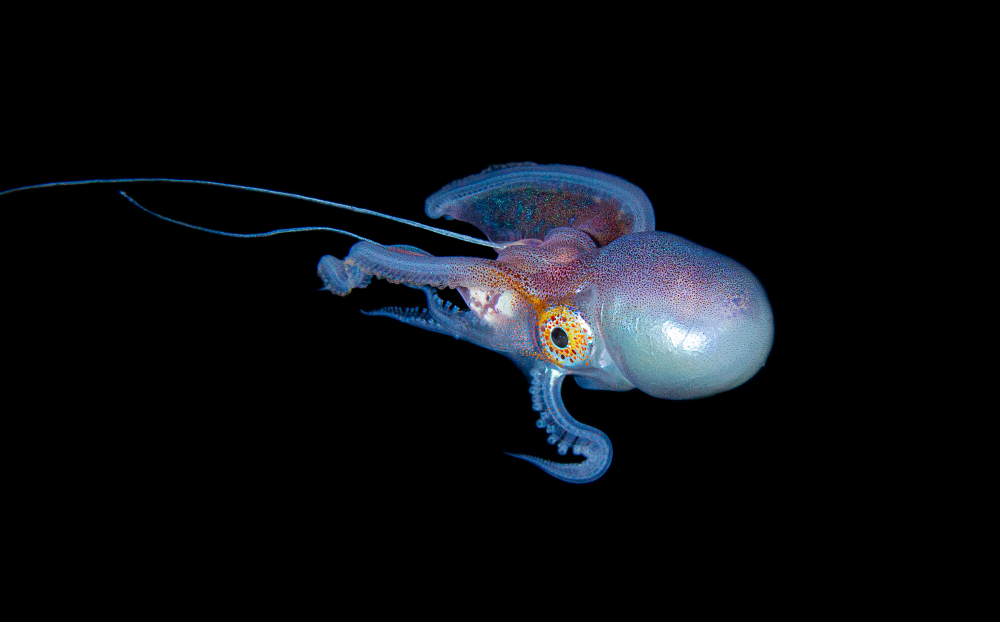
You see, rather than fearing the Portuguese Man o’ War, they've adapted to exploit it by sneaking into their tentacle mass and nabbing a few tendrils. They then wield these stinging noodles like whips, preventing predators from getting close enough to hoover them up like piece of popcorn.
Clever little peanuts, and speaking of popcorn – have you seen the tiny, adorable speck that grows up to be one of the biggest fish in the ocean?



 1
1