Nature
 PUBLISHED
 1
1


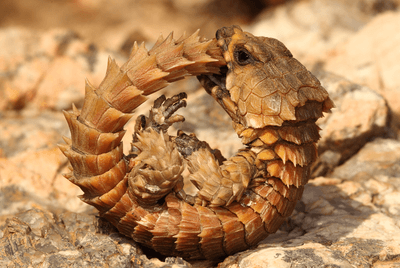


It looks like a baby dragon from Game of Thrones or perhaps a desert-dwelling Pokémon, but the armadillo girdled lizard is very much a real animal.
They are known by a few different names – including the armadillo lizard, the armadillo spiny-tailed lizard, and the golden-armadillo lizard – although they’re scientifically known as Ouroborus cataphractus.
The genus name Ouroborus is derived from the ancient symbol "ouroboros," which depicts a serpent or dragon eating its own tail, often used to represent the concepts of eternity, the cyclical nature of life, and the endless cycle of renewal. The species name "cataphractus" comes from the Greek word "κατάφρακτος" (kataphraktos), meaning "armored" or "covered.”
It’s the perfect name for these charismatic little creatures. The lizard’s armor-like scales are the species' most defining feature and help to protect the animal from predators in the harsh, dusty desert of South Africa’s western coast.
They typically hide in the cracks of rock faces where they live in large groups of 30 to 60 individuals, leaving only to hunt bugs and soak up the Sun. At the first sign of danger, they will quickly dart back into the crevice. If they are unfortunate enough to be caught by a predator, the armadillo lizard will bite its tail, just like the ouroboros symbol, to protect its vulnerable underbelly.

The armadillo lizard is a member of the family Cordylidae, which includes a bunch of small- to medium-sized lizards that live in southern and eastern Africa.
Its unique appearance isn’t the only unusual feature of the species. Armadillo lizards are one of the few species of lizard that do not lay eggs and give birth to live young, a form of reproduction called viviparity. The process is taxing for mothers, but it can be advantageous for harsh environments as it helps to protect them from environmental hazards like extreme heat and predators.
The female may even feed its young after it is born, which is almost unheard of among reptiles and typically a trait associated with mammals and birds.
Along with natural threats like predation, the lizard faces several unnatural challenges in its habitat, including over-exploitation and poaching for the pet trade. As such, they are listed as “near threatened” on the IUCN Red List.
Armadillo girdled lizards are not permitted to be exported from South Africa without appropriate documentation, but they are known to be illegally trafficked out of the continent, including to the US, where they’re sold as pets.