Nature
 PUBLISHED


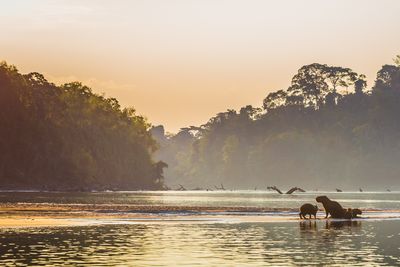


The Amazon River snakes through Peru, Colombia, and Brazil for at least 6,400 kilometers (3,977 miles). It's the world's second-longest river and the largest by volume. Yet it is not crossed by a single bridge (at least officially). Given humankind’s strong tendency to reshape natural landscapes and traverse the seemingly impossible, why have we left one of the world’s greatest rivers bridgeless?
There are a few good reasons, and one of them is simply that there isn’t much demand for an Amazon river crossing. "There is no sufficiently pressing need for a bridge across the Amazon,” Walter Kaufmann, chair of Structural Engineering (Concrete Structures and Bridge Design) at the Swiss Federal Institute of Technology in Zurich, told Live Science in 2022.
The depths of the rainforests are sparsely populated with relatively little infrastructure and roads, making bridges unnecessary for connection. For example, Macapá, the capital city of the Brazilian state of Amapá, has half a million people and no roads leading anywhere else in Brazil. Travel is usually carried out on the river itself.
"Of course, there are also technical and logistical difficulties," added Kaufmann. The second reason: it's a civil engineer's nightmare.
Each year, the Amazon receives between 1,500 millimeters and 3,000 mm of rain (1 mm of rain is equivalent to 1 liter per square meter) during the rainy season. Parts of the river can rise up to 9 meters (30 feet) and in some places, its width can go from averaging 2-10 kilometers (1-6 miles) to 48 kilometers (30 miles). In some extreme regions, it can reach a sprawling, flooded 190 kilometers (120 miles) across. The river can also carry large debris in the form of floating islands of vegetation, known locally as matupás. These can reach up to 40,460 square meters (435,600 square feet) across and 3 meters (10 feet) thick.
It's also undeniably challenging to build infrastructure in the dense rainforest, hence why there are very few human settlements of significant size in the Amazon. The ground is soft and unpredictable, plus it’s extremely easy for any human-made structures to be consumed by the rainforest’s relentless vegetation and harsh conditions, like intense rainfall.
Any attempt to build a bridge, unless perfectly planned, would likely end in crumbling foundations and caked in unforgiving greenery.
Although you can barely tell by looking at the landscape, the Amazon is scattered with the long-lost ruins of human settlements that have become lost to nature over the centuries. New imaging technologies are revealing that there are likely to be more than 10,000 pre-Columbian archaeological sites hidden throughout the Amazon basin. Unlike archaeological remains from ancient cultures in temperate parts of the world, the Amazonian structures have become swamped, swallowed by plant growth, and buried.
If you need a modern example, look no further than the notorious BR-319 highway, an 870-kilometer (541-mile) long road that runs through a pristine part of the Amazon rainforest from Manaus to Porto Velho. The highway was built in the early 1970s under Brazil’s military dictatorship, but it was ultimately abandoned by 1988 because it was uneconomical to maintain and required constant repairs due to rapid deterioration.
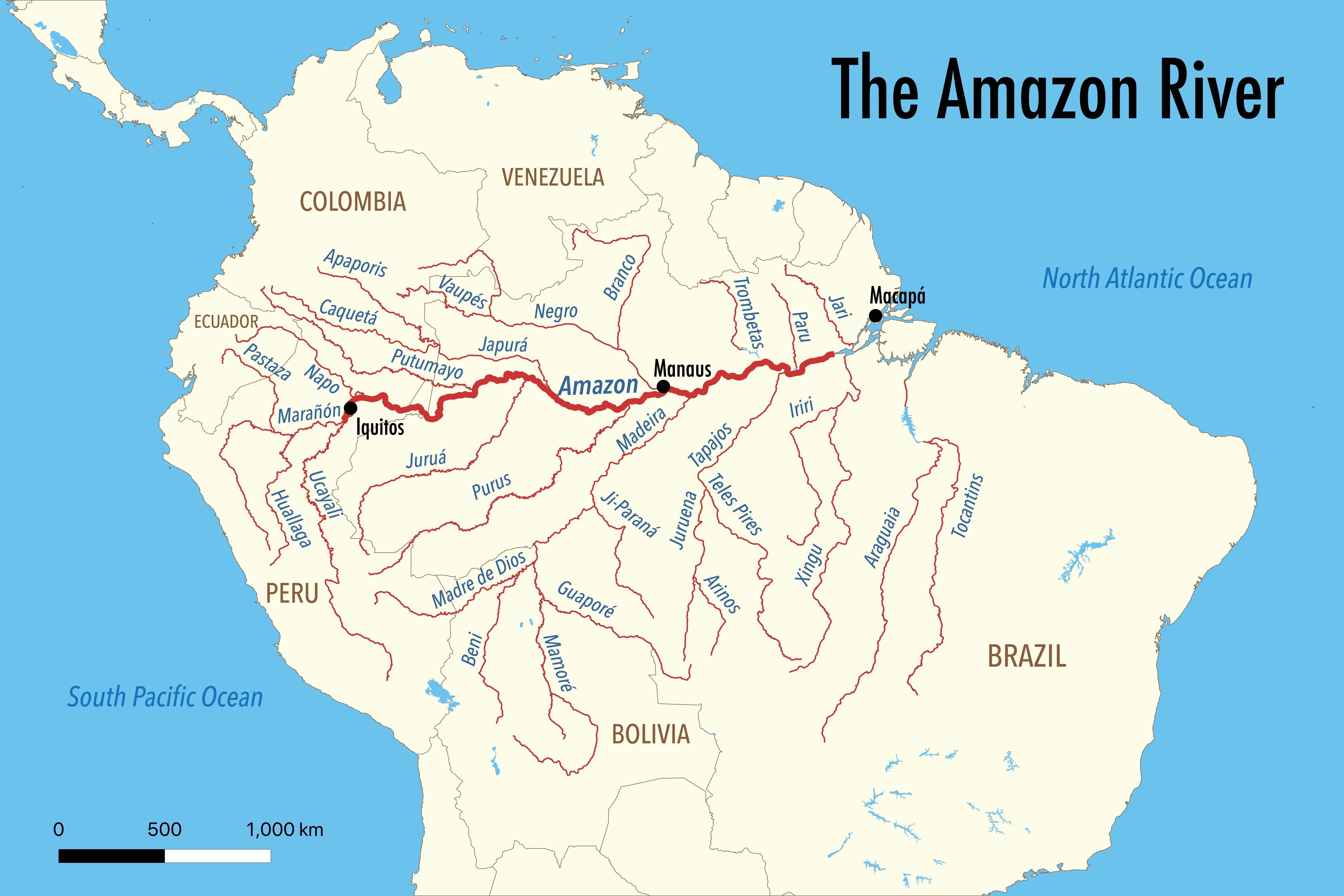
The closest thing to a bridge over the Amazon is the Journalist Phelippe Daou Bridge, which spans the Rio Negro near Manaus just before it merges with the Amazon River. Although it’s in the Brazilian state of Amazonas, it is technically over a tributary of the Amazon River, not the primary branch.
Completed in 2011, the construction of the bridge was wracked with controversy, namely that it could open up the region to further deforestation and destruction. Many also complained that the bridge, which connects the city of Manaus with the small town of Iranduba, is scarcely used and has little economic benefit.
Jair Bolsonaro, Brazil's former far-right populist president, did have plans to construct an Amazon-spanning bridge in Óbidos as part of a wider package of mega-infrastructure projects in the jungle. However, it was never built. With Bolsonaro now serving a 27-year prison sentence, it's unlikely he'll ever return to power to finish the job.
Many hope that bridges don't start crossing the Amazon River any time soon, either. The Amazon is an incredibly rich and unique hive of biodiversity and human culture that’s already under immense pressure from logging and mining, but the construction of roads and bridges could open it up for more exploitation.
Research has highlighted that the overwhelming majority (95 percent) of deforestation occurs within 5.5 kilometers (3.4 miles) of a road because it provides access to loggers, vehicles, and heavy machinery.
Another 2022 study used AI to identify rural (often unofficial and illegal) roads in the Brazilian Amazon from satellite imagery, identifying 3.46 million kilometers (2.15 million miles) of roads. The researchers found these new roads were directly related to deforestation, forest fires, and landscape fragmentation.
“These are arteries of destruction. The roads are opened to extract wood, and the ramifications spread from the main line, where the trucks and heavy machinery are,” study co-author Carlos Souza Jr., an associate researcher at Imazon who runs their Amazon monitoring program, told Mongabay.