Space and Physics
 PUBLISHED
 1
1




Science needs models. Even our best understanding is limited when it comes to reality, so we need to simplify, grouping things together that have a wide overlap of properties, and constructing theories that explain what we see. The spanner in the works is always the space oddities, the weirdos that challenge what we know. These very objects are the ones that push the envelope when it comes to science, so let’s celebrate seven brilliant ones.
The galaxy that is lacking dark matter
We do not know what dark matter is. This hypothetical substance is invisible and only interacts with gravity. It is expected to outweigh regular matter five-to-one, and it is necessary as the scaffolding for galaxies to form. With two exceptions: two galaxies that appear to have an extremely low level of dark matter.
NGC1052-DF2 is as wide as our own galaxy but with 100 to 1,000 times fewer stars and 400 times less dark matter than our own. NGC 1052-DF4 is similar: a double example of galaxies lacking something we thought crucial. A profound finding for cosmology.
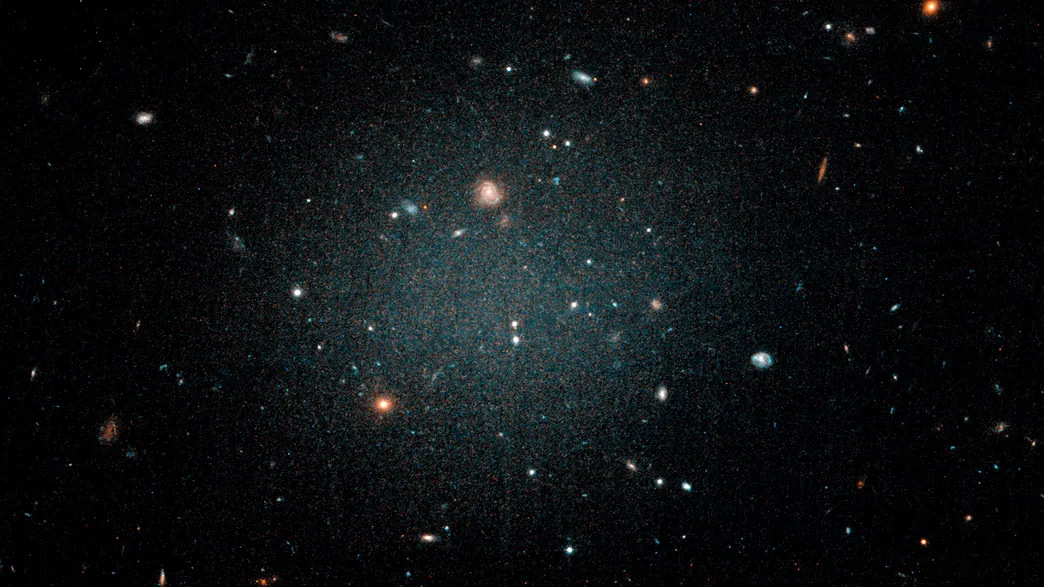
“It tells us something about dark matter that we didn’t know, namely that it is separable from galaxies," Professor Pieter van Dokkum from Yale University previously told IFLScience. "Wherever we saw a galaxy before, we also saw dark matter. This suggested a direct coupling of where the dark matter is and where the galaxies are. The whole scaffolding upon which the structure in the universe is built is essentially dark matter. The galaxies are the froth that floats on this sea of dark matter.
The Rectangular Nebula – the unique death of a Sun-like star
Nebulae are gas clouds found in space. They are usually cloud-shaped. Some can be carved from the inside by stars, some from the outside. There are circular ones, shells of material from old stars or exploding supernovas, or more cigar-like ones formed from jets of material such as the Dragon Jet nebula.
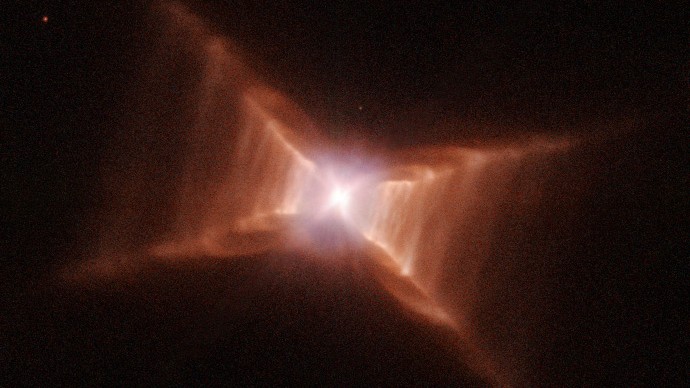
The Rectangular Nebula is its own weird beast. Its shape is simply bonkers and has puzzled scientists as to how it might have formed. It was the power of Hubble, decades ago, that revealed that we were seeing something like a star releasing “smoke ring” rings of material as it was shedding its outer layers, just as will happen to the Sun when it runs out of nuclear fuel at its core.
"The structure of the Red Rectangle revealed by Hubble is surprisingly complex. The features that impress me most look like the rungs of a ladder, although they are actually projections of gas cones, like a series of nested wine glasses filled to their brim with gas and seen from the side," Hans Van Winckel, from the Catholic University of Leuven, Belgium, said at the time.
Przybylski's Star: our best bet for advanced alien civilizations
Passing the light of the Sun through a prism, you create a rainbow. If you go to high details, you’ll see dark lines created by the chemical elements in its atmosphere. By matching the missing colors to the elements, we discover the composition of stars. Stars can have very different compositions but all within certain ranges. Apart from one.
Przybylski's Star appears to have chemical elements that should not be there because they are not stable enough to persist for more than a few years, as well as elements that we have only discovered in the lab and never in nature.
One element detected appears to be promethium, but there is no known isotope of promethium with a half-life longer than 17.7 years. Finding it on a star means something is producing it. On Earth, that something is us. There is also analysis that showed it contains actinium, protactinium, neptunium, plutonium, americium, curium, berkelium, californium, and einsteinium. As far as we can tell, none of these naturally occur.
Is it aliens? Are we getting the chemistry wrong? These elements are poorly studied, so the whole situation is murky. Maybe it’s the companion neutron star blasting Przybylski that is creating elements you won’t find anywhere else.
MoM's the word
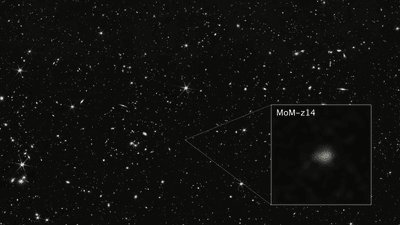
MoM-z14 is the most distant known galaxy, with MoM standing for “mirage or miracle." Its light comes to us from 280 million years after the Big Bang, and its existence is challenging models of galaxy formation and evolution.
According to those models, galaxies were only just forming at the time. Their stars had not had time to produce many heavy elements. Clearly, nobody told MoM-z14. The galaxy is 100 times brighter than theoretical studies predicted, and researchers even found more nitrogen than it should have been possible to produce in that timespan.
Clearly we are missing something, and this object is telling us we have to rethink what we know!
The oddest moving exoplanet?
Since the first discovery of a world beyond the Solar System, we got the memo: don’t make assumptions based on our Solar System. There are worlds out there with no analogs to what we see around Earth. But there is one that is truly incredible!
2M1510 is a system made of two brown dwarfs, stellar objects that never had enough mass to fuse hydrogen and become fully fledged stars. They orbit each other – so far, that's nothing unusual, but once they saw how they orbit, researchers found something odd. The orientation of the orbit changes, like something is pulling at them. The best explanation is that there is an unseen planet going perpendicularly between the two orbits. Truly, there are more things in heaven than are dreamt of by our scientists!
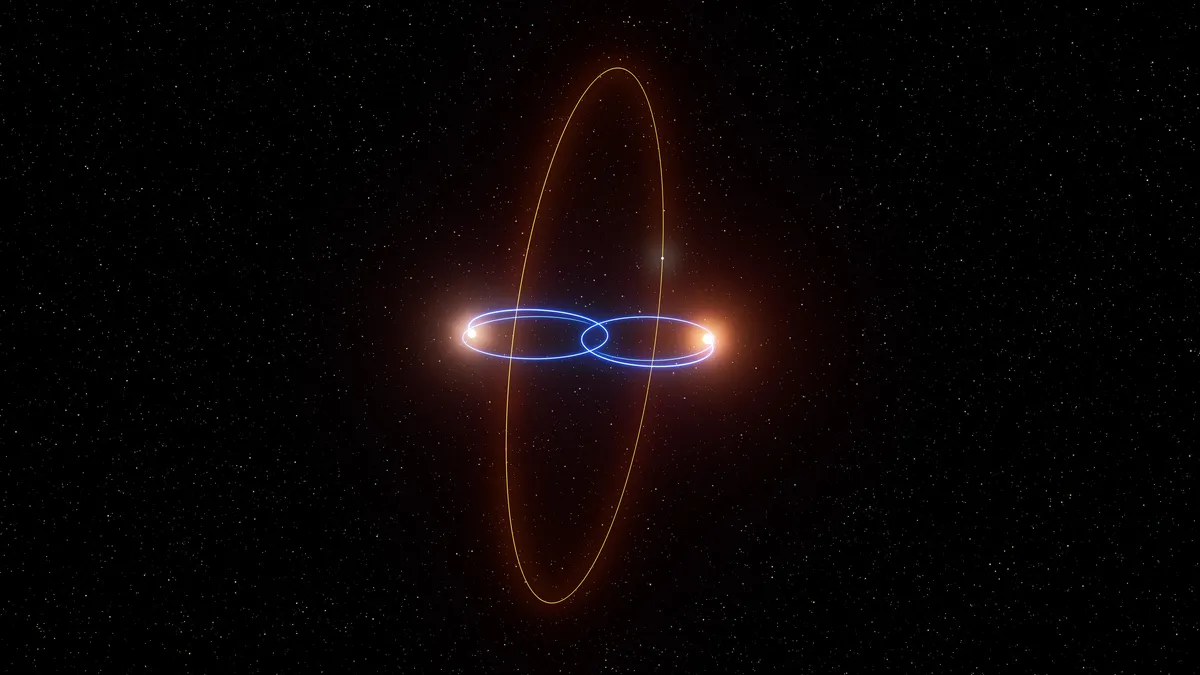
“The planetary systems and star systems outside the Solar System can come in all kinds of configurations and sizes," lead study author Thomas Baycroft, a graduate researcher at the University of Birmingham, told IFLScience. “You know, planets around binary stars were first predicted by science fiction before it became science reality. The universe is really interesting, and there's lots of stuff going on!”
A shocking Solar System moon!
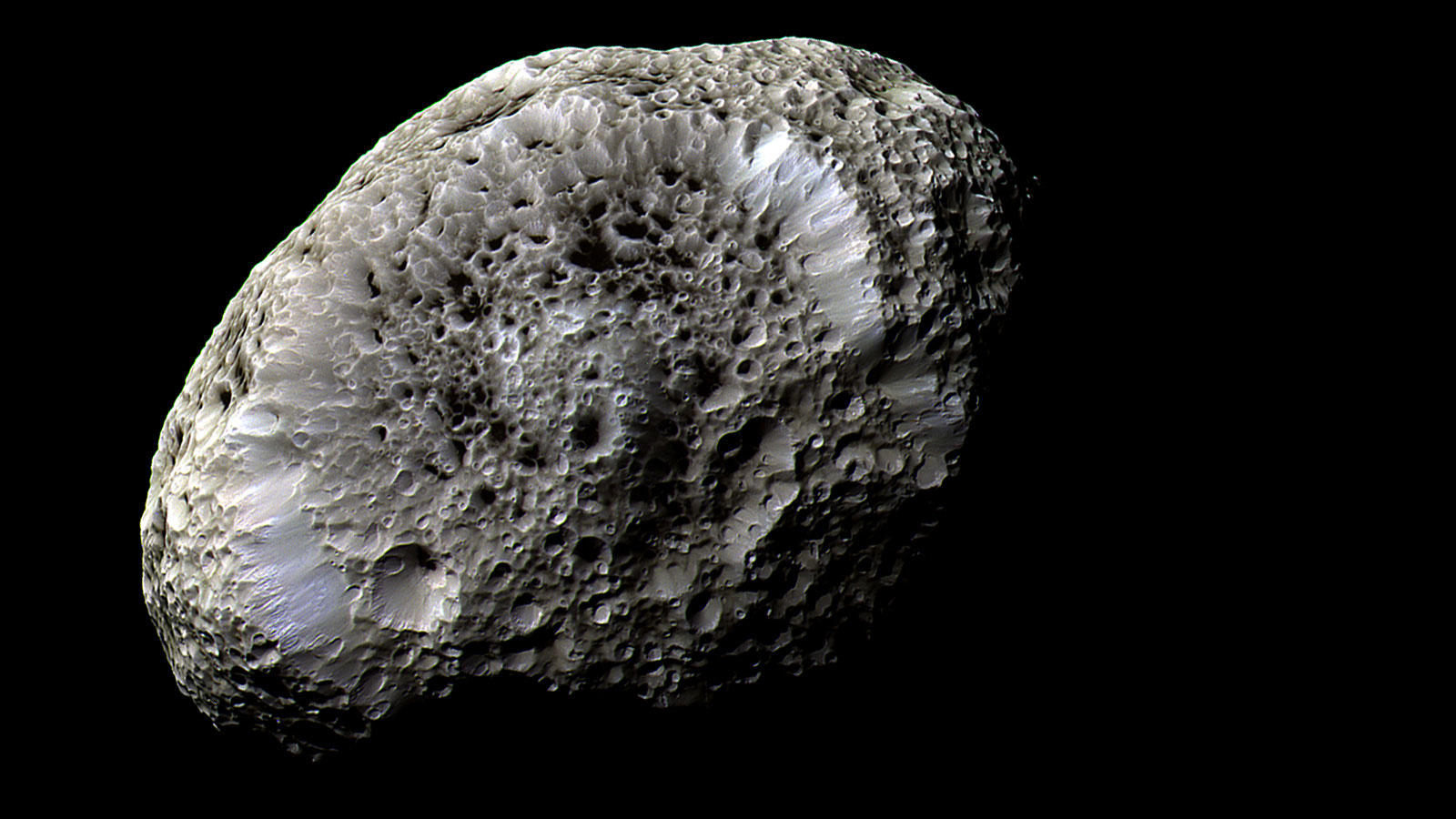
The oddities don’t stay out in the far reaches of the universe. There are plenty in this neighborhood too. Saturn’s Hyperion is one such bizarro object. This little moon has a sponge-like appearance and appears to be highly porous. Forty percent of the moon is empty space.
Hyperion appears to be getting a static charge building up, maybe similarly to how our Moon can get electrically charged. But you can stay at a distance and still get zapped. When the Cassini mission flew past, it was zapped by a beam of electrons shooting from the surface of the moon. Hyperion was thought to be inert, so it was a literal shock when Cassini got hit with 200 volts across 2,000 kilometers (1,200 miles) of space.