Nature
 PUBLISHED


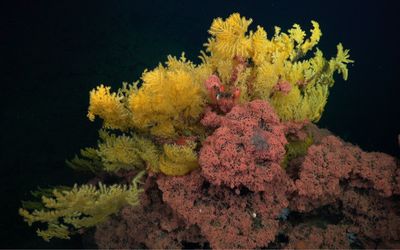


Going down into the deep sea is always full of surprises. You might encounter a bigfin squid, discover a fish with a see-through head, or just maybe be met with a forest of golden coral trees.
Off the coast of Costa Rica, scientists have discovered a brand new species of golden coral during expeditions to explore the seamounts in 2019 and 2023.
The corals were found between 360 and 529 meters (1,181-1,736 feet) deep below the surface of the Pacific Ocean. During the expedition, the team were able to collect some samples of the coral so they could learn more about it at the surface.
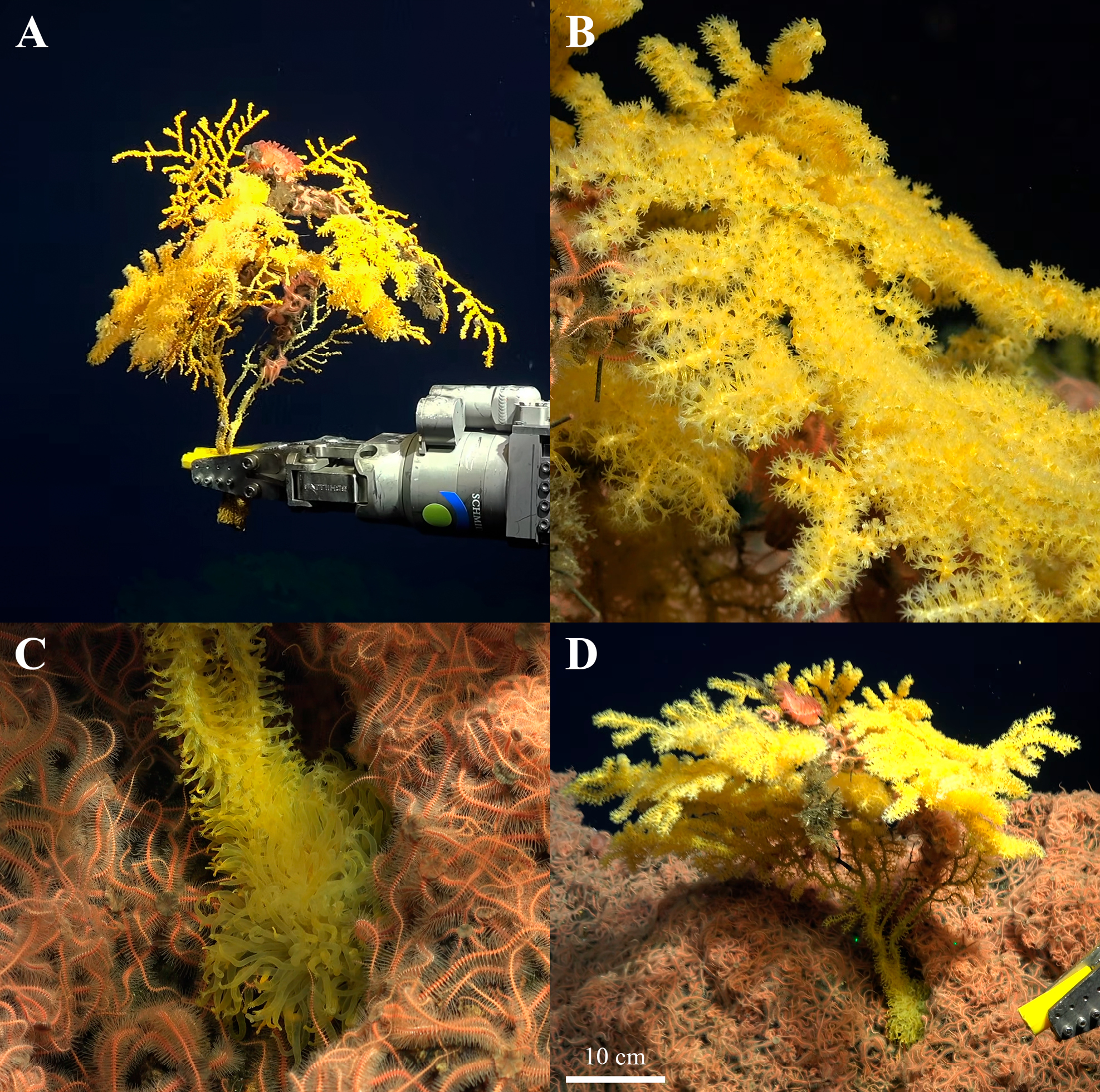
“I saw the octocoral garden for the first time in 2019 and I was impressed by the beauty of the landscape, which inspired, later, the Elvish name of the taxa,” said the study’s lead researcher, Odalisca Breedy from the Universidad de Costa Rica, in a statement.
The deep ocean is defined as more than 200 meters (656 feet) below the surface and covers around 66 percent of the planet's surface.
The area surrounding where the corals were collected was covered in brittle stars, making the corals look like golden trees rising up from the fields of the seabed. The specimens were collected at four different locations, both in the pacific margin of Costa Rica and southwest of Cocos Island National Park.
The corals were kept alive after collection to be analyzed, while their characteristics were explored both from the samples and from photographs taken of the corals in their deep ocean habitat. Three samples were taken for genetic analysis, but did not match any of the current known coral species, so it was not possible to establish clear relationships with other families of octocorals.
After the investigations, the team determined that the coral is an entirely new genus that has been named Laurinque elenya, with “Laurinquë [...] meaning golden tree in the Elvish language, Quenya [from The Lord of the Rings] in allusion to the bright yellow tree-like colonies.”
“The golden octocoral gardens on fields of brittle stars evoke the mystic world of elves, where they spoke Quenya[,] their ancient tongue” explain the authors in the paper.
Coral has had something of a bumper year, with record-breaking sites being uncovered, and an entire coral reef thought lost being rediscovered off the coast of Benin.
One species was even discovered flashing away inside a cave as a means of protecting itself, making it the first report of bioluminescence within a deep-sea cave.
The study is published in ZooKeys.