Nature
 PUBLISHED


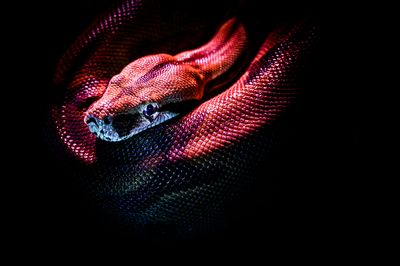


Eating your own kind might not sound like a winning survival strategy, but cannibalism is surprisingly common in the animal kingdom – especially in snakes. A new study has taken a deep dive into the cannibalistic tendencies of snakes, exploring just how widespread the behaviour is and why it may have evolved independently so many times.
Scientists from the Federal University of São Carlos in Brazil sifted through scientific literature and found 503 cases of snake cannibalism, involving at least 207 species in 15 families. It was most common in three different families of snake: Colubridae (29 percent of cases), Viperidae (21.2 percent), and Elapidae (18.9 percent).
Cannibalism is perhaps most associated with Elapidae, which includes the king cobra. This snake is so synonymous with eating other snakes that part of its Latin name (Ophiophagus) means "snake eater." Indeed, they primarily feed on other snakes, although they will resort to eating lizards, small mammals, and birds when food is scarce.
Blind snakes stood out as the only major group with no recorded cases of cannibalism. This may be because they never evolved the highly flexible lower jaws seen in other snakes, which allow them to swallow large prey, including other snakes, whole. It’s not so much an active choice as a physical limitation.
Some of the most unusual and "extreme" cannibalistic behaviour was observed in Boidae, better known as boas. Not only did they practise maternal cannibalism, in which the mother eats their own young, but they were also the only group that engaged in sexual cannibalism, when cannibalism takes place in individuals of opposite sexes during mating. This is not a particularly sexy idea to (most) humans, but it's another phenomenon that's surprisingly common in other animals.
Based on the number of snake species that engage in cannibalism today, the researchers conclude it has evolved at least 11 times independently throughout their evolutionary history, a process known as convergent evolution. It has been recorded in snakes on every continent, except Antarctica, where they're not native, in both wild and captive settings, hinting that it offers advantages in many different environments.
The researchers posit a few possible explanations. In captivity, stress from confinement and a lack of environmental enrichment may trigger cannibalistic behaviour. In the wild, however, food scarcity is likely a major driver. When prey is limited, another snake may simply become the most available meal. This could help explain reports from snakes living in environments such as commercial pine plantations in England or Brazil’s semiarid Caatinga region, the paper notes.
The researchers believe it’s noteworthy that half of the snake species known to practice cannibalism have generalist diets, meaning they consume a wide range of prey and aren’t particularly picky eaters. They suggest this flexibility could make it easier for snakes to turn on members of their own species when opportunities arise.
Many non-serpentine species are faced with food shortages, but not all resort to cannibalism. For snakes, however, the strategy appears to pay off time and time again. It provides a direct energy source, reduces competition, helps to regulate population density, and allows mothers to adjust brood size to their liking.
Scientists once assumed that cannibalism represents a random or maladaptive behaviour in snakes, but this paper indicates it may have some evolutionary worth for the suborder as a whole.
Humans, by contrast, tend to view cannibalism through a moral lens shaped by empathy, disgust, and deep-seated taboos. But in the world of limbless reptiles with dislocatable jaws, it's just another way to survive.
The study is published in the journal Biological Reviews.