Nature
 PUBLISHED



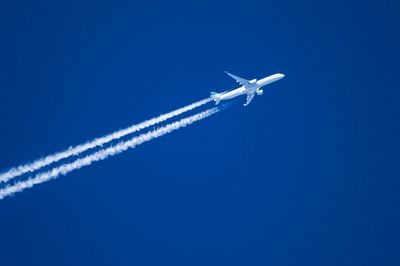


Those feathery white streaks that trail behind aircraft as they cruise through blue skies aren't as sweet and innocent as they look. Relax: they’re not sprinkling mind-altering chemicals onto the unsuspecting population, but they do have a seriously negative impact on the environment.
Contrails – that’s CONtrails, not CHEMtrails – are formed when hot, humid exhaust from jet engines mixes with extremely cold ambient air at high altitudes, causing water vapor to condense and freeze around soot particles coughed out by the jet exhaust.
The problem with contrails
They're essentially strips of cloud that trap outgoing heat and radiation emitted from our planet. They also shield Earth from incoming heat and radiation, but overall they retain more heat than they reflect, creating a net greenhouse warming effect.
Naturally occurring clouds do this too, but contrails add an extra, previously unaccounted-for influence into the mix, contributing roughly one-third of aviation's total impact on the climate.
Not all contrails are created equal, however. Some will fade away within a few minutes, while others will lurk for several hours, spreading into a blanketing cloud formation.
The weather conditions at cruising altitude have a big influence on how a contrail behaves once it's blurted out, which means it's possible to control them by understanding the meteorological landscape and tinkering with flight paths.
A world-first trial in contrail control
In a new trial called Operation Blue Skies, the UK government is teaming up with Google and several scientific organizations to see whether anything can be done about this problem.
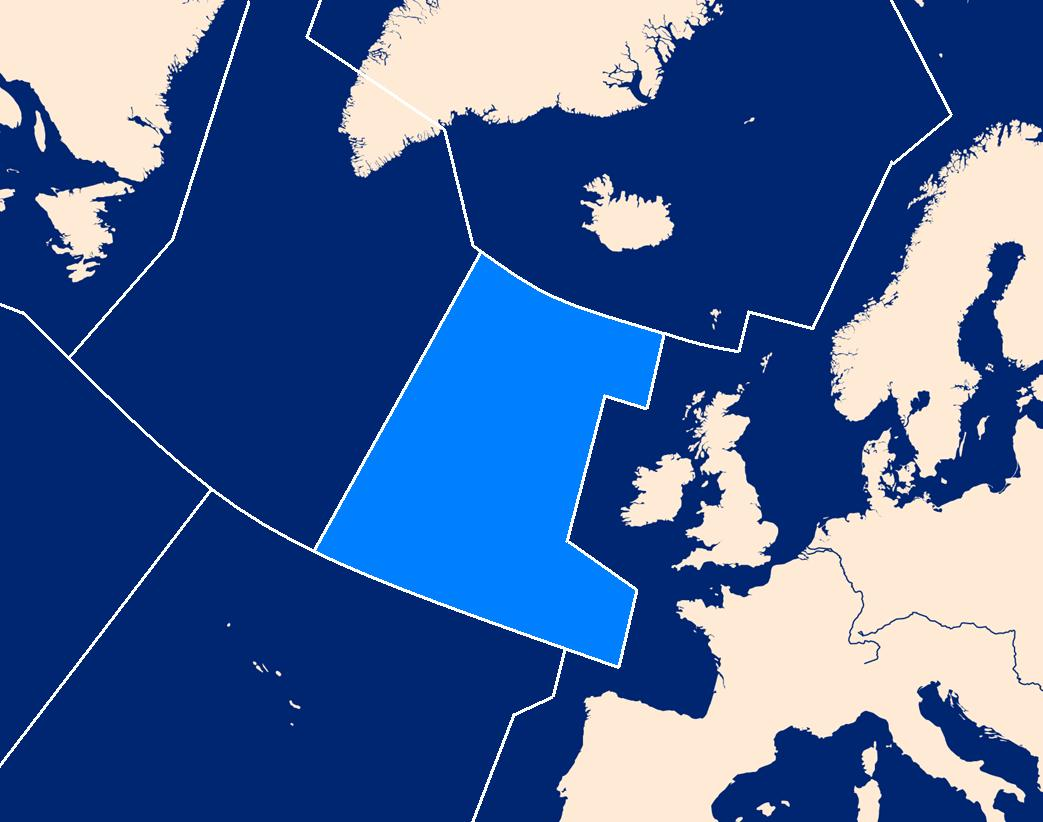
Starting in November, air traffic controllers managing the Shanwick airspace on the eastern side of the North Atlantic will use AI-powered forecasts to advise pilots to avoid contrail-sensitive regions using minor altitude adjustments.
“Contrail avoidance has reached a pivotal moment. The question is no longer whether we can mitigate contrails, but whether we can make that mitigation work at the scale of the global aviation system," Kemal Armada, Product Manager at Google, said in a statement.
"This trial is an important step toward making that a reality, while demonstrating the strength of British research and innovation in developing practical solutions to one of aviation’s most important climate challenges," commented Armada.
Nestled off the coast of the British Isles, the Shanwick airspace is an ideal location to test this pilot program. This block of Atlantic airspace is a major thoroughfare for air traffic between Europe and North America, hosting over 1,000 flights every day and accounting for approximately 5 percent of global contrail warming.
Will the trial work?
The trial will run for 30 months, with the manoeuvres primarily taking place in winter testing windows that last 20 to 40 days.
All in all, the project will cost £5 million. Over £2.6 million of funding comes from the UK Government’s Department for Transport, while Google UK will contribute a further £1.4 million through AI expertise and computing infrastructure.
The UK Met Office is also involved, using the data to develop a new UK contrail forecast system.
The data from the venture will be passed on to scientists at Imperial College London and the University of Cambridge, who will independently verify the results to see whether this could be a viable way to curb aviation's climate impact.
If the method proves effective, it could bring major changes to the way air traffic is managed in the near future.
“Contrail avoidance could drastically reduce the global climate impact of aviation, at minimal cost to passengers and companies,” explained Professor Steven Barrett, Regius Professor of Engineering at the University of Cambridge.
“Operation Blue Skies is a big step forward in this process, as it will test the ability of the UK to reduce contrail coverage at an airspace-wide scale and in a real-world setting. It’s an exciting step in building a more sustainable aviation industry,” added Barrett.