Nature
 PUBLISHED



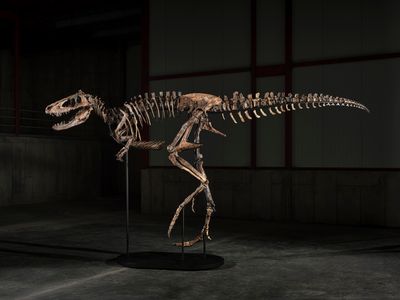


Sotheby’s is auctioning a fully mounted Nanotyrannus skeleton, one of just three specimens that set off a fierce debate as to whether they're juvenile T. rexes or their own smaller species.
While the fossil was unearthed by commercial fossil hunters on private land, the controversy of this species means this sale will likely heighten the ongoing debate about rare dinosaur fossils disappearing into private collections and beyond the reach of science.
Currently listed at a guide price of $6 million dollars, perhaps the biggest cost is really your conscience.
A new species of tyrannosaur?
The specimen, nicknamed Jodi, was dug up from the Hell Creek Formation, USA, where it had been resting for 67 million years. Sotheby’s listing refers to it as Nanotyrannus cf. lancensis, but not everyone agrees.
For decades paleontologists have argued over whether certain dinosaur fossils belonged to juvenile T. rexes or were from a smaller species of carnivorous theropod that had created its own niche at the same time and place.
Recently, that argument tilted in favor the new, smaller species, particularly in light of the astonishing “dueling dinosaurs” fossils composed of a smaller tyrannosaur and Triceratops locked in combat as they died.
.jpg "A close up of the Nanotyrannus skull of the specimen up for auction.")
That tyrannosaur specimen is about 40 percent the size of a fully grown T. rex, but has features that researchers argue make it more likely it belonged to an independent species that was then named Nanotyrannus lancensis.
The unease over the sale could therefore be heightened, as the Nanotyrannus debate has run for so long in part because useful fossils of the candidate species are in short supply, particularly those complete enough to be helpful. That brings us back to Jodi.
A rare specimen of a controversial dinosaur
With 191 bone elements, including an almost complete skull with 35 teeth, Jodi is in remarkable shape considering her age. The larger number of teeth in Nanotyrannus fossils is one of the key pieces of evidence for it belonging to a different species, along with the smaller number of tail bones.
At 2 meters (6.5 feet) tall and 6 meters (19.6 feet) long, Jodi is about half the size of its more formidable cousin, but is perhaps better suited for millionaires with limited room for a full-sized fossil.
Sotheby’s claims that “judging from the overall size and degree of bone development, it can be determined that the skeleton is that of an adult individual”, while reiterating that it is “one of only three such skeletons known to science”, although that number depends a bit on how complete you insist a fossil needs to be.
As for Jodi's discovery, it has a striking link to the famous Dueling Dinosaurs.
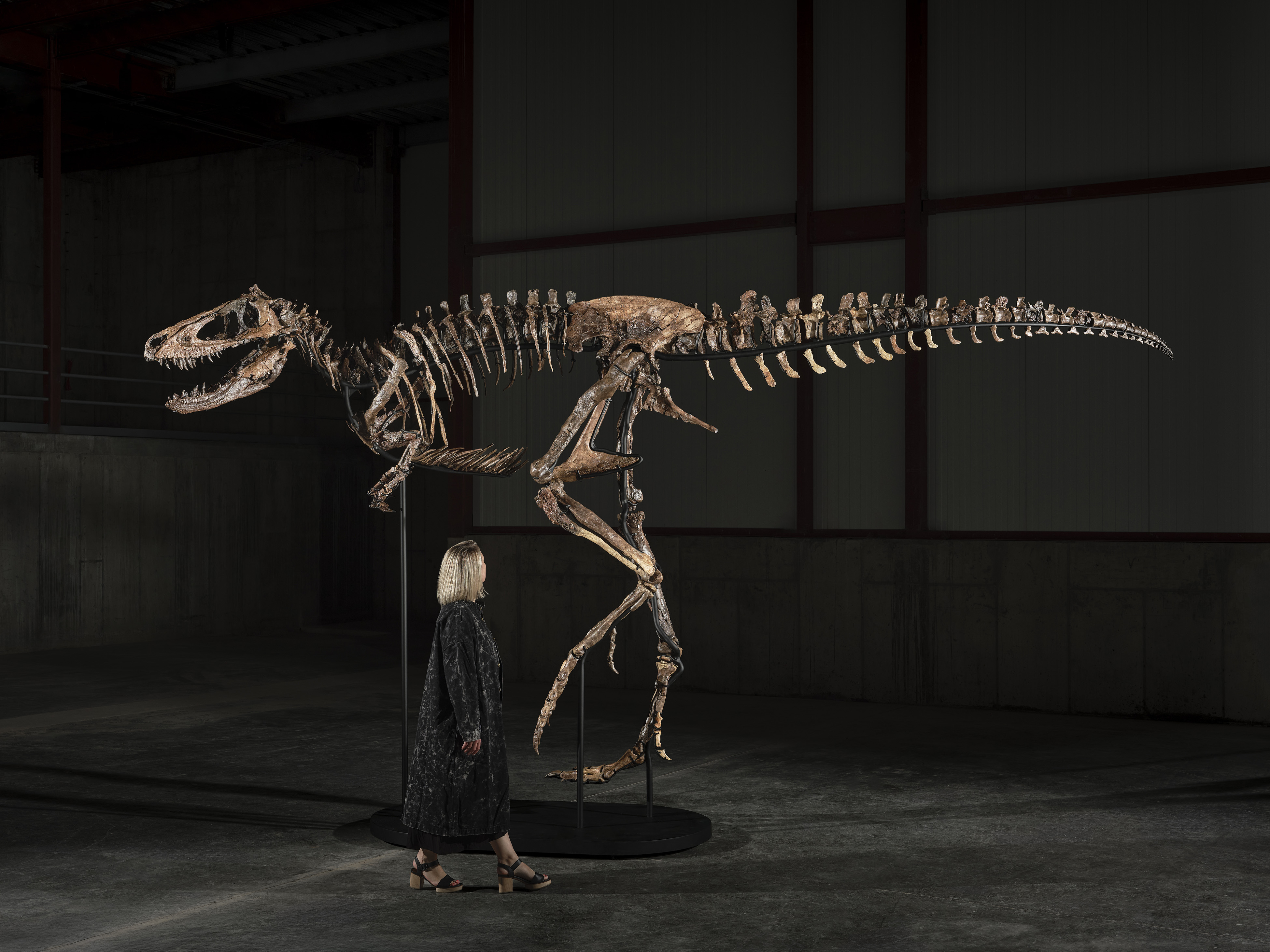
“’Jodi’ was discovered by rancher Jodi Pierson in 2019 in the Hell Creek Formation,” Sotheby’s states on its website, “just eight miles from the dig site of the famous ‘Dueling Dinosaurs’. ‘Jodi’ was then excavated by Pierson’s cousin… commercial paleontologist Clayton Phipps (known as the “Dinosaur Cowboy”) who famously excavated the amazing “Dueling Dinosaurs”.”
Under US law, any dinosaurs found on private property belong to whoever owns the land, meaning there is a strong and well-established trade in commercial fossils from some of the most famous formations such as Hell Creek.
This has included the most expensive fossils ever sold. Earlier this year Gus the T. rex went for an eye-watering $50 million dollars when it went under the hammer, smashing the previous record set by Apex the Stegosaurus of $44.6 million only two years' previously.
In an era where governments are directing ever smaller portions of their budget towards science and education, it’s very rare that museums can afford the sums now being attached to these mounted dinosaur fossils increasingly going up for auction.
With scientists unable to publish on specimens kept in private collections, they have to hope that whoever decides to splash the cash on these fossils then donates them to a museum. That fact is causing plenty of alarm among paleontologists who see important research stymied.
The debate is further charged for species with so few surviving examples, such as Jodi, but there is nothing illegal about this sale making the battle is far more uneven than between a Jodi’s cousin “Bloody Mary”, and the Triceratops.
The auction will take place on October 27 in New York, following a public exhibition starting October 13.