Nature
 PUBLISHED




What you'll discover in this article
- We explore the extraordinary life of Jonathan, a 194-year-old tortoise who was already an adult when Charles Darwin was doing his famous research.
- The tortoise has 287 unique gene variants that may hold the secret to extremely long lifespans.
- “As far as longevity is concerned, he is exceptional for his species,” Stephen Clark, study author who serves as CEO and chief scientist for the non-profit Kallel Labs, told IFLScience.
What is the secret to a long and happy life? Who better to ask than Jonathan the tortoise, the oldest known living land animal?
Jonathan, the 19th-century gentleman
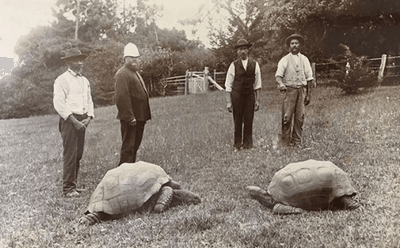
Jonathan the tortoise is widely believed to be nearly 200 years old. In 1882, several decades after he was born in the Seychelles, he was shipped to the island of St Helena in the middle of the South Atlantic.
Since he was mature at the time of his arrival, researchers estimate he’s around 192 to 194 years old. When Abraham Lincoln and Charles Darwin were in their heyday, Jonathan was already a fully grown adult.
He belongs to a species known as the Aldabra giant tortoise (Aldabrachelys gigantea), which is known for its extreme longevity. However, in terms of lifespan, Jonathan may be an exceptional individual from this exceptional species.
Extreme genetics
In a new study, an international team of scientists was keen to use genetic analysis to understand how Jonathan had achieved such a long life.
The one thing we for sure found out that separated him from the other Aldabras in our study is that he has some gene promoters that look very young.
Dr Stephen Clark
“As far as age goes, there was a large study looking at the average age and the maximum age of his species, and the average was around 80 and the maximum was 96. So, as far as longevity is concerned, he is exceptional for his species,” Dr Stephen Clark, study author who serves as CEO and chief scientist for the non-profit Kallel Labs, told IFLScience.
After obtaining a DNA sample from Jonathan’s vet, the team sequenced the genome and compared it to four other Aldabra tortoises, ranging in age from a 5-year-old to adults in their 90s.
This revealed that Jonathan possessed 287 unique gene variants, including several known to be involved in DNA repair, telomere maintenance, insulin regulation, mitochondrial function, and cancer.
"He has some genes that further slow the effects of ageing – by repairing DNA, for example – but also has particularly stable gene regulators that keep his cells working properly long after ours would have run into problems," Dr Justin Gerlach, study author and biologist at the University of Cambridge, told IFLScience.
In other words, the super-senior tortoise has a sturdy set of genes that have allowed him to resist genetic "wear and tear" over the decades.
“The one thing we for sure found out that separated him from the other Aldabras in our study is that he has some gene promoters that look very young, as young as the 5-year-old tortoise we looked at,” added Clark.
“Those same gene promoters looked very old in the two old Aldabras (both 91 years old) we examined. These genes were involved in mainly in mitochondrial function, so we suspect his mitochondria are younger-acting than the 91-year-olds. We found 272 of these genes,” he added.
Is Jonathan truly exceptional?
Within any population, there are always outliers with exceptional lifespans. Some individuals, through a combination of chance and natural selection, inherit genes that give them an advantage, while others may simply be fortunate enough to avoid the diseases, accidents, and other hazards that shorten life.
Lifestyle and environment can also be very influential – and it’s fair to say that this tortoise has had a very privileged life.
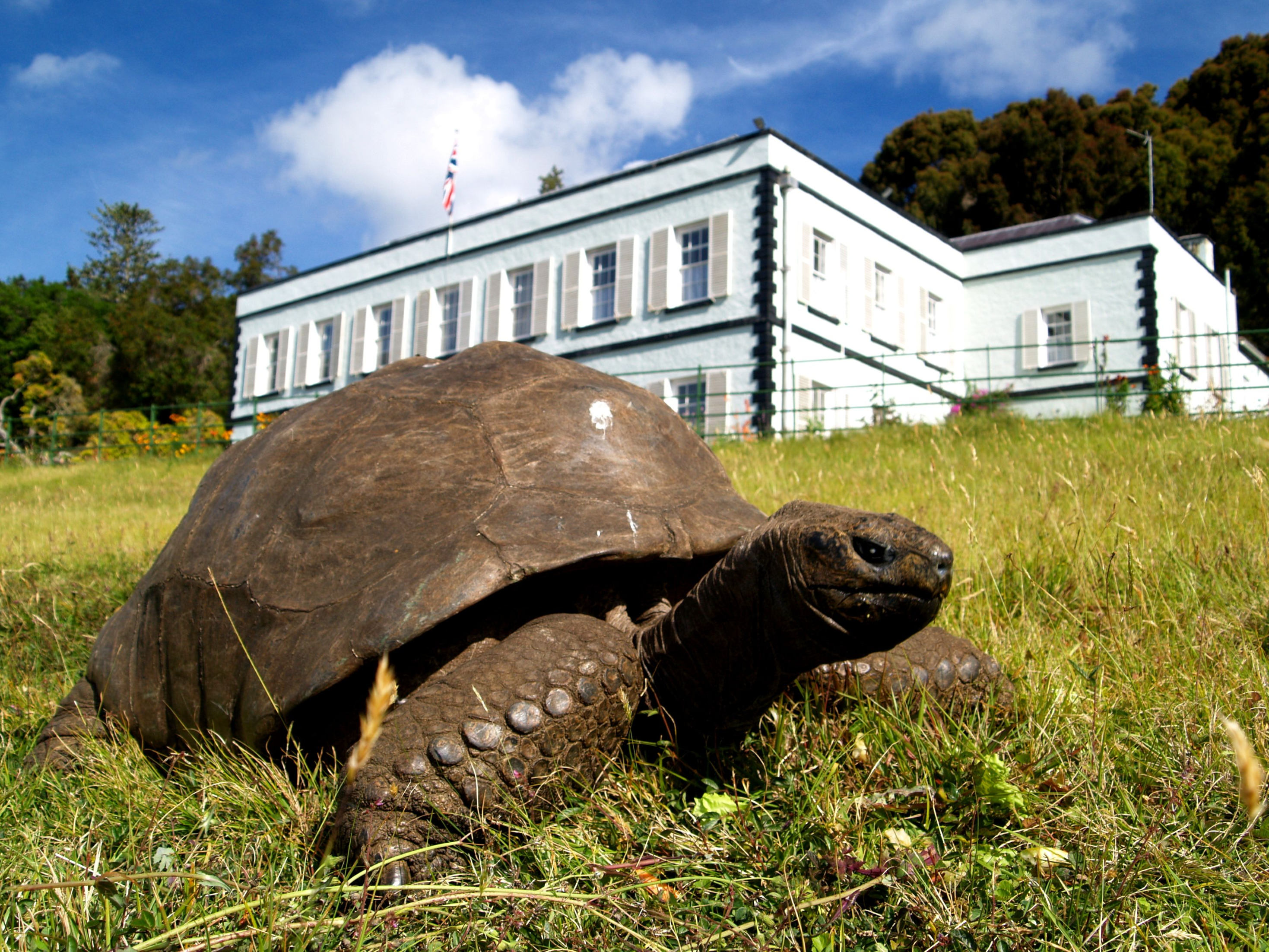
Jonathan spends his days roaming around the predator-free grounds of Plantation House, the official residence of the governor on Saint Helena. Because of his poor sense of smell and eyesight, he is hand-fed by a personal team of veterinarians and caretakers.
However, as this study suggests, his lavish lifestyle isn't the only secret to his success.
But is it purely genetic potluck that makes Jonathan so special? Some of the researchers suspect that he may be unique in other ways, and they plan on finding out more.
“He may be a subspecies of Aldabra, a particular subspecies that lives longer than the average Aldabra, but we don't know this yet. Kallel wants to sequence more Aldabras like him. There is an island called the 'Aldabra atoll' that has around 100,000 Aldabras living on, so we plan to look at the genetics of some of those Aldabras and see just how different Jonathan is,” added Clark.
The study is published in the journal Science Advances.