Nature
 PUBLISHED


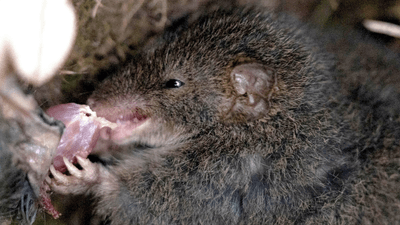


A marsupial that has sex until it drops dead has been found to cannibalize the spent remains of males that died in the frisky fray. Before you question their stamina, you should know that these animals embark on mating marathons that can go on for over 10 hours, resulting in an attack of hormones that becomes too much to bear.
“During the breeding season, male and females mate promiscuously in frenzied bouts lasting as long as 14 hours,” said Associate Professor Andrew Baker from QUT School of Biology and Environmental Science in a statement. “Certain stress-induced death follows for all males as surging testosterone causes cortisol to flood uncontrolled through the body, reaching pathological levels.”
And the bad times don’t stop there, as it turns out the bodies of spent males have one thing left to give when their loving days are done.
“The males drop dead, which provides an opportunity for cheap energy gain via cannibalism for still-living males and pregnant or lactating female antechinuses,” added Baker.
Producing milk is an energetically expensive pastime (just ask polar bear moms), and creating life even more so. It makes sense not to waste calories when they keel over in front of you, but it was still an unusual and surprise discovery for the researchers that first spotted the behavior.
“While cannibalistic behaviour has been reported in some dasyurids (the family which includes antechinuses, quolls and Tasmanian devils), it is very rare to observe in the wild,” Baker continued.
The finding comes following photos of a mainland dusky antechinus (Antechinus mimetes) eating a dead member of its own species. The photos were taken last year in New England National Park, New South Wales, Australia.
The range of mainland dusky antechinus crosses over with another closely related species, meaning the sex deaths can sustain other species as well as their own.
“In places such as Point Lookout where two antechinus species (A. mimetes and the brown antechinus, A. stuartii) are living in the same area, the two slightly separated breeding periods provide the opportunity to cannibalise both their own and the other species,” said Baker. “Each species may benefit from eating dead males of the other."
The benefit of this cannibalism likely changes depending on the breeding window of each species. For the antechinus that breeds earlier, the lactating females probably benefit most, while the later breeding group may be near-death males sustaining themselves off of already dead ones.
Unfortunately for the male antechinus, eating your own doesn’t prevent the inevitable.
“The antechinus seen feeding on its dead comrade appeared vigorous and large-bodied, but it had damage to its right eye and hair loss on its arms and shoulders, which is associated with stress-induced decline in males. He was perhaps destined soon to become somebody else’s meal.”
The study is published in Australian Mammalogy.