Nature
 PUBLISHED
 2
2


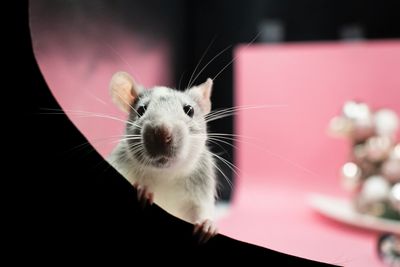


In a quest to understand complex speech, scientists inserted what's been dubbed a human “language gene” into mice. Remarkably, the genetic tweak had a profound impact on the little rodents' ability to squeak, revealing astonishing clues about the evolution of vocal communication.
Mouse pups that had the human version of the language gene showed different vocalization patterns from their buddies with the usual version mice have. When calling for their mother, their squeaks were higher-pitched and featured a different selection of sounds than usual.
“All baby mice make ultrasonic squeaks to their moms, and language researchers categorize the varying squeaks as four ‘letters’—S, D, U, and M. We found that when we ‘transliterated’ the squeaks made by mice with the human-specific [language gene] variant, they were different from those of the wild-type mice. Some of the ‘letters’ had changed,” Robert B Darnell, study author and head of the Laboratory of Molecular Neuro-Oncology at Rockafeller University, said in a statement from 2025.
Once grown up, the genetically modified mice showed even more interesting changes. When attempting to woo a potential mate, the males produced more complex high-frequency calls than the controls.
“They ‘talked’ differently to the female mice. One can imagine how such changes in vocalization could have a profound impact on evolution,” explained Darnell.
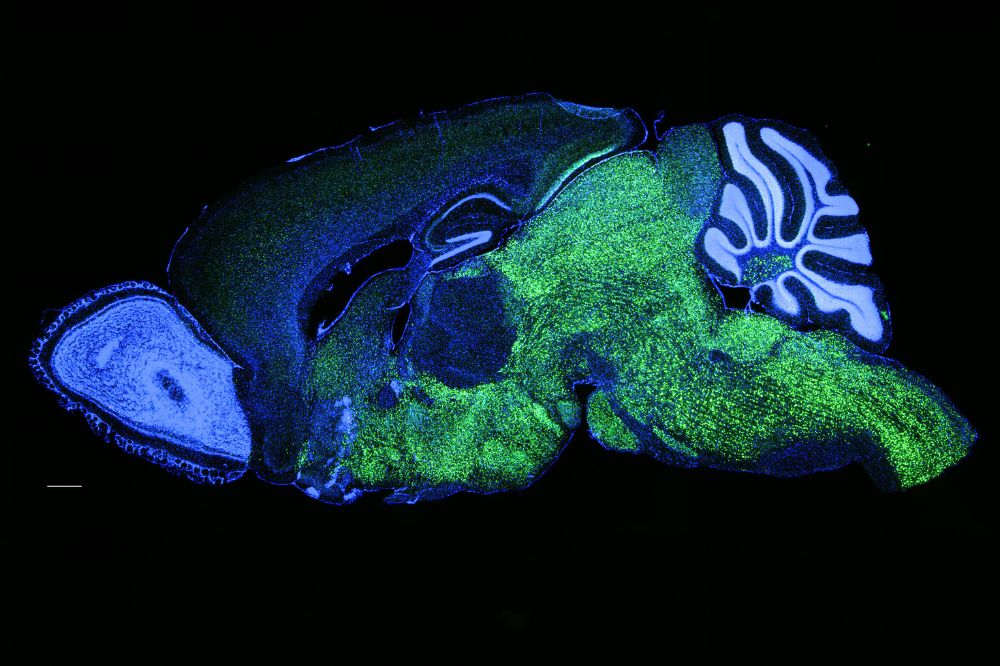
All of these changes are associated with the shift of a gene called Nova1, which codes for the protein neuro-oncological ventral antigen1 (NOVA1). Other genes, as well as other environmental factors, are likely to be associated with the emergence of complex vocal communication. However, NOVA1 certainly appears to be an important ingredient in the mix.
This gene is found across a wide variety of animals – from birds to mammals – but it's slightly different in humans. The human variant produces a single amino acid change, from isoleucine to valine, at position 197 (I197V) in the NOVA1 protein chain.
The researchers first found that the human-specific NOVA1 variant did not change how the protein binds to RNA for brain development or movement control. In other words, it worked just like the original mouse version. However, they discovered something unexpected: the human NOVA1 variant did affect RNA binding at genes linked to vocalization.
“Moreover, many of these vocalization-related genes were also found to be binding targets of NOVA1, further suggesting the involvement of NOVA1 in vocalization,” said Yoko Tajima, first study author and postdoctoral associate in Darnell’s lab.
“We thought, wow. We did not expect that. It was one of those really surprising moments in science,” added Darnell.
What’s very striking is that our closest known relatives, Neanderthals and Denisovans, did not have the same human variant we possess. They simply had the same NOVA1 protein as all non-human animals.
“Our data show that an ancestral population of modern humans in Africa evolved the human variant I197V, which then became dominant, perhaps because it conferred advantages related to vocal communication. This population then left Africa and spread across the world,” remarked Darnell.
Did this mean that our extinct hominin cousins lacked the genetic equipment to speak as fluently as Homo sapiens? If so, could this have been a key advantage that allowed our species to thrive while others fell into demise? This latest study would seem to suggest so, although (as ever) there’s undoubtedly more to the tale.
The study was published in the journal Nature Communications in February 2025.
An earlier version of this article was published in March 2025.