


 Nature
 PUBLISHED





What you’ll find in this article…
- One of the world’s rarest butterflies – the Poweshiek skipperling – was facing extinction, with more found in captivity than existed in the wild.
- Michigan State University has announced the species has been saved from the brink of extinction with the release of thousands of captive-bred individuals in the past four years.
- The recovered population is now expanding, a promising sign for the wider ecosystem because, as Dr Nick Haddad told IFLScience, these butterflies “are canaries in the coalmine” – if their habitat is improving, that’s benefiting all species that live there.
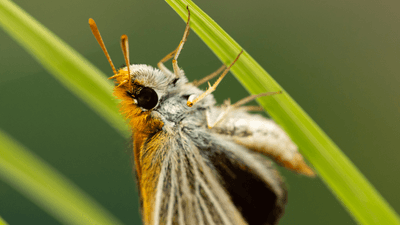
A tiny butterfly has been quietly losing a battle in the US Midwest since the early 2000s, with its numbers plummeting in the wild. But in 2022, conservation scientists in Michigan started releasing captive-bred Poweshiek skipperlings before they were lost forever. Now, the recovered population has expanded to the point that Michigan State University (MSU) is announcing it has saved the species from extinction.
Over 99 percent of the prairie and prairie fen habitat in the US has been lost. By improving habitat for [the] Poweshiek skipperling, we're also improving habitat for all species that live there.
David Pavlik
It may seem like this is only good news for a small insect you've never heard of, but conservation efforts like this have broader implications for the ecosystems of endangered animals.
“Restoring Poweshiek skipperling populations requires improving prairie and prairie fen habitat,” David Pavlik at MSU’s W.K. Kellogg Biological Station told IFLScience.
“Over 99 percent of the prairie and prairie fen habitat in the US has been lost. By improving habitat for [the] Poweshiek skipperling, we're also improving habitat for all species that live there, from the most common to the rarest.”
These butterflies (Oarisma poweshiek) used to be found across the Midwest, from Iowa to Michigan and southern Canada, but their numbers have dropped precipitously over the past two decades. A combination of habitat loss, wetland destruction, and damaging agricultural practices is thought to have contributed to their demise.
Neonicotinoid pesticides are a particular concern, as they are known to have contributed to the decline of a broad range of insect species.
A last outpost
The Poweshiek skipperling is clinging on in Manitoba, Canada, but Michigan has become its last true stronghold, something researchers attribute to the state's unique landscape.
Surrounded by the Great Lakes, it’s home to rare prairie fen wetland habitats. For this reason, Michigan is now a vital refuge for many of North America’s most endangered butterflies.
Species recovery can only be successful if there's suitable habitat for released animals to thrive in, and so a key step in this conservation story was the restoration of the environment. Then, it was time to get breeding.
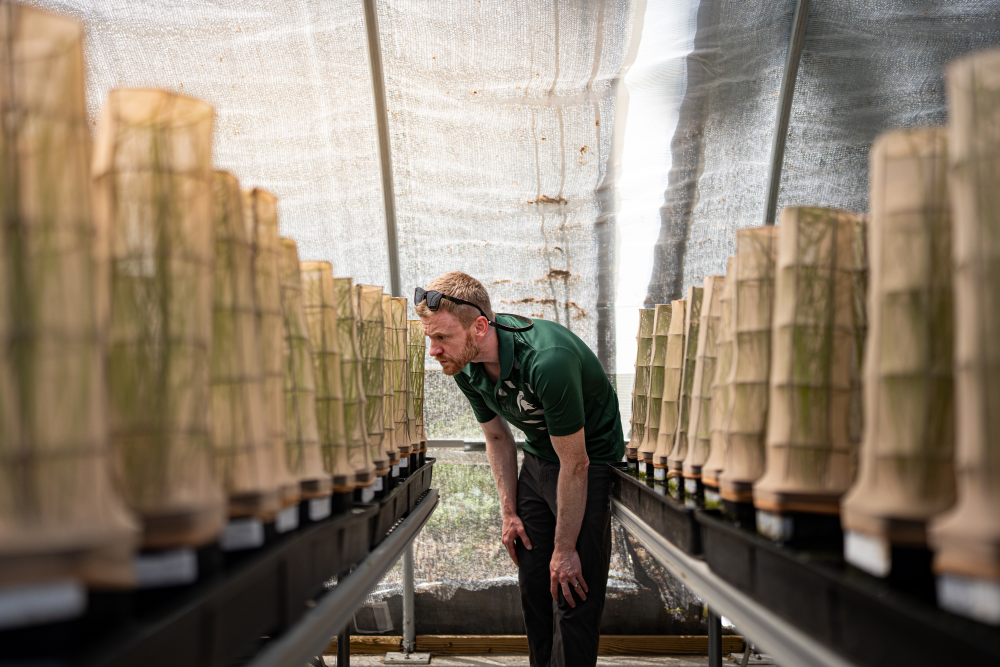
MSU and its conservation partners have created specially designed hoop houses to recreate the humid conditions Poweshiek skipperling caterpillars need to develop. Once they had metamorphosised into butterflies, they were ready for release, but the scientists needed to be able to keep track of these individuals.
So, how do you tag a butterfly? you put it to sleep, of course.
“We use a very small amount of isoflurane (frequently used to anesthetize humans and animals during medical procedures) in an enclosed container that temporarily puts the butterflies to sleep so that we can safely mark them before release,” said Pavlik.
“Because we use such a small amount, the butterflies wake up very shortly after we mark them, usually within 30 seconds to a minute."
Flying free
A first release of 102 butterflies in 2022 hoped to prevent extinction, and another 1,300 had joined them by 2025. The researchers now say it’s possible to see hundreds of these butterflies while walking the prairie fen, while back in 2022 just nine sightings were documented in the entirety of the US.
In the US Midwest and in the US, we have lost a quarter of all butterflies in the past two decades. This includes loss of very common species.
Nick Haddad
A promising sign for Poweshiek skipperlings, and every other creature they share their habitat with.
“They are canaries in the coalmine,” Dr Nick Haddad, professor at MSU’s College of Natural Science, told IFLScience. “In the US Midwest and in the US, we have lost a quarter of all butterflies in the past two decades. This includes loss of very common species.”
“Though the endangered species get lots of attention and effort devoted to them, it is not long before other butterflies will follow suit.”
As such, success stories like that of the Poweshiek skipperling mark a big moment for the preservation of our natural spaces.
A lot of fuss over a fuzzy little butterfly? Absolutely not.




 1
1