Nature
 PUBLISHED


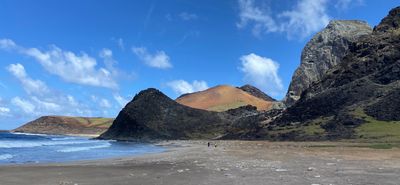


On a remote, volcanic Brazilian island, sea turtles gather and lay their eggs. However, a new study has found a worrying trend emerging in this quiet corner of the South Atlantic: nesting sites are becoming riddled with “plastic rocks”.
Back in 2019, scientists came across a collection of blue-ish, green rocks on Trindade Island, around 1,140 kilometers (708 miles) off the coast of Brazil’s southeastern state of Espírito Santo. To their shock, chemical analysis of the material revealed it was formed of rocky sediment that had become infused with plastic melted from volcanic activity.
In a new study, researchers returned to Trindade Island to learn more about the situation. So-called “plasticlasts” were found on six beaches, most notably on Tartarugas Beach, which means Turtle Beach in Portuguese.
Along these beaches, the team found that many of the resident green turtles (Chelonia mydas) had plastic rocks deep within their nests.
“One of the requirements for the Anthropocene to be considered a new geological epoch, something still under debate, is precisely the existence of human-made materials buried in the sediment. As they were up to 10 centimeters [4 inches] below the surface in the nests, this is a potential accumulation point for the next million years,” Fernanda Avelar Santos, the first author of the study from São Paulo State University, said in a statement.
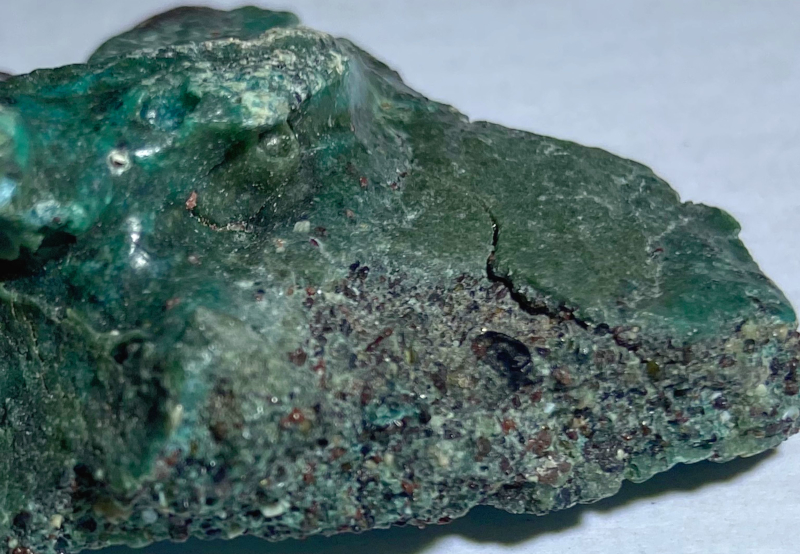
“Chemical tests identified that these were high-density polyethylene [HDPE] ropes and dyes containing copper, a metal that gives them their green color. This raises a red flag regarding maritime activities such as fishing and shipping, which are responsible for this source of marine pollution, the largest in the world,” added Santos.
Different forms of plastic rocks were found in different parts of the environment. Near the water's edge, they tended to be rounded and smoother, molded by the sea’s waves. Those further inland were more jagged and angular, as they're less impacted by water erosion.
“This indicates that plastic is part of the geological cycle of the beach, with characteristics very similar to grains of sand and rock fragments,” Santos explains.
The scientific community is still racing to understand the full scope of how microplastics impact biological health. While some researchers point to the potential for chemical toxicity and endocrine disruption, others argue that the physical presence of these particles poses a more immediate mechanical threat to digestive systems.
Understanding these threats is vital, as microplastics can now be found in practically every environment and biological system on the planet, from the deepest ocean trenches to bodies of Antarctic insects. One thing is clear: the proliferation of plastics into the natural world is far bigger than a litter problem.
The study is published in the journal Marine Pollution Bulletin.