


 Nature
 PUBLISHED


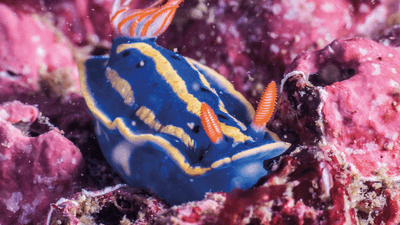


The mysteries of the animal world are plentiful with much about the inner workings of the lives of Earth’s animals still to be uncovered. In the sea slug department, however, there has been something of a breakthrough, as scientists have successfully reared a chromodorid sea slug from egg to adult in a lab for the first time.
Nudibranchs, or sea slugs, are mollusks and are popular for their bright colors and funky appearances. Surprisingly, sea slug young have shells immediately after hatching that they lose as they settle on reefs. At this stage of development, they shift from a floating lifestyle to becoming creatures at the bottom of the sea bed. While the stages of development between floating and seafloor life ages are understood in some species they had remained something of a mystery in the species Hypselodoris festiva.
The reason why it is so difficult to rear sea slugs in the Chromodorididae family, which includes H. festival, is that they are picky eaters, with each species having a very specific diet, some of which are unknown. Therefore getting the appropriate food for the adults to create an egg mass has been challenging.
Nudibranchs are simultaneous hermaphrodites, meaning they have both sex organs. Adult individuals spawn masses of fertilized eggs after mating. Scientists collected adult H. festiva from tidal pools in Japan and reared them in a laboratory setting. Just six days later several thousand floating larvae hatched. Fed on a diet of microalgae the young continued to grow, metamorphosing about three weeks after their hatch date.
Metamorphosis involved the loss of their shells and the known switch of lifestyle from floating to sea floor dwellers. At this time they also ate the same food as adults, namely sponges, and developed their characteristic coloration at around 36 days after hatching. They started to form the feathery sensory structures known as rhinophores as well as gills around 42 days after hatching.

Observing their growth in the lab setting allowed researchers to create nine stages of growth for the sea slugs, which include two metamorphic stages and seven juvenile ones.
The study also revealed more about sea slug bottoms. Prior to the study, the anus was believed to be on the dorsal side of the sea slug and did not move much during growth. However in H, festiva the anus appeared on the ventral side as a juvenile and the adult stage anus was on the dorsal side, meaning the sea slugs had, for a time, two anuses. The team speculates that the internal organs detach from the juvenile anus and move to the adult position.
There are more than 395 species in the Chromodorididae family, and the full life cycle of none of them had been fully understood before now. The team is proposing H. festiva as the model organism for chromodorid research and the methods applied to rear this species could be applied to other sea slugs in the future.
The paper is published in Scientific Reports.


 1
1