


 Nature
 PUBLISHED


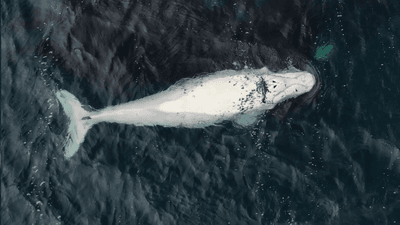


A spectacular rare white southern right whale has been spotted off the coast of Argentina. Thought to be a young albino whale swimming with its mother, the calf was sighted in July.
Southern right whales (Eubalaena australis) can grow to be 17 meters (55 feet) long and weigh 80,000 kg (176,370 pounds). They are distinctive in appearance, being the only larger whale without a dorsal fin. Their name comes from whaling, being thought of as the “right” whale to hunt for oil and meat. These whales are baleen filter feeders, consuming krill and other small marine invertebrates and crustaceans.
Calving in right whales is thought only to occur every 3-5 years and gestation takes around 12 months – however, this has increased in recent years to 6-10 years, potentially due to stress. After the calf is born it is thought to be fully weaned after another year with its mother. The calves are born from June to October.
“This whale calf is only a few days old and its presence is significant for the region, as it is likely to remain here for several months,” Agustín Baraschi, who filmed the video, told Storyful.
The whales are labeled as least concern by the IUCN, and since they spend most of their time in an area less dominated by humans than the northern right whale, are less likely to become entangled in fishing lines or struck by boats.
The calf is likely albino, according to Baraschi. Albinism is a genetic mutation that affects the production of the pigment melanin within the skin of an animal. This is a relatively common phenomenon in the animal world and can be seen in everything from killer whales to anteaters. There are even variations that can turn animals, patchy, yellow, or completely black.
In other whale news, a humpback slapped a man with its tail, while they’ve also been added to the list of animals known to use tools.



 1
1