Health and Medicine
 PUBLISHED



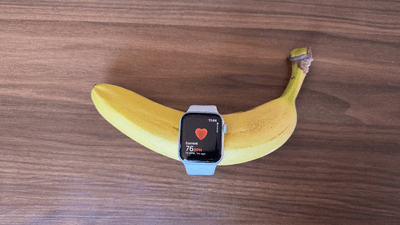


Here’s a fun experiment for any smartwatch or fitness tracker owners: grab a piece of fruit in your home and wrap your smartwatch around it. Found a pulse? You’re not alone.
Turns out lots of fruits yield a reading, revealing the racing pulses of kiwis and borderline bradycardia of bananas.
Fear not – we haven’t overlooked the sentience of the fruits we happily chuck in a blender – it’s merely a trick of light and a little thing science likes to call photoplethysmography.
How do smartwatches work?
Smartwatches detect your pulse through something known as photoplethysmography (or PPG, because who has time for all those consonants). It’s a non-invasive technique that measures volumetric changes in blood flow by shining light onto skin and then monitoring how that light is absorbed and reflected.
It’s used in pulse oximeters in clinical settings (if you’ve ever had something popped on the end of your finger, congratulations! You’ve been pulse oximetered). The same tech is also used in fitness trackers and smartwatches and you may have noticed the little light under the watch’s face.
When your heart beats, it briefly increases the volume of blood in the small capillaries just under the surface of your skin. That increase in blood flow changes how much light is absorbed and reflected, and these changes are tracked to give a pulse rate.
Does fruit have a heartbeat?
Wrap a smartwatch around a banana, and there’s a decent chance you’ll get a pulse. We asked Space Editor Dr Alfredo Carpineti to do just that and he got a reading of 85 beats per minute. Meanwhile, Health & Medicine Editor Laura Simmons detected the pulses of a nectarine and avocado in the cool low 70s, a rather stressed kiwi at 110, and a flatlining tomato – RIP.
So, beyond wasting the billable hours of our editors, what does this tell us?
When you put a smartwatch on a fruit it’s still going to try and detect a pulse through PPG. That means any random fluctuations in the way the light is absorbed and reflected – be that vibrations or movement – will get picked up by the tech’s algorithm and translate it into a pulse. The phenomenon isn’t limited to fruit, we just think they look the funniest wearing a fitness tracker.
If you’ve got a smartwatch, why not try it for yourself and let us know in the comments if your fruits’ hearts are racing – or anything else in your house for that matter...