Nature
 PUBLISHED



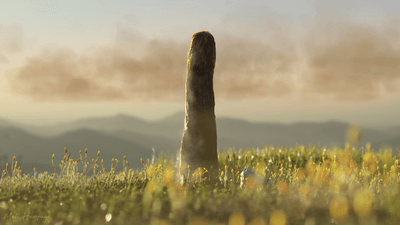


Earth was a very different planet 410 million years ago. There was no grass. No trees. But something else towered high into the sky on land. The planet’s largest terrestrial organisms: Prototaxites.
It’s easier to tell you what Prototaxites aren’t rather than what they are. Once thought to have fungal roots, we’ve since found evidence to the contrary. Seemingly fulfilling the role of trees, they also don’t match with plants. In fact, Prototaxites don’t seem to fit the bill for any kingdom we know of.
“They are life, but not as we now know it, displaying anatomical and chemical characteristics distinct from fungal or plant life, and therefore belonging to an entirely extinct evolutionary branch of life,” said Dr Sandy Hetherington, a research associate at National Museums Scotland and senior lecturer from the School of Biological Sciences at the University of Edinburgh, in a statement.
Life in the Rhynie chert
Hetherington has been studying Prototaxites fossils retrieved from the Rhynie chert. This is an Early Devonian deposit of rocks containing the well-preserved remains of an ancient wetland ecosystem found near the Scottish village of Rhynie.
Derived from sediment composed mostly of quartz, it dates to 400 to 412 million years ago and contains exceptionally well-preserved fossils of some of the earliest lifeforms that moved onto land.
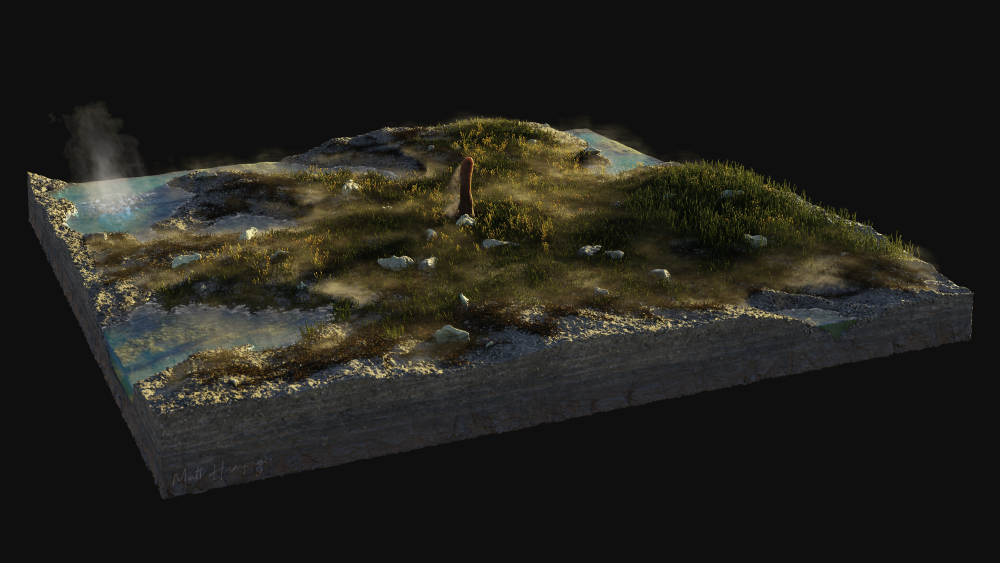
This includes Prototaxites. The giants of their time, they reached tree-like heights of around 8 meters (26 feet). Having appeared during the late Silurian around 420 million years ago, these organisms were only overtaken in size by trees during the Middle to Late Devonian, some 25 million years later.
These lifeforms were a sizable resource for hungry arthropods, but despite their size the identity of Prototaxites remained something of a mystery. Over the last 165 years scientists have found around a dozen species of Prototaxites, but it was just one – Prototaxite taiti – found in the Rhynie chert that helped us to narrow down where they sit on the tree of life.
Fungal flaws
For a long time, the leading theory was that these pillar-like organisms were a kind of fungus, but a 2026 study found their fossils lacked evidence of chitin, the primary material of fungi cell walls. They also had unusual internal structures not seen in any living or extinct fungus.
That there aren’t similar lifeforms from the modern era or the ancient past suggests one explanation, say the researchers: that Prototaxites belonged to a lineage of complex eukaryotes that evolved independently before going extinct without leaving behind any living descendants.
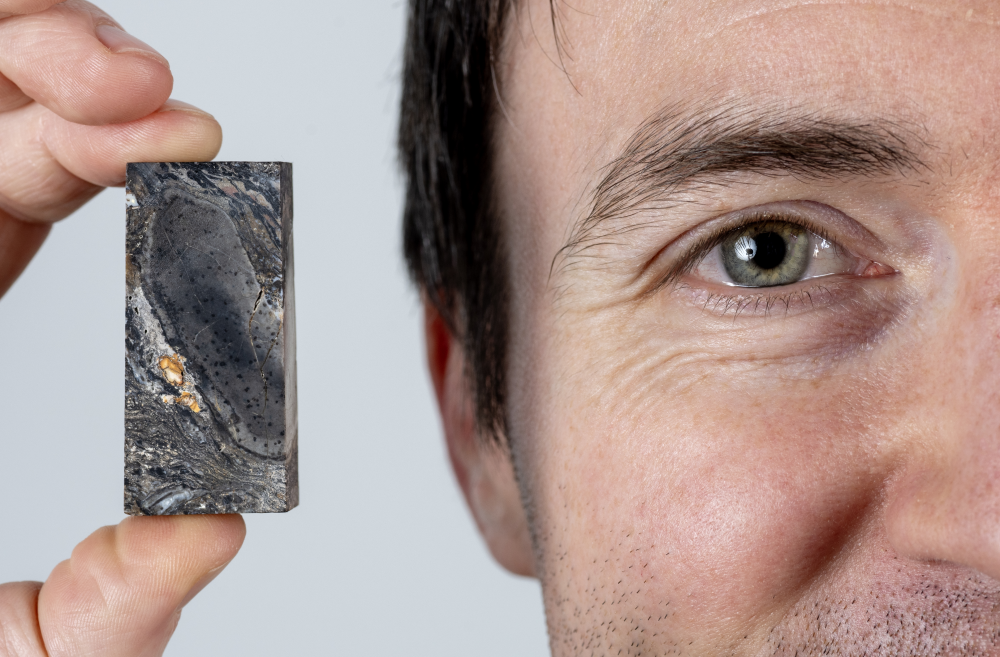
“Our study, combining analysing the chemistry and anatomy of this fossil, demonstrates that Prototaxites cannot be placed within the fungal group,” said Laura Cooper, a PhD student from the Institute of Molecular Plant Sciences at the University of Edinburgh and co-first author, in the statement.
“As previous researchers have excluded Prototaxites from other groups of large complex life, we concluded that Prototaxites belonged to a separate and now entirely extinct lineage of complex life."
"Prototaxites therefore represents an independent experiment that life made in building large, complex organisms, which we can only know about through exceptionally preserved fossils.”
The great (big) unknown
So, what is this extinct branch on the tree of life? Regrettably, we still don’t have a name for it, and for good reason.
If correct, the researchers suggest Prototaxites are just a handful of examples of this extinct branch of complex life and, as such, identifying that lineage won’t be possible unless we start finding more fossils. Until that day, we can only confidently say what Prototaxites isn’t: an easy lifeform to identify.