Nature
 PUBLISHED
 10
10


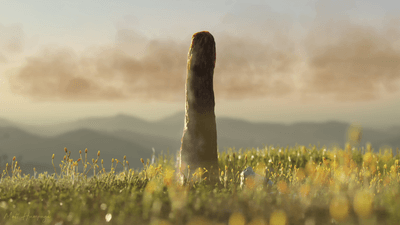


The question of where to place Prototaxites, the Devonian Era’s largest land species, on the tree of life appears to be answered. These fossils have been enigmas for almost two centuries, and palaeontologists have now concluded that’s because they were truly unlike anything modern, a lineage snuffed out by remorseless planetary change.
The Devonian Period is often called “The Age of Fishes”, but it also saw the first tall forests on land. However, land plants would not appear, at least at these sizes, until the subsequent Carboniferous Period. That left the Prototaxites of the era a puzzle even to Darwin. The most common explanation has been that they were a type of fungus, creating an ecosystem worthy of a psilocybin trip where mushrooms towered up to 8 meters (26 feet) high.
A newly published paper challenges this, using evidence drawn not from the giants themselves, but a small species recognizably part of the same kingdom. The work was done using specimens preserved in remarkable detail in the Rhynie chert, a fossil-rich strata from northern Scotland.
“The Rhynie chert is incredible,” said Dr Corentin Loron of the University of Edinburgh in a statement. “It is one of the world’s oldest fossilised terrestrial ecosystems and because of the quality of preservation and the diversity of its organisms, we can pioneer novel approaches such as machine learning on fossil molecular data.”
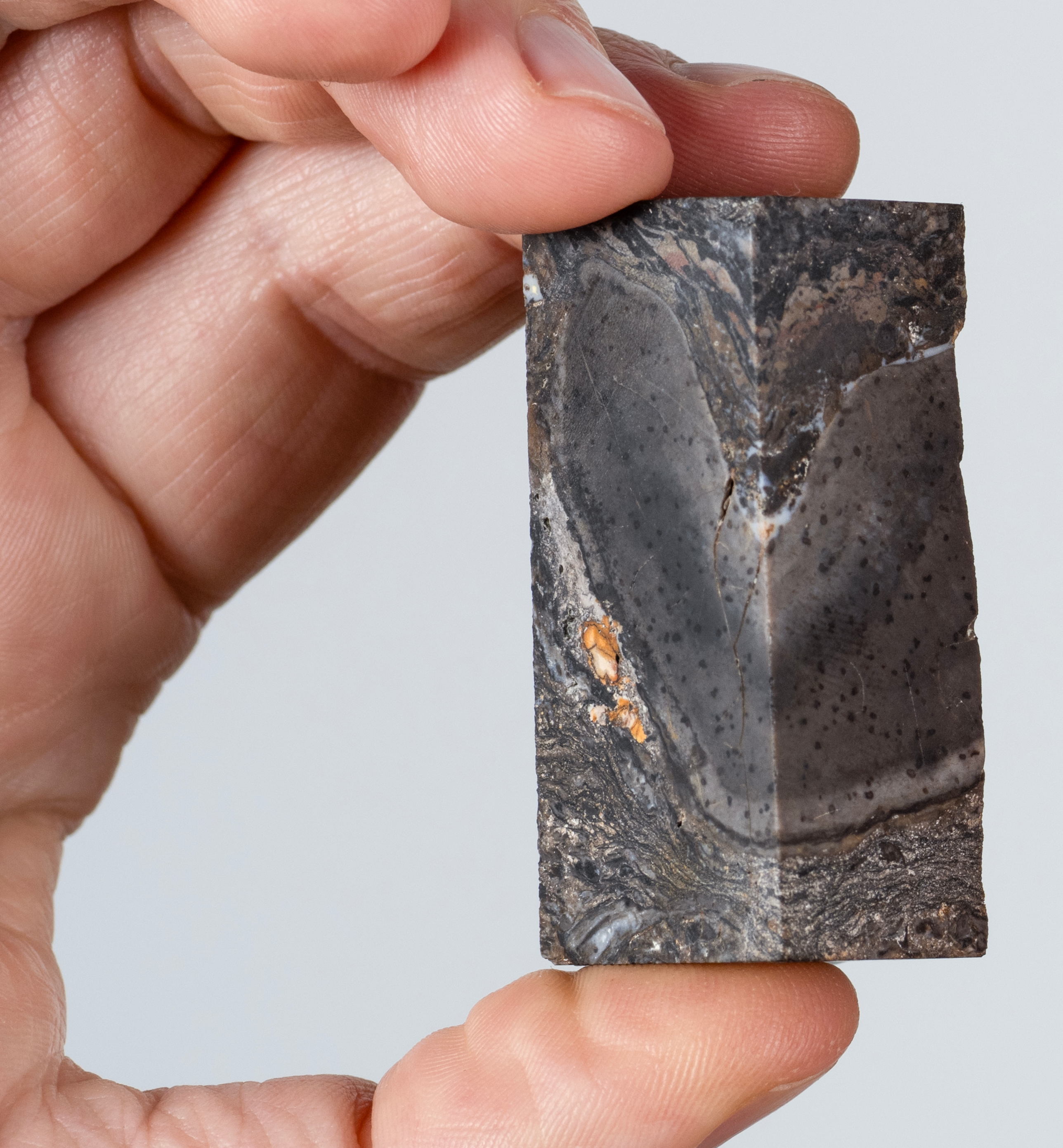
The authors submitted a version of their paper in July 2024, and a preprint attracted attention last March while still undergoing peer review. They argued that small, but exceptionally well-preserved fossils known as Prototaxites taiti lacked the structural polymers such as chitin, chitosan, or beta-glucan that all living fungi have in their cell walls. Since some of these polymers can be identified in the cells of fungi that lived alongside P. taiti, and are preserved in the same chert, the authors conclude it is not that the passage of time has destroyed the evidence. Instead, these molecules were never there, and P. taiti built itself in other ways.
Similarly, the authors tested for the presence of perylene, a biomarker found in fungi, but absent from all P. taiti samples they studied.
The largest P. taiti sample is 5.6 centimeters (2.2 inches) wide. We don’t know how long it grew, but a section spans the entirety of a 6.9-centimeter (2.8-inch) block. This was apparently the largest living thing in the ecosystem captured by the chert.
Nevertheless, P. taiti was much smaller than the giant Prototaxites that have been found in younger fossil beds, some of which had bases a meter (3.3 feet) wide. Despite the difference in scale, the authors are confident they are closely related, and deserve the same genus name. Consequently, they conclude, if P. taiti was not a fungus, neither were the other Prototaxites.
However, the authors agree that Prototaxites also had differences from plants, algae, animals, or prokaryotes too great to place them with any surviving lineage.
“It’s really exciting to make a major step forward in the debate over Prototaxites, which has been going on for around 165 years,” said Dr Sandy Hetherington. “They are life, but not as we now know it, displaying anatomical and chemical characteristics distinct from fungal or plant life, and therefore belonging to an entirely extinct evolutionary branch of life. Even from a site as loaded with palaeontological significance as Rhynie, these are remarkable specimens and it’s great to add them to the National Collection in the wake of this exciting research.”
The Rhynie chert was deposited 407 million years ago, around a third of the way through the 50 million years in which Prototaxites appear in the fossil record. Towards the end of their time, Prototaxites were overtaken in size by land plants. Whether their extinction was simply a matter of not being able to compete with the new arrivals, or if some planet-wide change spelled their demise is unknown.
The study is published open access in Science Advances.