Nature
 PUBLISHED
 9
9




The world of botany is usually pretty good at following certain rules. It was previously thought that because the Fibonacci sequence is present in the structure of so many extant plant species, it must have evolved in some of the earliest living plant species. However, an ancient species, one of the first examples of a plant with leaves in the fossil record, has thrown a spanner into the understanding of this by having leaves arranged in such a way that Fibonacci numbers can’t describe.
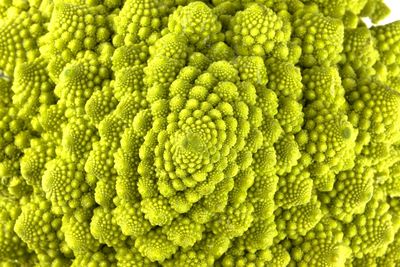
The Fibonacci sequence is a series of numbers where each number is the sum of the two preceding ones. The sequence starts with 0, 1, 1, 2, 3, 5, 8, and so on. Most living plants have organs that emerge at 137.5 degrees from the previous organ, thereby creating continuous spirals with the number of clockwise and anticlockwise spirals forming consecutive numbers in a Fibonacci sequence. Common examples of this can be seen in the heads of sunflowers and in pinecones.
The clubmoss Asteroxylon mackiei is an extinct lycopod species belonging to the earliest clade of leafy plants, the Drepanophycales. All the living lycopod clades have species with Fibonacci spirals, however, in the Early Devonian family Lycopodiales, non-Fibonacci species outnumber (pun intended) the ones with the Fibonacci spirals, and scientists are still debating why this might be.
Asteroxylon mackiei is a fossil species that is over 400 million years old. The fossilized remains were found at the Rhynie Chert in Aberdeenshire, Scotland in 1969, and cross-sections of the plants were taken. In this study, 3D-printed reconstructions were made of the cross sections to better understand the arrangement of these unusually presented leaves.
“Our model of Asteroxylon mackiei lets us examine leaf arrangement in 3D for the first time. The technology to 3D print a 407-million-year old plant fossils and hold it in your hand is really incredible. Our findings give a new perspective on the evolution of Fibonacci spirals in plants.” Said Dr Sandy Hetherington, Evolutionary Palaeobiologist and Project Lead, in a statement.
While two of the reconstructions following a Fibonacci spiral pattern have eight counter-clockwise spirals and one reconstruction had seven and the one had nine, both non-Fibonacci numbers. The two reconstructions had no spirals at all, and instead grew their leaves in rings along the stem.
" Using these reconstructions we have been able to track individual spirals of leaves around the stems of these 407 million year old fossil plants. Our analysis of leaf arrangement in Asteroxylon shows that very early clubmosses developed non-Fibonacci spiral patterns," said Holly-Anne Turner, first author of the study,
These findings suggest that plants alive today may have evolved leaves that are arranged in Fibonacci spirals throughout plant evolution and not through ancient genes from plants like Asteroxylon mackiei. The research also suggests that leaf evolution in these clubmosses might be evolutionarily separate from other groups of plants.
The paper was published in the journal Science.
An earlier version of this story was published in 2023.