Nature
 PUBLISHED


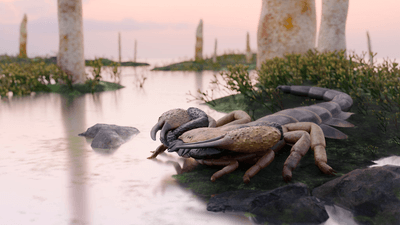


Museums are home to many mysteries. For all their labels and information panels, there remain specimens that elude identification for decades – even hundreds of years – after their discovery. Just ask the world’s largest scorpion.
Named in a new study as Praearcturus gigas, this extinct behemoth was first described as a giant crustacean similar to a woodlouse back in 1871. Being 415 million years old, what evidence of their existence remained was fragmentary, making it harder to build a complete picture of what it looked like and how it lived.
Fresh discoveries of better-preserved fossils in recent years inspired a revisit of the remains’ identity. Armed with modern techniques including X-ray tomography, a team of scientists took another look at this ancient crustacean and compared its anatomy against that of several other extinct and extant animals.
The results revealed several features that are unique to scorpions. They include giant pincers with a fixed and movable finger, the latter measuring over 76 millimeters (2.99 inches) in length. It also had a stridulatory surface, something extant scorpions use to warn predators by rubbing their body parts together. It also had a sternum similar in shape to the Silurian scorpion Eramoscorpius brucensis.
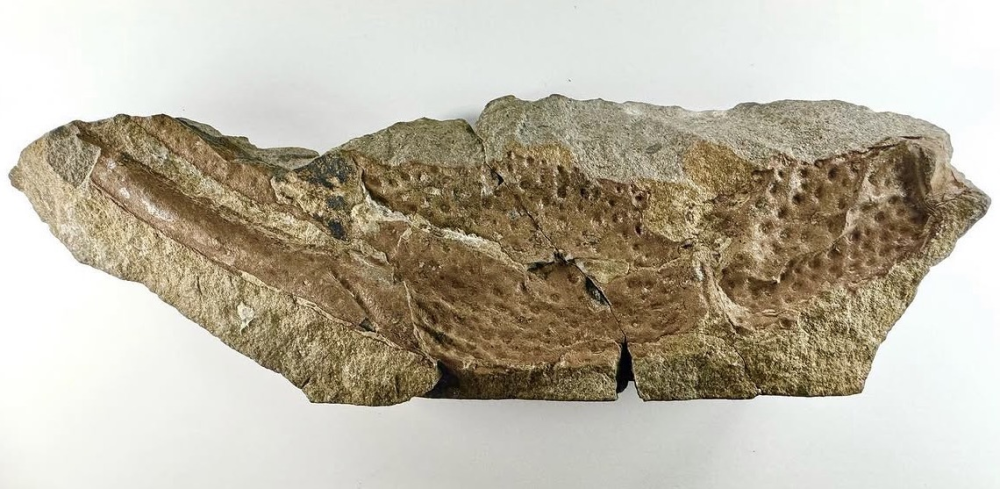
There were elements to its anatomy that stood out as unique among scorpions, however. Most notably, these included some wing-like lateral extensions along its abdominal segments. All told, the team determined it to be an “extremely large” scorpion measuring around a meter (3.3 feet) in length, with pincers that would’ve made it one of the most fierce predatory arachnids of its time.
This animal is an order of magnitude larger than any other terrestrial animal we know of at the time.
Dr Richie Howard
Does all that mean it was an apex predator? And if so, what was it eating?
“This is one of the most perplexing elements of the story,” study author Dr Richie Howard, who is the curator of fossil arthropods at Natural History Museum (NHM), London, told IFLScience. “Our default expectation is that scorpions are land based predators – they have many adaptations to be successful at this. But this animal is an order of magnitude larger than any other terrestrial animal we know of at the time.”
If Praearcturus was living on land, it would’ve had a difficult job sustaining such enormous size by feeding on the much tinier arthropods sharing its habitat. That is, Howard says, unless there are beastly Devonian bugs in the fossil record we have yet to find.
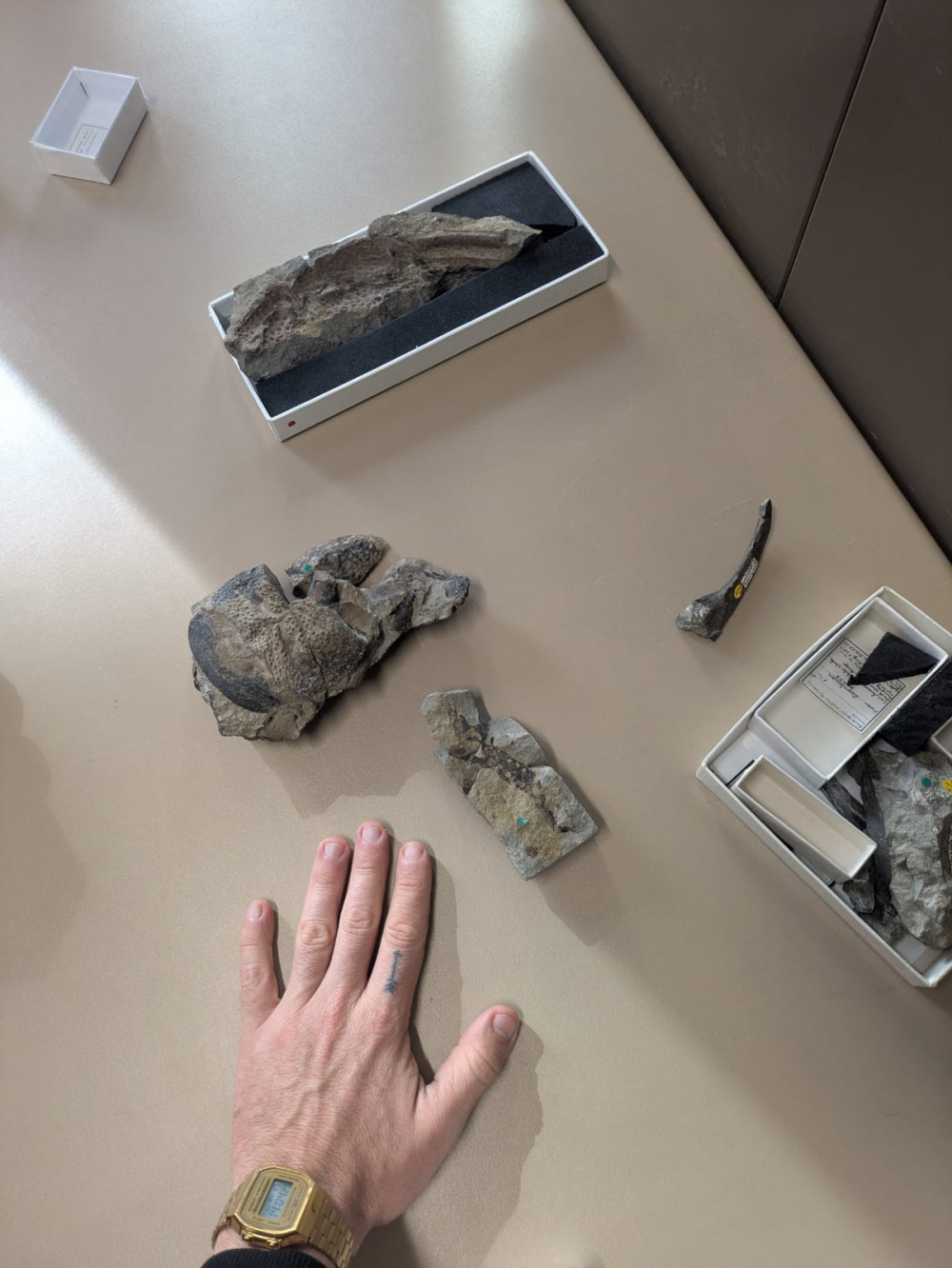
For that reason, the authors are leaning towards the idea that this scorpion was amphibious, capable of hunting on land and underwater. This would’ve cracked open the menu to include primitive armored fish and other large arthropods. A more fitting meal for a monstrous hunter like Praearcturus.
“There were other big aquatic predators in the Early Devonian, but Praearcturus is by far the largest I’ve seen from the geological formation the fossils come from,” said Howard. “So, yes, I expect it was an apex predator.”
It really goes to show the value in protecting and preserving natural history collections for the future.
Dr Richie Howard
Remarkable, then, that such a mighty thing remained hidden for so long among the NHM's many specimens. The fossils have been with the institution for over 150 years, and yet only now do we have the tools and fossil evidence to determine that it was a scorpion unlike any other the Earth has ever seen.
“I feel very lucky to have had the opportunity to study these unique fossils at the right point in history where their true identity could be confirmed,” said Howard. “It is only because of further discoveries published much more recently in the 2010s that the evidence all came together to paint this picture. It really goes to show the value in protecting and preserving natural history collections for the future.”
Praearcturus now claims the title as the largest scorpion to ever have lived. It also moves the timeline forward on giant arthropods, arriving around 50 million years before famous monsters like Arthropleura, a millipede that was about the size of a car.
I absolutely love what an alien environment it must have been where this thing was living.
Dr Richie Howard
Today, the United Kingdom is only home to one species of invasive scorpion that’s gathering momentum in Kent. Just goes to show what a very different world it was 415 million years ago.
“I absolutely love what an alien environment it must have been where this thing was living,” said Howard. “A swamp covered in primitive moss-like plants with towering arborescent fungus jutting out like standing stones, plus a gigantic scorpion paddling around! Amazing.”
The study is published in the journal Palaeontology.

 1
1