Nature
 PUBLISHED


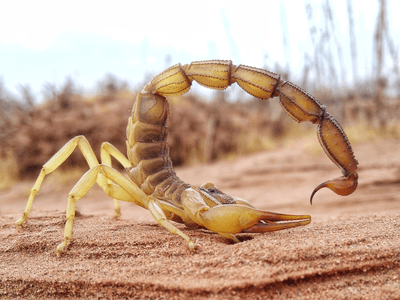


Millions of years before Neolithic people thought of using metals to stab or crush their enemies, scorpions did the same thing, enhancing their stingers and claws with zinc, iron, manganese, and calcium. New research reveals that, rather than a one-size-fits-all, these arachnids match the metal in their exoskeleton to the role of the weapon they are enhancing.
Many forms of life have made metals part of their biology. The blood that pumps in your veins uses iron to carry oxygen, for example, while horseshoe crabs use copper to perform a similar role. The capacity of higher concentrations of metals to deliver extra toughness has been utilized by species as diverse as snails in their shells and Komodo dragons in their teeth.
“Scorpions are incredible hunters, and while we knew that metals strengthen the weapons in some species’ arsenals, we don’t know if all scorpions’ weapons contain metal, and if so, whether this metal enrichment relates to how they hunt,” Sam Campbell, who did much of the research as a graduate student fellow at the Museum of Natural History, said in an emailed statement.
“We decided to use microanalytical techniques to unravel where and how these metals are distributed in the scorpions’ weapons to offer a clue as to how and why metal enrichment has been carried through the scorpion family tree.”
Humans fear scorpions’ venom-injecting stingers the most, but some rely more heavily on the crushing and slicing power of their claws, particularly when it comes to subduing prey. For many, the stinger is more of a defensive weapon, or a method to subdue prey when the claws have failed, probably because venom stores are costly to replenish. Yet other species sting with abandon. Campbell and co-authors suspected this variation might be reflected in where metals are concentrated, and perhaps which metals species use.
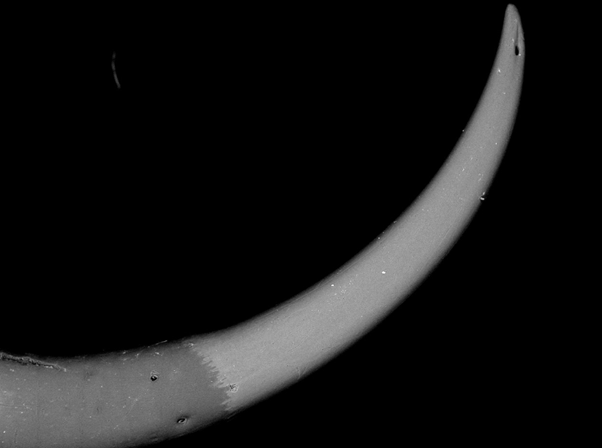
High-resolution electron microscopy, combined with X-rays, allowed the team to measure the metal enrichment in different parts of each scorpion’s exoskeleton. They found in 15 of the 18 species studied, millions of years of evolution have concentrated zinc in the stinger tip, where it needs to pierce a victim’s skin or own protective armor. However, the rest of the stinger is often so different as to create a visual contrast, which the authors found was because the metal component below the tip is usually mostly manganese.
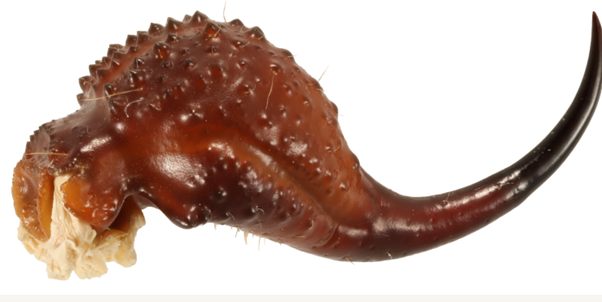
Likewise, the sharp tooth-like edges of the pincers are rich in either zinc or zinc and iron, but these metals are not present in the rest of the outer portion of the pincer.
Clearly zinc is something scorpions prize highly, leading the researchers to expect that the more zinc a scorpion had in its pincers, the more crushing force they could apply. Science is all about checking expectations, however, and the researchers found the opposite. It’s the species that depend on stingers the most, and have slimmer, more delicate pincers that are more likely to load their claws with zinc.
“This points to a role for zinc beyond hardness, perhaps playing a bigger role in durability,” Campbell said. “After all, long claws need to grasp prey and prevent it from escaping before being injected by venom. This is an interesting finding because it suggests an evolutionary relationship between how a weapon is used and the specific properties of the metal that reinforces it.”
The authors also observed a negative correlation for the concentration of zinc in stinger tips and claw blades. That is, the more zinc a scorpion had in one, the less there was likely to be in the other. The authors see this as evidence that a scorpion will put more zinc towards its favored weapon, but did not find the same relationship for calcium.
Many questions remain, such as why zinc is often reinforced with iron in claws, but never in stinger tips, and why the relationship between these metals and manganese is so complex. The authors also did not investigate whether male and female scorpions use metal differently.
Although their armor is usually not as tough, spiders and many stinging insects are known to use metal. The authors hope to expand their research to see how the use of particular metals relates to their hunting approaches.
“By combining the National Museum of Natural History’s deep knowledge of scorpion taxonomy, morphology and behavior, and the Museum Conservation Institute’s expertise in microanalysis, we were able to efficiently and drastically expand our understanding of the evolution of metal enrichment in scorpions,” said senior author Hannah Wood.
“Not only does our work illustrate the material properties of scorpions’ weapons, but it establishes a new approach towards analyzing the role of metal enrichment across the tree of life.”
The study is published in the Journal of the Royal Society Interface.