Nature
 PUBLISHED




A first-time discovery was made by a team of researchers trawling in Sardinia as they brought up a catshark that appeared to have no skin. Investigations into the animal's anatomy, published in the journal Fish Biology, revealed that the fish possessed none of the structures associated with elasmobranch skin, the group that contains sharks, and is believed to be the only time such a creature has been found free-swimming in the ocean.
For elasmobranch sharks, skin plays an important role as a chemical and mechanical defense. It secretes mucus that is considered the first line of its immune system, preventing microbes from forming colonies on its surface as it contains antibacterial proteins. Uniquely made up of denticles – overlapping teeth-shaped structures – it’s also a strong mechanical barrier against certain predators and ectoparasites.

Unfortunately for our blackmouth catshark (Galeus melastomus), this protective tool was completely absent as inspection of its “skin” revealed it had a severe lack of all skin-related structures: epidermis, part of dermis, dermal denticles, and teeth. Rough luck, lil' swimmer.

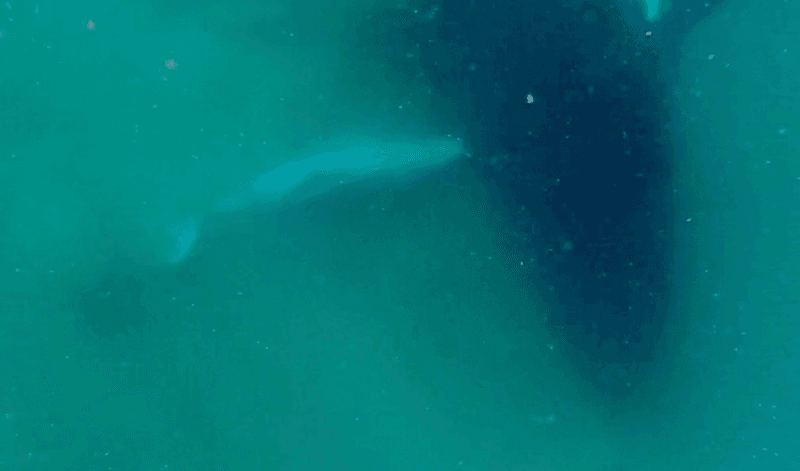
The individual was caught by trawl in July 2019 at a depth of 500 meters (1,640 feet) in Sardinian waters. Given the significance of skin to a shark's survival, the researchers report that the condition would be potentially fatal and yet our trooper was discovered well developed and seemingly in good health. For feeding the catshark was in luck as this species eats its prey whole without the need for teeth. Without its exterior dermal denticle "teeth", however, it lacked the usual markings of blackmouth catsharks as seen in the image above.

Reasons for why this poor shark ended up toothless on the inside and out range from natural to human-linked explanations. The authors suggest that long-term exposure to chemically contaminated sites could be to blame, as well as ocean warming or acidification due to climate change. Alternatively, it might be an error that occurred naturally during the animal’s embryonic development.
In an ever-changing environment, the researchers urge that understanding such abnormalities is an important step in protecting marine animals as if we don’t find out what triggered our skinless shark, we could end up with a lot more skinny dippers in our oceans.