


 Nature
 PUBLISHED


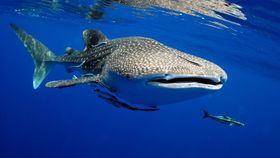


Investigations into the eyes of the world’s largest shark have revealed that their eyes are covered in tiny teeth called “dermal denticles”. The discovery, published in the journal PLOS ONE, reveals how the whale sharks use this protective layer to prevent their soft eyeballs from being injured.
The whale shark, Rhincodon typus, is the largest fish in the ocean, growing up to 18 meters (60 feet) in length. These gentle giants however feed on one of the ocean’s tiniest animals, krill. Like all sharks they are covered in dermal denticles that create a layer of “skin,” which are V-shaped structures that decrease drag and turbulence, allowing them to swim quicker and more quietly.
Many shark species have “third” eyelids that extend over the eyes when they’re thrashing about feeding. Third eyelids however pale in comparison to the weirdness of whale sharks’ eyes, which can retract back into their heads. They also don’t have eyelids, but they can roll the entire eye back into the socket giving one of nature’s most convincing smh vibes.

And things got even weirder when researchers from the Okinawa Churashima Research Center, Japan, were investigating aquarium whale sharks as well as dead specimens to learn more about their freaky eyeballs. Using a range of techniques to examine their eye protection morphology they discovered the sharks had unique "armored eyes".
The eye denticles differed in morphology from the dermal denticles that make up the whale sharks’ “skin”, showing the presence of these tiny teeth achieves more than streamlining the animal. The researchers write that these optical gnashers most likely serve a protective function, preventing the eye from suffering abrasions, which perhaps indicates the importance of perfect vision for these animals.

"As far as we know, eye denticles have not been found in other elasmobranchs [sharks, rays, and skates], including species closely related to the whale shark," the researchers write in the study. "It seems likely, therefore, that eye denticles are a characteristic unique to the whale shark."
It was previously believed that whale sharks prioritized other senses when it came to assessing their environment, but this adaptation indicates that preserving the eyeballs is more important to the success of these giants than we realized. The researchers hope to continue their investigations into the wacky eyes of these amazing animals, looking into color range, visual field, and sensitivity.




 1
1