Nature
 PUBLISHED
 1
1




It’s a good day to be a marine biologist: a bundle of new species has been found living among the deep-sea methane seeps off Costa Rica’s Pacific coast.
Scientists led by UC San Diego’s Scripps Institution of Oceanography have collected the results of five research expeditions and 63 submersible dives to the deep sea in the Costa Rican Pacific region between 2009 and 2019.
All in all, the team found 488 distinct animal species, which is the highest biodiversity count ever recorded in a single vent region. Among the new critters are teeny octopuses, fish, clams, yeti crabs, alien-like worms, squat lobsters, mussels, starfish, spindly sea stars, and more.
At least 58 species are entirely new to science, while 131 have previously been described. It's uncertain whether the remaining 299 deep-sea dwellers are novel or not, but the researchers hope to find out with further snooping.

“We hope that this information-rich, freely available resource will strengthen deep-sea biodiversity research, education, and conservation, as well as set a high scientific standard to inspire similarly comprehensive studies for other parts of the world,” Charlotte Seid, lead study author and manager of the Benthic Invertebrate Collection at Scripps Institution of Oceanography, said in a statement.
The Pacific waters of Costa Rica are a fascinating hub of biodiversity, thanks in part to their unusual geological history. The descent of the Cocos Plate beneath the Caribbean Plate at the Middle America Trench fuels the emergence of deep-sea methane seeps. As a consequence of the gas leaks, methane-rich fluids can be found in more than 100 sites located around 50 kilometers (31 miles) offshore along the Costa Rica margin, stretching from southern Nicaragua down to the Osa Peninsula.

Bubbles of methane provide the “food” for bacteria that perform chemosynthesis, utilizing chemical energy from methane rather than relying on the Sun's energy through photosynthesis. In the depths of the ocean, where sunlight is scarce, these remarkable bacteria form the foundation of entire ecosystems, sustaining an extraordinary and often unique diversity of life.
The latest research is far from the first to highlight the glorious amount of biodiversity in this part of the Eastern Pacific.
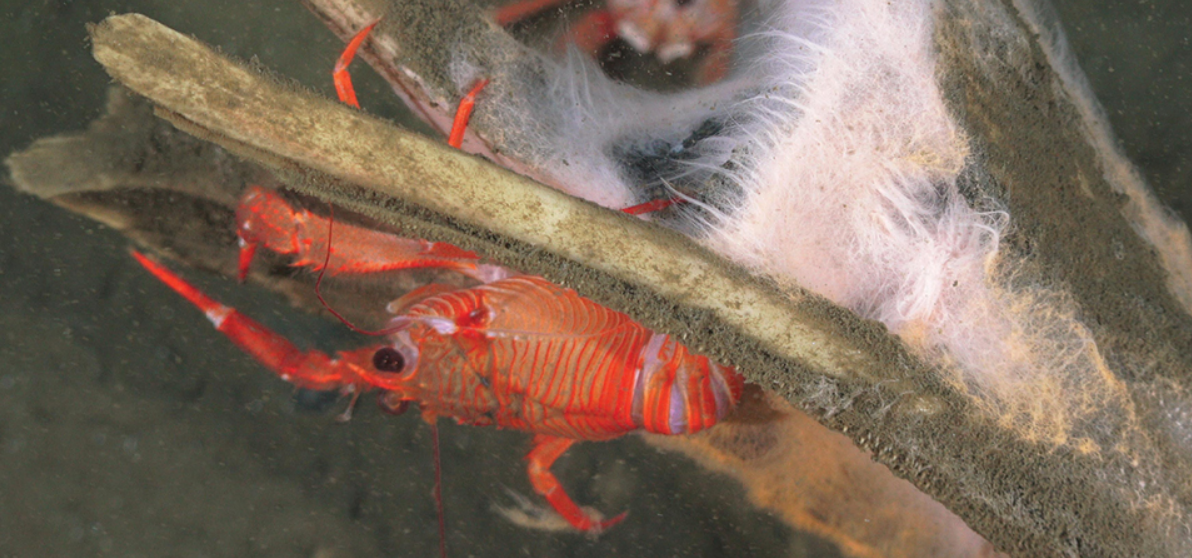
Back in 2019, the Schmidt Ocean Institute’s research vessel Falkor surveyed numerous deep-sea seamounts near Isla del Coco National Park off the coast of Costa Rica, revealing a bunch of otherworldly species.
More recently, researchers revealed four new species of deep-sea octopus near Costa Rica, not to mention a deep-sea skate nursery nicknamed the "Skate Park".
The study is published in the journal ZooKeys.