Nature
 PUBLISHED
 2
2


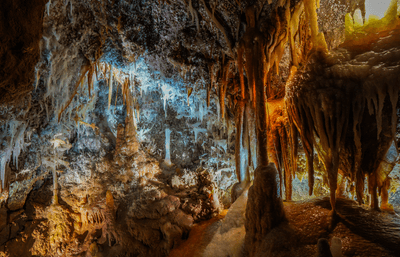


The Jenolan Caves of eastern Australia are the oldest known caverns in the world, at least by most estimates. This geological elder has been dated to approximately 340 million years old, meaning it was forged when most of Earth’s landmasses were fused into the supercontinent Gondwana, a distant era long before the first dinosaurs even walked the Earth.
The Jenolan Caves are found in a far-flung region of Oberon Council, New South Wales. The site consists of many chambers, some cradling pools of subterranean waters, accessed by over 300 known entrances from the surface.
Until a few decades ago, most believed the caves were geological juveniles, carved relatively recently by the winding rivers of the Blue Mountains. That changed in 2006 when geologists performed a study that was, quite literally, groundbreaking.
The team didn't look at the rocks themselves, but at the clay minerals trapped within them. These minerals crystallized when volcanic ash drifted into the caves hundreds of millions of years ago. By measuring the potassium-argon ratio, which calculates the steady decay of radioactive potassium into argon gas, scientists determined the cave was around 340 million years old.
“We’ve shown that these caves are hundreds of millions of years older than any reported date for an open cave anywhere in the world,” Dr Armstrong Osborne, then a geologist at the University of Sydney, said in 2006.
“Even in geological terms, 340 million years is a very long time. To put it into context, the Blue Mountains began to form 100 million years ago; dinosaurs became extinct 65 million years ago, and Tasmania was joined to the mainland as recently as 10,000 years ago. Most people were convinced that caves were quite young, and those of us who thought they were really old couldn’t find any evidence. But no one imagined that they would be more than 300 million years old. This was totally off the planet,” Dr Osborne added.
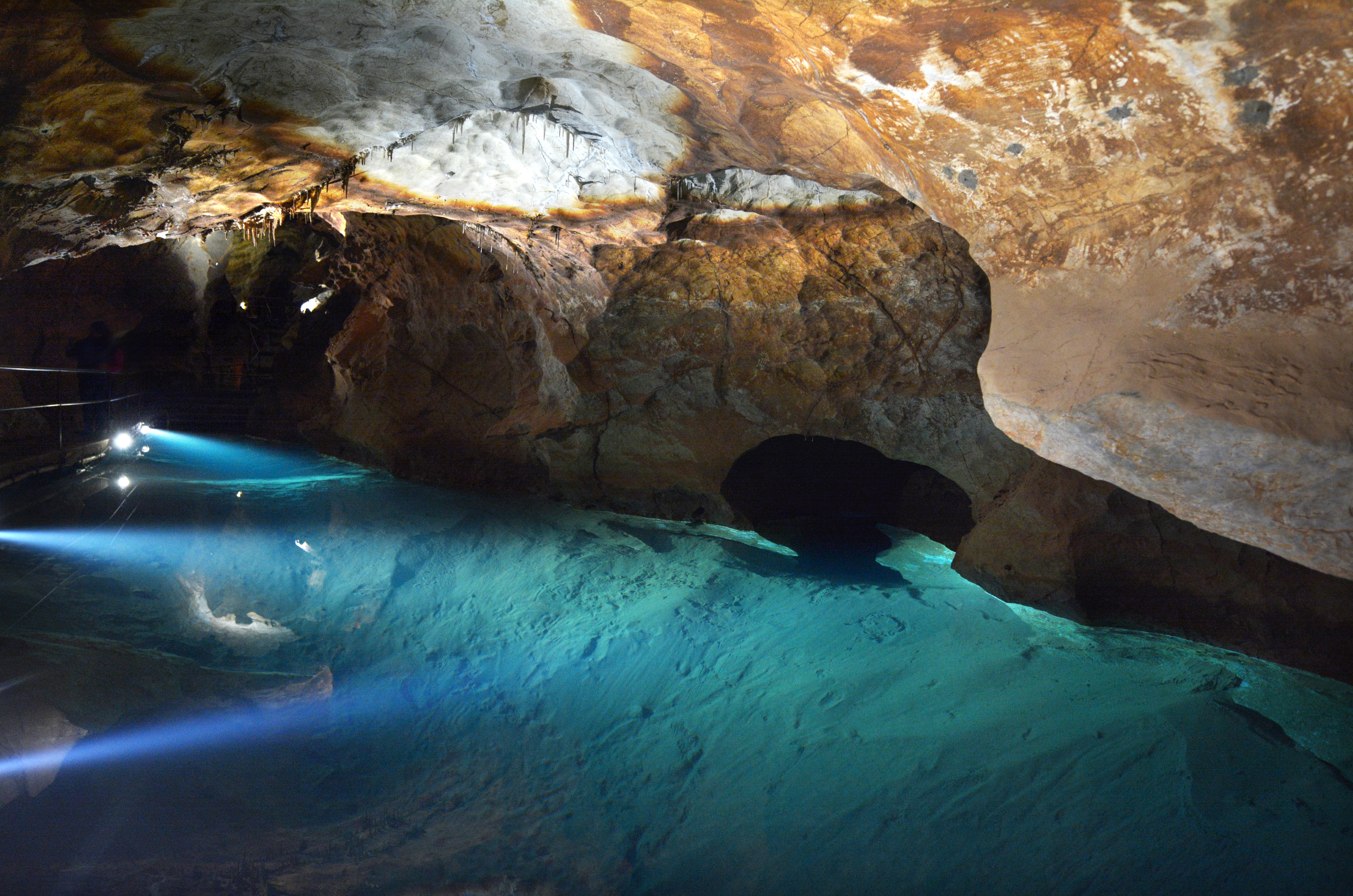
As the millennia passed, the cave grew in size and intricacy. The 2006 study also found younger bits of sediment, showing the caves were buried under the Sydney Basin over time, with layers from 303 million, 258 million, and 240 million years ago.
The ancient Jenolan River, over 200 million years old, carved underground passages and McKeown’s Valley. As a result of its long history, the caves showcase a variety of types: active river caves like Imperial Cave, water-filled phreatic caves like Diamond Cave, breakdown chambers such as the Exhibition Chamber, and dome-shaped caves like the Persian Chamber, created by mixing warm and cool waters underground.
The walls bear the prehistoric remains of sea creatures, including shells and fossilized corals, despite being over 100 kilometers (62 miles) away from the present-day coast in Sydney. This indicates that the caverns were once flooded with seawater. Judging by the state of this preserved ecosystem, researchers suspect this marine ecosystem was once a calm reef system, bustling with snail-like gastropods, shelled creatures, sponge-like stromatoporoids, and corals.
Beyond the staggering age of the rocks and their long-gone inhabitants, these ancient chambers are steeped in human history. The Jenolan Caves reside within the ancestral lands of the Burra Burra people, a clan of the Gundungurra Nation. They know the system as Binoomeal, meaning "Dark Places."
The caves are central to a Dreamtime creation story that tells of a deadly struggle between Gurangatch, a powerful eel-like spirit, and Mirragan, a fierce quoll-like creature. After a titanic battle across the surrounding landscape, Gurangatch sought refuge in the depths of Jenolan to rest and lick his wounds.
This connection to rejuvenation has persisted for millennia. As recently as the 20th century, Indigenous Australians would journey deep into the caves, carrying their sick to be bathed in the subterranean waters, which were believed to possess healing properties.