Nature
 PUBLISHED
 1
1


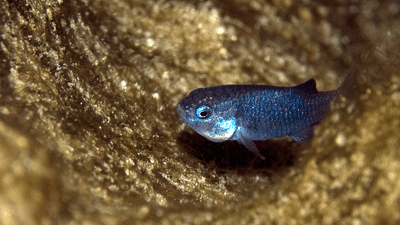


Hooray! We bring good conservation news from the world of fish biology. Devils Hole pupfish (Cyprinodon diabolis) are one of the world's most endangered fish species, living in Death Valley National Park. Biologists have recently completed their annual spring season count and recorded the most fish seen in 25 years.
Devils Hole pupfish live in just one small cavern near Ash Meadows National Wildlife Refuge in Nye County, Nevada. The pupfish are small, only measuring around 35 millimeters long, and while the males are bright blue the females are a paler teal color. The cavern is filled with water at a balmy 33°C (91°F), and the fish live in the upper 24 meters (80 feet) of the cave. They rely on a small sunlit shelf for algae to eat and are thought to have the smallest habitat of any vertebrate species on Earth. The shelf is essential but precarious; seismic activity can cause the rest of the water to slosh, affecting the shelf, and the cavern is so deep that the bottom has never been reached.
The population of Devils Hole pupfish has undergone rapid changes. In the early 1990s there used to be around 200-250 pupfish counted each spring. However, for the last 20 years the population has usually been around 90, with a worryingly low year of just 35 fish counted in 2013.
This spring, however, biologists counted 191 Devils Hole pupfish, the highest number since March 1999. The fish are counted twice a year both via scuba diving and on the shelf, with the next count due in the fall of 2024.
“It’s exciting to see an increasing trend, especially in this highly variable population. Increasing numbers allow the managing agencies to consider research that may not have been possible in the past, when even slight perturbations of habitat or fish had to be completely avoided. We’re excited about the future directions with respect [to] managing this species,” said Michael Schwemm, Senior Fish Biologist for the US Fish and Wildlife Service, in a statement.