Nature
 PUBLISHED


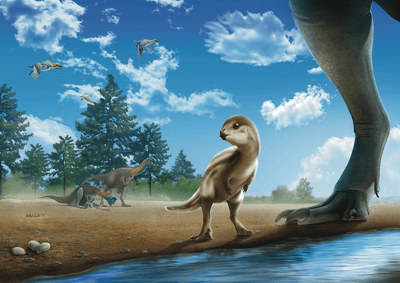


Korea’s first discovered partial dinosaur skull comes from a new species that bears a delightful resemblance to a beloved cartoon character, Dooly, making the choice of name Doolysaurus an easy pick for the paleontologists who found the specimen.
Dr Jongyun Jung, a visiting postdoctoral researcher at the University of Texas (UT), was part of a team digging in the Ilseongsan Formation on Aphae Island, off the tip of South Korea, when Hyemin Jo of the Dinosaur Research Center found some bones. “When we first found the specimen, we saw some leg bones preserved and some vertebrae,” Jung said in a statement. “We didn’t expect skull parts and so many more bones. There was a fair amount of excitement when we saw what was hidden inside the block.”
The individual dinosaur was about the size of a turkey, but growth markings in its femur revealed it was at most two years old and still growing. Jung and co-authors think the adults might have been about twice as large, but that estimate is rough.
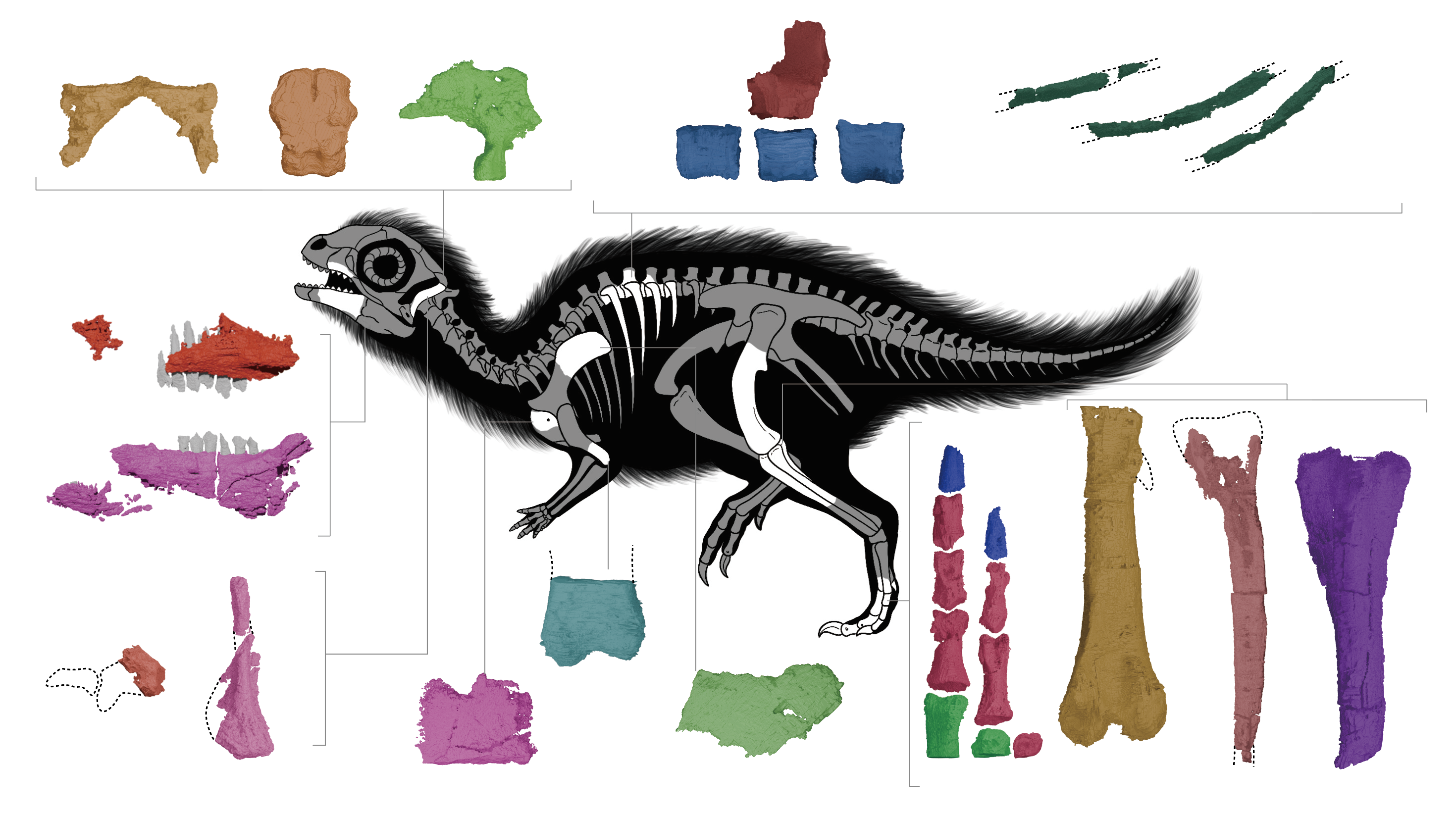
Although not discussed in their paper, the authors also think this dinosaur junior had fuzzy body-covering threads that would have given it a more babyish appearance. “I think it would have been pretty cute,” said study coauthor, UT's Professor Julia Clarke. “It might have looked a bit like a little lamb.”
“Dooly is one of the very famous, iconic dinosaur characters in Korea. Every generation in Korea knows this character,” said Jung. “And our specimen is also a juvenile or ‘baby’, so it’s perfect for our dinosaur species name to honor Dooly.”
.png "An image of Dooly and a considerably larger dinosaur")
Dissimilar enough to any known dinosaur from elsewhere, Doolysuarus was chosen as the genus name. The species name, huhmini, honors Professor Min Huh, who not only founded the Dinosaur Research Center, but also worked to preserve Korea’s most important dinosaur fossil sites.
The rock containing the original, and so far only, D. huhmini fossil is so hard that it will take years for all the bones to be extracted. However, using micro-CT scans, the authors have created detailed representations of what is within.
This has led the team to classify Doolysaurus as a thescelosaurid, a family of bipedal dinosaurs from East Asia and North America. The rock is mid-Cretaceous, although at this stage the dating still has a wide uncertainty.
As an early member of the clade, Doolysuarus adds to evidence that thescelosaurids originated in Asia. The gastroliths (stones swallowed to help break down food) mark Doolysuarus as an omnivore, feeding on a mix of plants and insects. As it grew up small vertebrates probably became a larger part of its diet. Although modern birds’ use of gastroliths is sometimes attributed to their inability to chew food, 17 of the first Doolysaurus’ teeth were found.
Although these appear to be the first Doolysaurus bones scientists have found, we may have other remnants of the species. South Korea has very few dinosaur bones, but is a rich source of tracks and eggs (including from giant theropods found nearby), most of which have not been matched to a species known from its skeleton.
No new dinosaur species had been identified from Korea in 15 years before this find, but Jung is hopeful that will change, saying, “We’re expecting some new dinosaur or other egg fossils to come from Aphae and other small islands.”
The study is published in Fossil Record.