Nature
 PUBLISHED


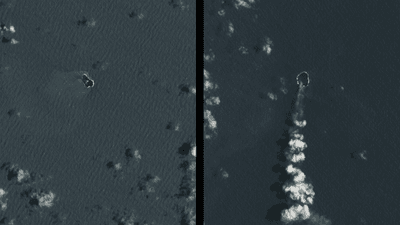


The volcanic eruption of Hunga Tonga–Hunga Haʻapai back in 2021 might’ve been the largest in over a century, but that’s far from the only eruptive activity that Tonga has seen as of late. In 2022, a new volcanic island emerged from the ocean nearby – and it’s just grown again.
The island was formed by the eruption of Home Reef – a submarine volcano found in the Central Tonga Islands between Lateiki and Late Island – in September 2022. Since then, multiple further eruptions have seen the island grow, the latest having occurred from December 2024 through to January 2025.
Before this point, the island at Home Reef had reached 12.2 hectares (30.1 acres), which is roughly 2,000 times smaller than Tonga’s main island, Tongatapu; and around 6,500 times smaller than New York City.
By February 2, 2025, however, satellite imagery revealed that the recent bout of volcanic activity had caused the island to grow by another 3.7 hectares (9.2 acres).
It’s not the first time an island has popped up here – this is the fifth one that we know of. The first recorded Home Reef island came after an eruption in 1852, followed by another in 1857. There were also eruptions in 1984 and 2006, the latter producing an island with cliffs as high as 70 meters (230 meters).
However, all four prior islands eventually disappeared. This type of temporary landmass is referred to as an ephemeral island.
The current iteration of the island at Home Reef has already beaten the lifespan of its 2006 predecessor, which had receded beneath the water’s surface around nine months after its birth – but how much longer might it last?
“Some of the previous eruptions had a more explosive character, which led to land made of a more fragmented, easily erodible material,” Simon Plank, a researcher from the German Aerospace Center (DLR), told NASA Earth Observatory. “This one is characterized by effusive flows that form a hard material that gives the island a high chance of surviving for several years.”
While volcanic eruptions are difficult to predict, and the most recent activity report suggests there have been no new lava flows at Home Reef up until February 7, there’s a possibility that the island will continue to grow during that time too.
Home Reef is part of a chain of around 80 submarine volcanoes that form the Tonga-Kermadec Arc – also home to the Taupo supervolcano – which just so happens to be one of the world’s most active.
[H/T: NASA Earth Observatory]